Demographic Challenges of the Sahel
This article focuses on the demographics of the 10 countries that make up the Sahel region--Burkina Faso, Chad, Eritrea, The Gambia, Guinea-Bissau, Mali, Mauritania, Niger, Senegal, and Sudan.

This article focuses on the demographics of the 10 countries that make up the Sahel region--Burkina Faso, Chad, Eritrea, The Gambia, Guinea-Bissau, Mali, Mauritania, Niger, Senegal, and Sudan.
Project: PACE: Policy, Advocacy, and Communication Enhanced for Population and Reproductive Health
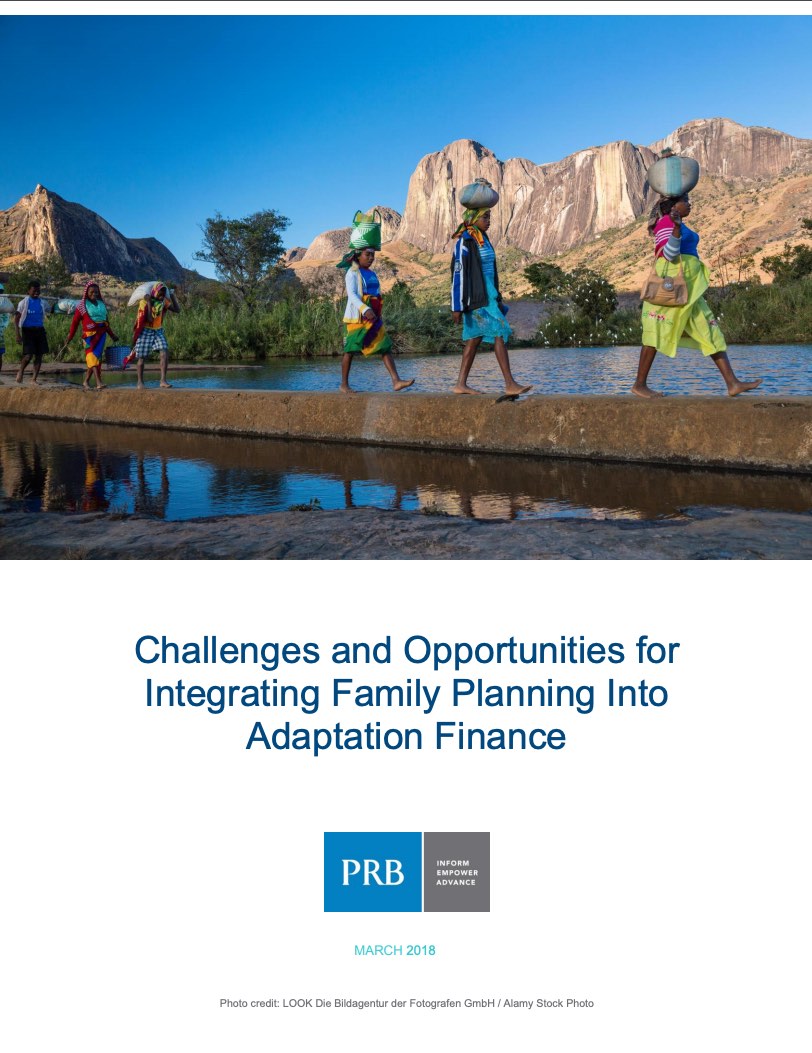
The impacts of climate change—climbing temperatures, extreme weather, drought, shifting rainfall patterns, and rising sea levels—are intensifying around the world.

Project: Demography and Economics of Aging and Alzheimer’s Disease
Experts point to key dynamics challenging policymakers, health care planners, and families
(2010) The cities and towns of developing countries are projected to absorb at least 2.5 billion additional people by 2050. At the same time, these areas will experience global climate change likely to bring floods, droughts, food insecurity, and loss of livelihoods.
(2007) More than 35 million Americans identify as Hispanic, making them the country's largest ethnic minority. However, Latinos have been underrepresented in the all-volunteer armed forces, especially among officers.
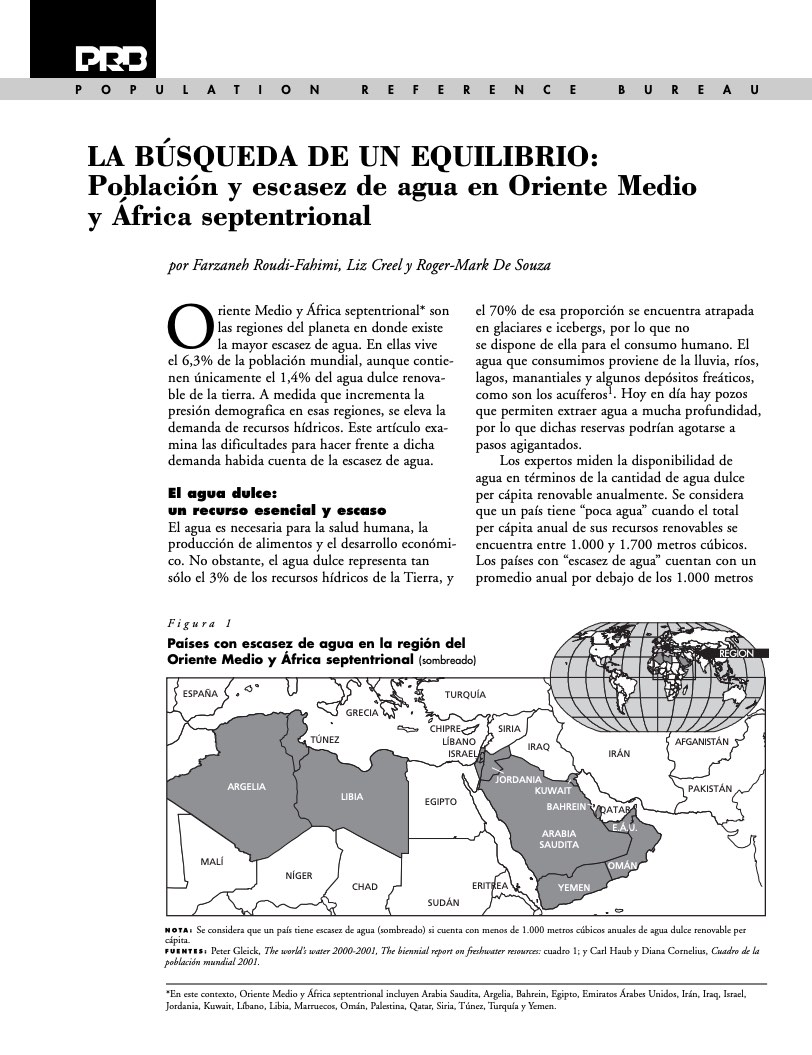
(2002) The Middle East and North Africa (MENA)* is the most water-scarce region of the world. Home to 6.3 percent of the world's population, the region contains only 1.4 percent of the world's renewable fresh water.
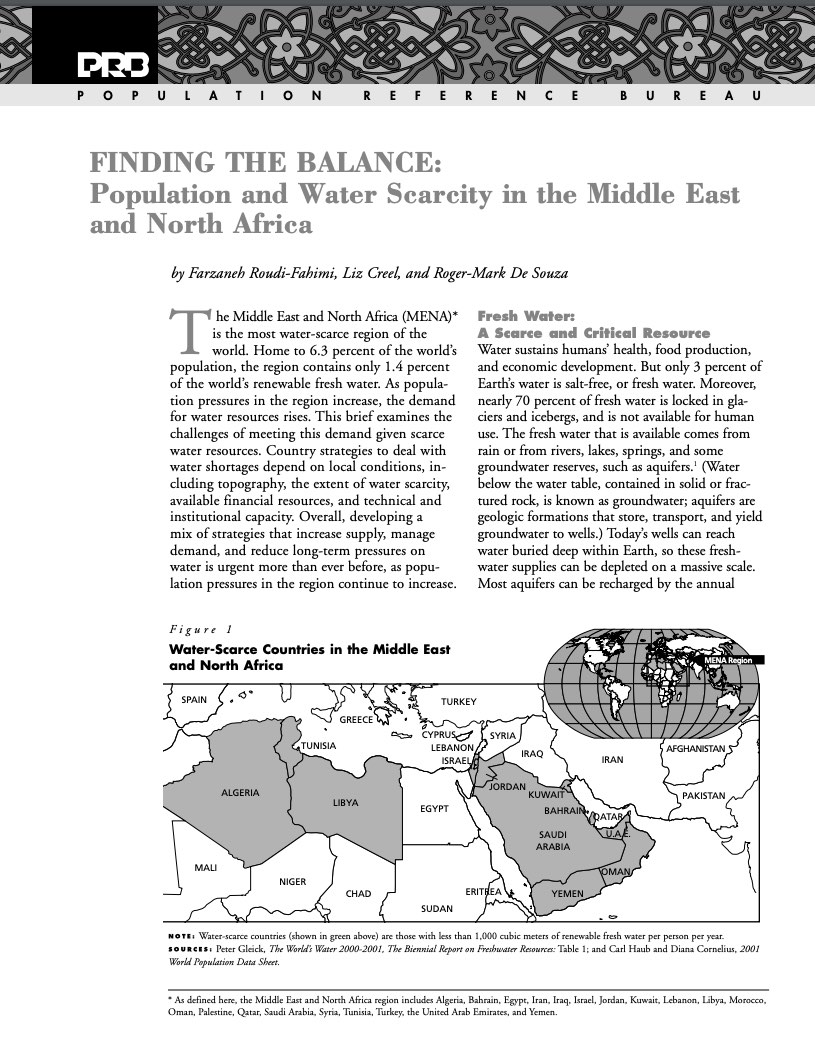
(2002) The Middle East and North Africa (MENA)* is the most water-scarce region of the world. Home to 6.3 percent of the world's population, the region contains only 1.4 percent of the world's renewable fresh water.
(2002) The Middle East and North Africa (MENA)* is the most water-scarce region of the world. Home to 6.3 percent of the world's population, the region contains only 1.4 percent of the world's renewable fresh water.