Building Up Communities by Breaking Down Data
Only by disaggregating data can we understand enough to make wise policy decisions that build up our communities.


Only by disaggregating data can we understand enough to make wise policy decisions that build up our communities.
(2013) Suspensions, expulsions, and arrests are strong predictors of trouble for students. Students in trouble tend to drop out or not graduate on time, which can ultimately diminish their lifetime earnings—and will make them much more likely to be incarcerated than those who graduate.
(2008) Each year, nearly 10 million children die, mostly from preventable and treatable causes. Millions of children in low-income countries suffer from long-term illnesses, malnutrition, and injuries that limit their life options. What can we do to improve children's health and save lives in low-income countries? What are the links to mother's health?
Project: PACE: Policy, Advocacy, and Communication Enhanced for Population and Reproductive Health
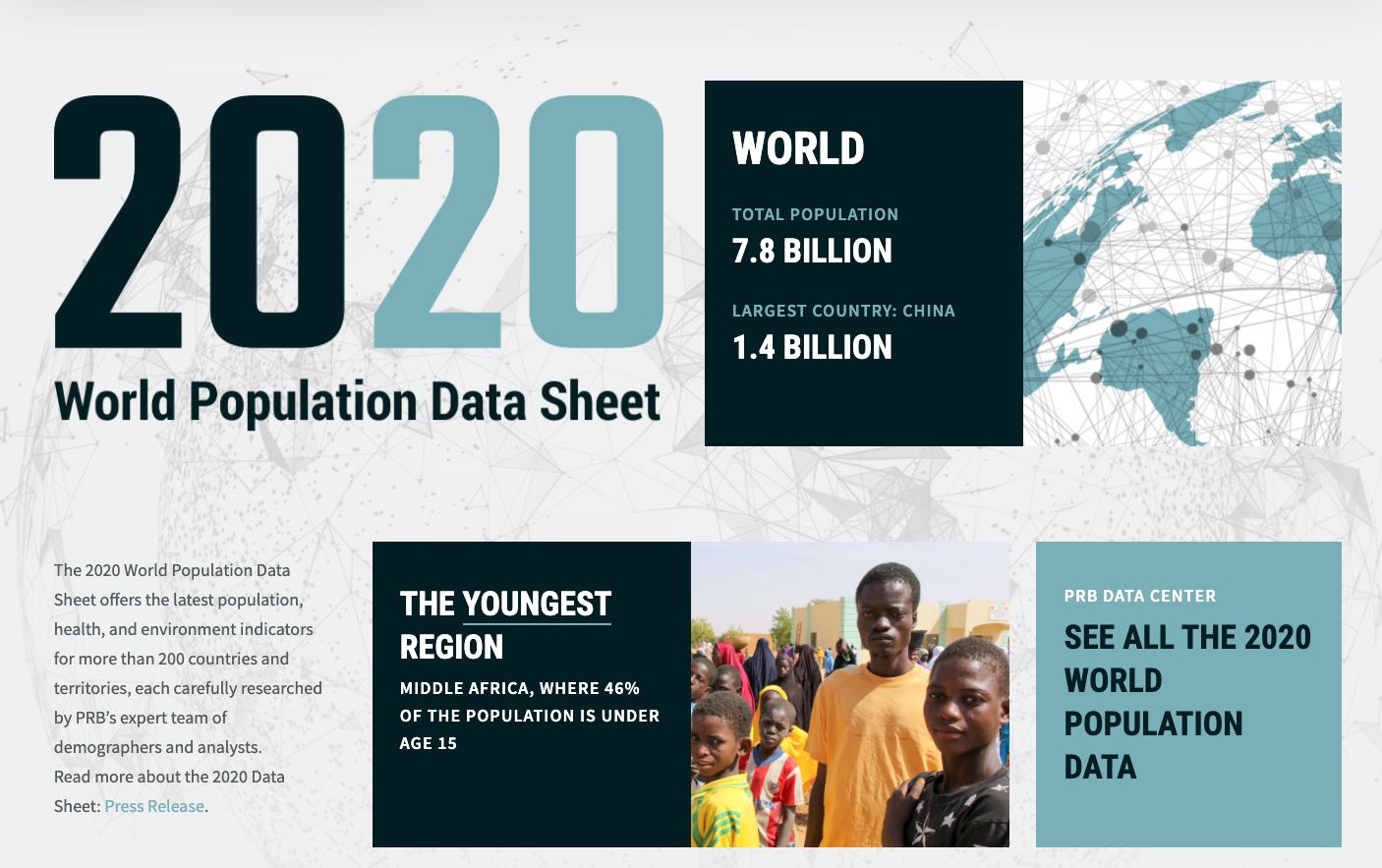
The 2020 World Population Data Sheet offers the latest population, health, and environment indicators for more than 200 countries and territories, each carefully researched by PRB’s expert team of demographers and analysts.
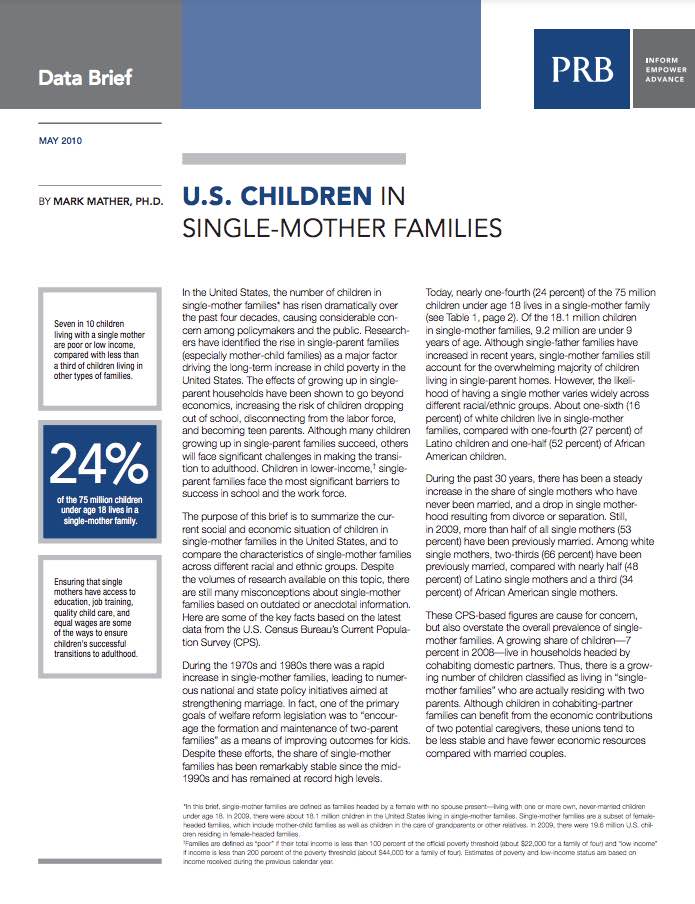
(2010) In the United States, the number of children in single-mother families has risen dramatically over the past four decades, causing considerable concern among policymakers and the public.
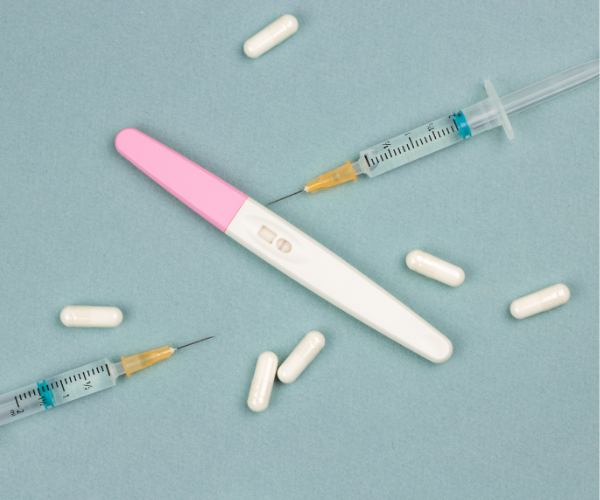
Infertility receives nowhere near the attention or funding of fertility decline or aging despite asking the same fundamental question.
(2010) With almost half of the world's population under age 25, investments in young people are vital to improve economic and social outcomes and achieve the Millennium Development Goals (MDGs).
(2009) Malaria threatens close to one-half of the world's population, and more than 1 million children die each year of malaria-related complications.
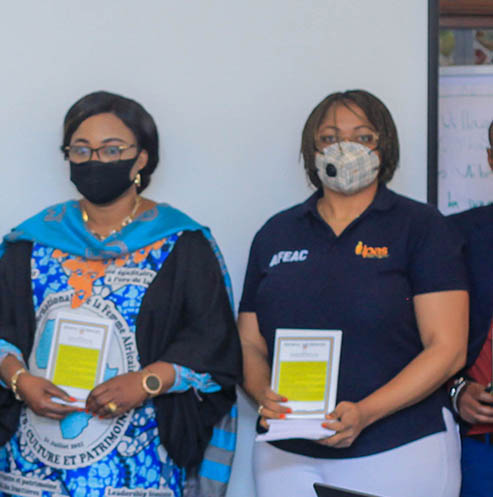
Project: Strengthening Evidence-Based Policy to Expand Access to Safe Abortion (SAFE ENGAGE)
Women in sub-Saharan Africa face the greatest risk globally for an unintended pregnancy to result in an unsafe abortion.
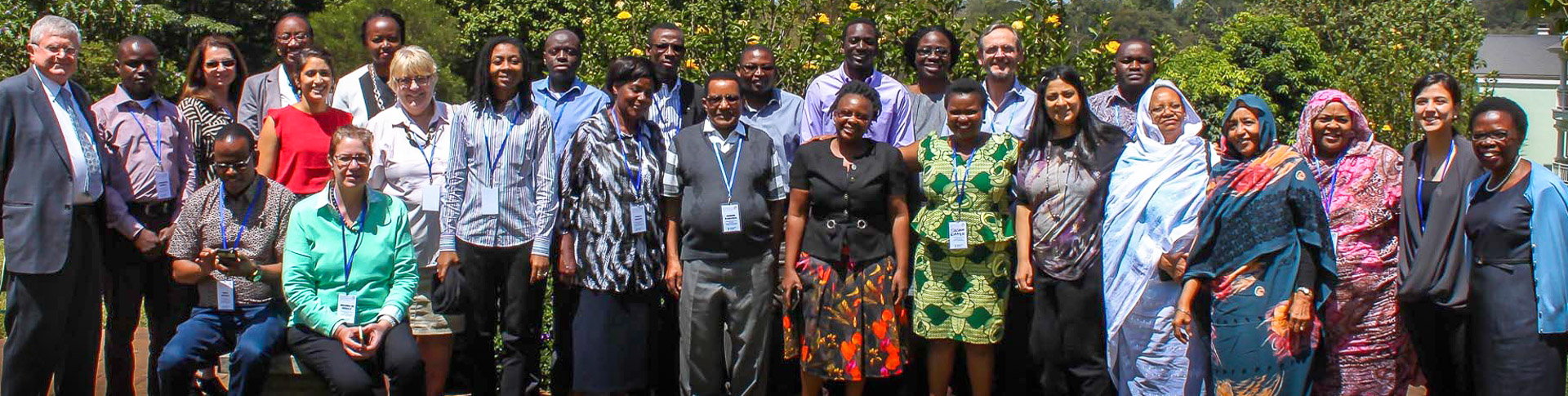
Project: Evidence to End Female Genital Mutilation/Cutting
From 2015 to 2019, the African-led consortium developed innovative research methods and uncovered new evidence about the practice and how it is changing—focusing on families and communities, and health and legal systems—in eight countries: Burkina Faso, Egypt, Ethiopia, Kenya, Nigeria, Senegal, Somalia, and Sudan.