
497 Search Results Found For : "Low-priced"
Nearly 1 in 3 Working Families in U.S. Struggle to Meet Basic Needs
(2012) The slow recovery from the recession has fallen hard on America's working poor families, increasing their numbers by 125,000 in 2010 to more than 10 million families, according to a new analysis of U.S. Census Bureau data.
Beyond the Headlines: What’s Really Happening With Global Fertility?
This guide explains what’s behind falling fertility rates, unpacks common assumptions about fertility decline, and explores how policymakers can respond.
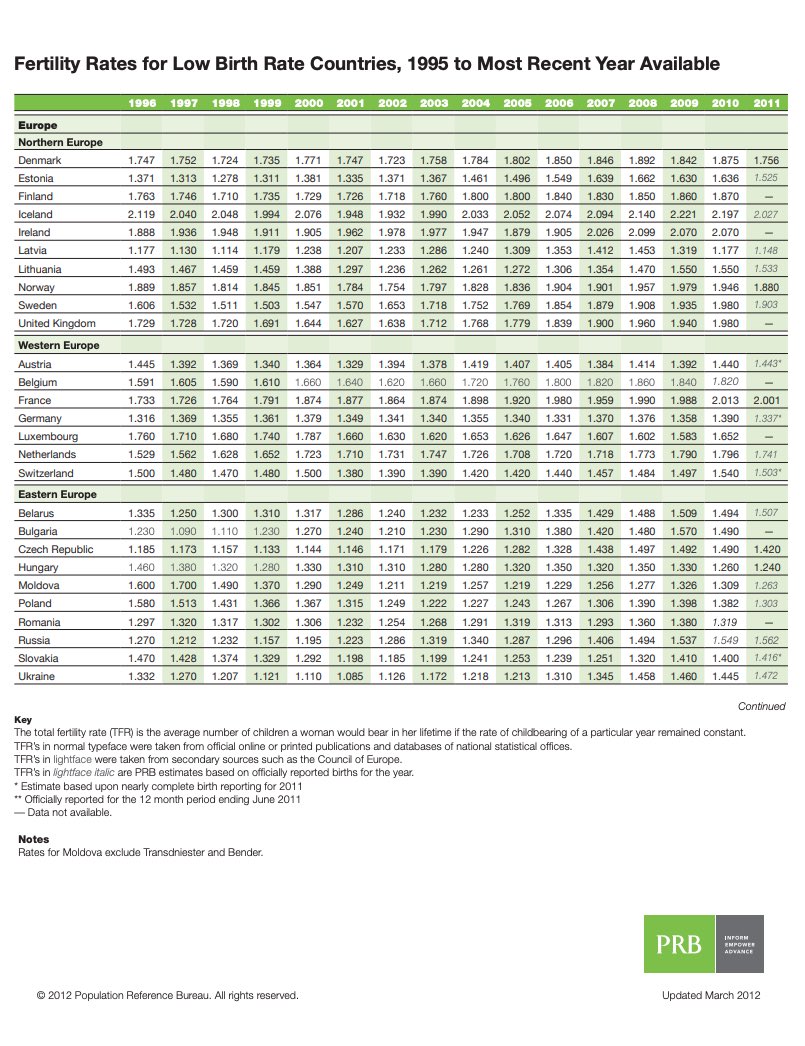
Fertility Rates in Low Birth-Rate Countries, 1996-2011
Unmet Need for Family Planning
(2012) As more evidence about the health and economic benefits of family planning becomes available, global and national stakeholders are paying more attention to addressing the reproductive health needs of women and couples through family planning.
Did South Korea’s Population Policy Work Too Well?
(2010) Many developing countries adopted policies to slow population growth in the latter half of the 20th century in response to population growth rates that had risen to three or more times greater than those ever observed in industrialized countries.
You Asked, We Answered: Challenging the Low-Fertility Panic for Reproductive Health
Could governments cut investments in sexual and reproductive health—such as teen pregnancy prevention programs—under the false perception that 'the job is done'?
South American Transition to Low Fertility Spreads to Paraguay
(2010) Paraguay does not seem a likely candidate for rapid fertility decline: The population is poorer, more rural, and has lower educational levels than its neighboring countries.