
PRB Welcomes Isabella Aboderin of APHRC, Jennifer Madans of CDC to the Board

Population Reference Bureau (PRB) is pleased to announce the addition of two members to its Board of Trustees: Isabella Aboderin, senior research scientist at the African Population and Health Research Centre (APHRC) in Nairobi, Kenya; and Jennifer Madans, associate director for science at the Centers for Disease Control and Prevention’s National Center for Health Statistics.
“We are thrilled to welcome Isabella and Jennifer to the Board. Between them, they bring rich knowledge and experience in demographic change, population, health, and disability issues,” said Jeffrey Jordan, PRB’s president and CEO. “They will provide valuable input to inform our staff’s efforts in research and policy, and fresh perspectives for the Board’s governance and strategic tasks,” he added.
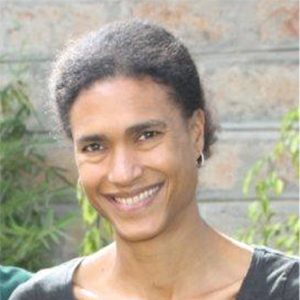

Aboderin, an expert on global aging issues, heads the Aging and Development Unit at APHRC, which she joined in 2013. She is also a visiting professor of gerontology at the University of Southampton (United Kingdom) and an extraordinary professor at North-West University (South Africa). She holds a doctorate from the School for Policy Studies at the University of Bristol and a master’s degree in health promotion sciences from the London School of Hygiene & Tropical Medicine.
Aboderin said she looks forward to contributing her knowledge and experience on population aging as it relates broadly to Africa and lower-income countries. “Most of PRB’s work in aging so far has been on the United States, so I hope to expand that to enable PRB to have a more global focus [on aging],” she said. She added that she can also bring a ground-level view of and insights on population issues in sub-Saharan Africa, where PRB is very active.
Madans holds a doctorate in sociology from the University of Michigan and completed a postdoctoral fellowship at the Yale School of Public Health. At the National Center for Health Statistics, her research has focused on data collection methodology and measurement of health and health services. Madans is a founding member and has acted as chair for three United Nations-sponsored initiatives to develop internationally comparable measures of disability and health.
Madans said she will bring a data producer’s perspective to PRB and weigh in on “data collection and methodological issues that can have a bearing on how PRB does its work” in data analysis, synthesis, and communication. Madans said she looks forward to approaching population and demographic issues from a policy perspective.
Aboderin and Madans will start their PRB Board terms in fall 2018. They succeed Parfait M. Eloundou-Enyegue and Linda J. Waite, both of whom reached mandatory term limits on the Board in spring 2018.
Eloundou-Enyegue, the chair of the Department of Development Sociology at Cornell University, joined the PRB Board in 2012 and served as chair of the Governance and Nominating Committee during his tenure. Waite, the Lucy Flower Professor in Urban Sociology at The University of Chicago, also joined the PRB Board in 2012 and served on the Audit Committee and the Governance and Nominating Committee.
Related Posts
Understanding and Comparing Population Projections in Sub-Saharan Africa
The release of a new set of population projections by the Institute for Health Metrics and Evaluation (IHME) in July 2020 was greeted with extensive coverage in the media and stimulated fresh debate among demographers about calculation and communication of projections.