The U.S. Population Is Growing Older, and the Gender Gap in Life Expectancy Is Narrowing
The current growth of the population ages 65 and older is unprecedented in U.S. history and has important implications for policymakers.

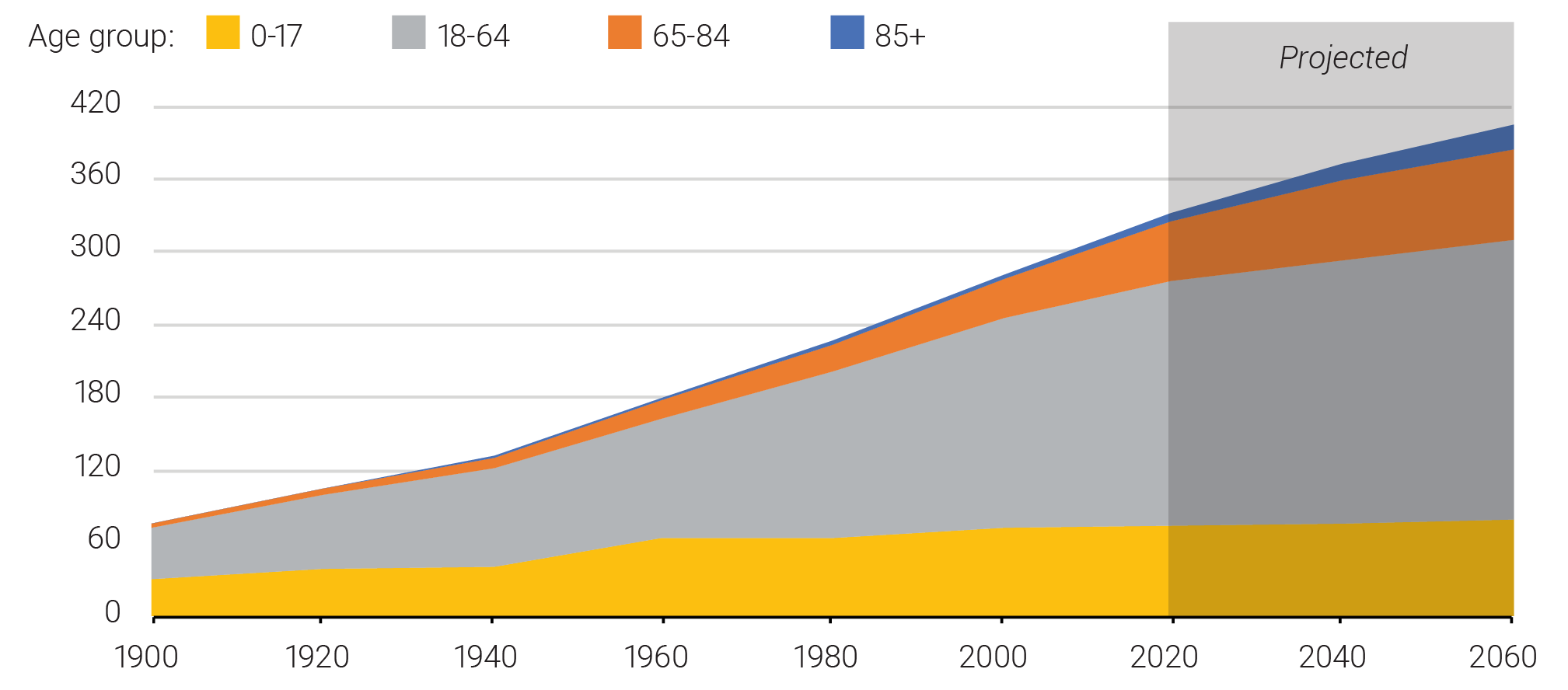
The current growth of the population ages 65 and older is unprecedented in U.S. history and has important implications for policymakers.
(2009) Malaria threatens close to one-half of the world's population, and more than 1 million children die each year of malaria-related complications.
(2006) The "fertility transition"—the shift from large to small families that demographers have observed throughout much of the world—has been remarkably rapid in Morocco, according to a recently released demographic and health survey on that country.

(2020) The world is better equipped to fight a pandemic today than it was in 1918, when influenza swept the globe and infected up to one-third of the world’s population.1 While science and medical advances have given us new advantages in fighting disease, some demographic trends since 1918 may increase the risk for spreading contagions and our vulnerability to viruses.
(2000) Under apartheid, water had been so inequitably distributed that water policy reform became a lead component of the new government's Reconstruction and Development Programme.
(2001) Malaria threatens at least 24 million pregnancies each year in Africa, the continent most affected by this disease according to the World Health Organization (WHO).