Project: Research Technical Assistance Center (RTAC)
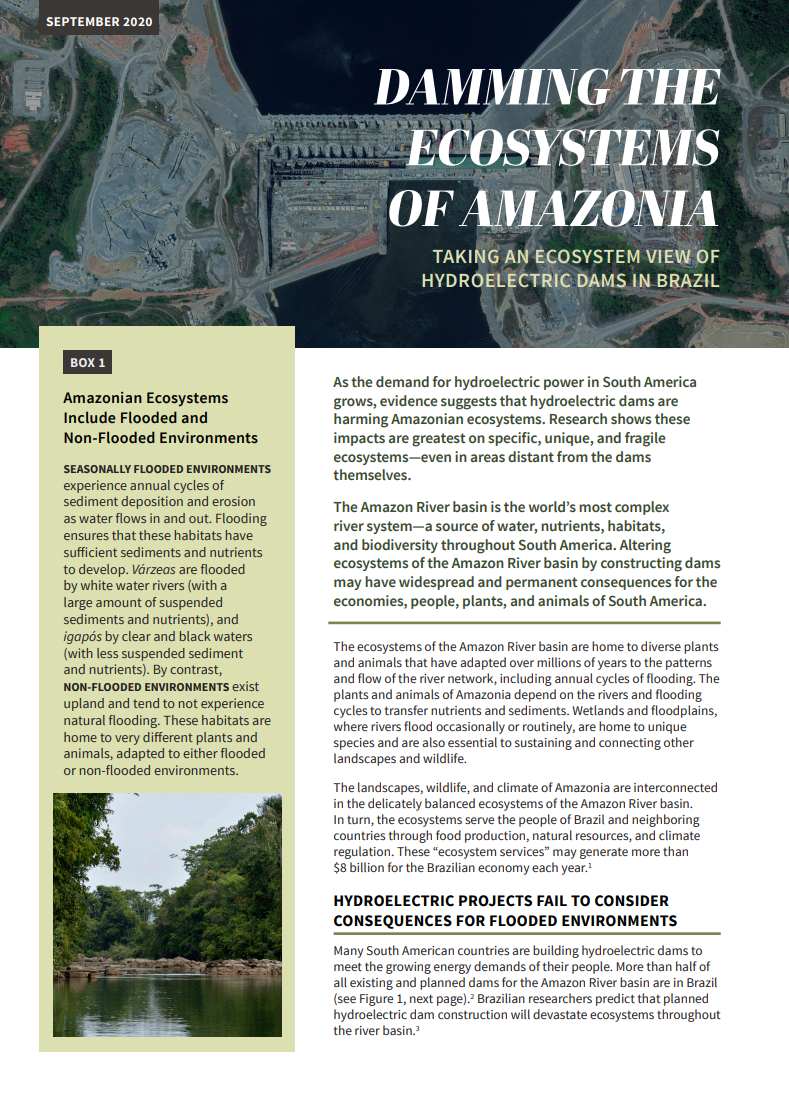
Damming the Ecosystems of Amazonia
This innovation brief describes the growing impact of hydroelectric dams on the Amazon River ecosystem in Brazil.

Project: Research Technical Assistance Center (RTAC)
This innovation brief describes the growing impact of hydroelectric dams on the Amazon River ecosystem in Brazil.
Project: Evidence to End Female Genital Mutilation/Cutting
From 2015 to 2019, the African-led consortium developed innovative research methods and uncovered new evidence about the practice and how it is changing—focusing on families and communities, and health and legal systems—in eight countries: Burkina Faso, Egypt, Ethiopia, Kenya, Nigeria, Senegal, Somalia, and Sudan.

Are data users aware of all the resources offered by the American Community Survey? We went on the road in Texas to find out.
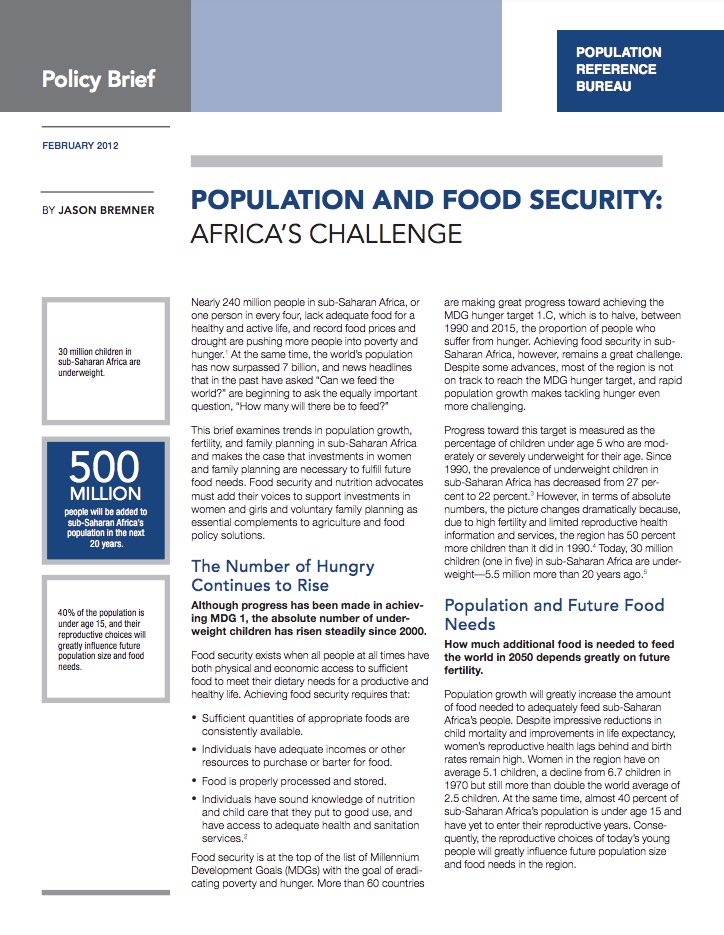
(2012) Nearly 240 million people in sub-Saharan Africa, or one person in every four, lack adequate food for a healthy and active life, and record food prices and drought are pushing more people into poverty and hunger.1 At the same time, the world’s population has now surpassed 7 billion, and news headlines that in the past have asked “Can we feed the world?” are beginning to ask the equally important question, “How many will there be to feed?”
(2005) En début février de cette année, le Brésil s'était, une fois de plus, presque arrêté de fonctionner à l'occasion de la célébration annuelle du carnaval. Pendant les quatre jours de réjouissances, des bénévoles associés à plus de 1 800 organisations non-gouvernementales (ONG) ont distribué plus de 11 millions de préservatifs, financés par le Ministère de la santé brésilien, en plus des 20 millions qui sont normalement distribués chaque mois.


Project: Research Technical Assistance Center (RTAC)
This presentation outlines the health and development implications of cutaneous leishmaniasis (CL), along with the challenges related to diagnosing and treating this neglected tropical disease.
(2009) Religious diversity has been a defining characteristic of India's population for centuries. The country has no official state religion, but religion plays a central role in Indian daily life through its temple ceremonies, festivals, pilgrimages, family religious traditions, and the like. While Hinduism has been the dominant religion for several thousand years, Buddhism, Christianity, Islam, Jainism, and Sikhism have also flourished.
Project: PACE: Policy, Advocacy, and Communication Enhanced for Population and Reproductive Health
Collecting, analyzing, and using gender-related indicators in projects is critical to addressing many of the underlying challenges that communities around the world face, particularly in integrated Population, Health, and Environment (PHE) projects.