The U.S. Population Is Growing at the Slowest Rate Since the 1930s
The pace of U.S. population growth is slowing, according to the Census Bureau’s 2018 estimates and 2020 projections, which provide a preview of 2020 Census results.

The pace of U.S. population growth is slowing, according to the Census Bureau’s 2018 estimates and 2020 projections, which provide a preview of 2020 Census results.

Policy changes could reduce the disproportionate burden of care work on American women, researchers said.
(2003) Coastal regions, areas that are home to a large and growing proportion of the world's population, are undergoing environmental decline.
(2003) Coastal regions, areas that are home to a large and growing proportion of the world's population, are undergoing environmental decline.
(2007) In the South, Texas, Florida, and Georgia are poised to gain seats in the U.S. House of Representatives after the 2010 Census.
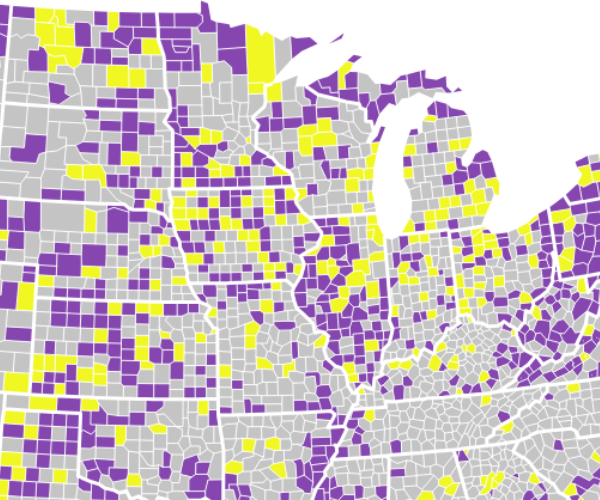
Over 450 U.S. counties would have lost population between 2023 and 2024 without immigration, according to an analysis of new data from the U.S. Census Bureau.
(2008) Encouraging progress against malaria was made in the Americas and some parts of Asia in the last century, but the first global campaign to stop malaria didn't succeed.
(2011) Germany's recovery from the devastation of World War II is often called an "economic miracle" because its economy is now Europe's largest. Immigration has been an important part of the country's modern demographic history.
(2006) With a population growth rate of nearly 1 percent a year, the United States is the fastest growing developed country in the world. While many European countries are facing population decline, the U.S. population is growing as fast as or faster than many developing countries. And the total population of the United States (currently at 296 million) is expected to reach 300 million some time this summer—and about 450 million by the year 2050.