Fewer Malaria Cases in Cambodia
(2002) According to the World Health Organization (WHO), around 300 million people worldwide suffer from malaria each year resulting in at least 1 million deaths.

(2002) According to the World Health Organization (WHO), around 300 million people worldwide suffer from malaria each year resulting in at least 1 million deaths.
(2003) Both are voices of women in Delhi, but they could be from anywhere in this country of 1 billion people.
(2009) "The World in 2050: A Scientific Investigation of the Impact of Global Population Changes on a Divided Planet" was held in Berkeley, Calif., on Jan. 23 and 24, 2009.
(2011) "Vasectomy is like putting money in the bank. [It] is a long-term investment, money you [would] have otherwise used to buy expensive birth control methods," says Dr. Charles Ochieng, a medical doctor in Kenya.
(2010) The State of Metropolitan America, by the Brookings Institution's Metropolitan Policy Program, identifies five demographic trends and developments that dominated the first decade of the 2000s in the 100 largest metro areas of the United States.
(2009) With a lack of clear federal legislation on immigration, some municipal governments are enacting restrictionist policies to address the changing demographics of their communities.
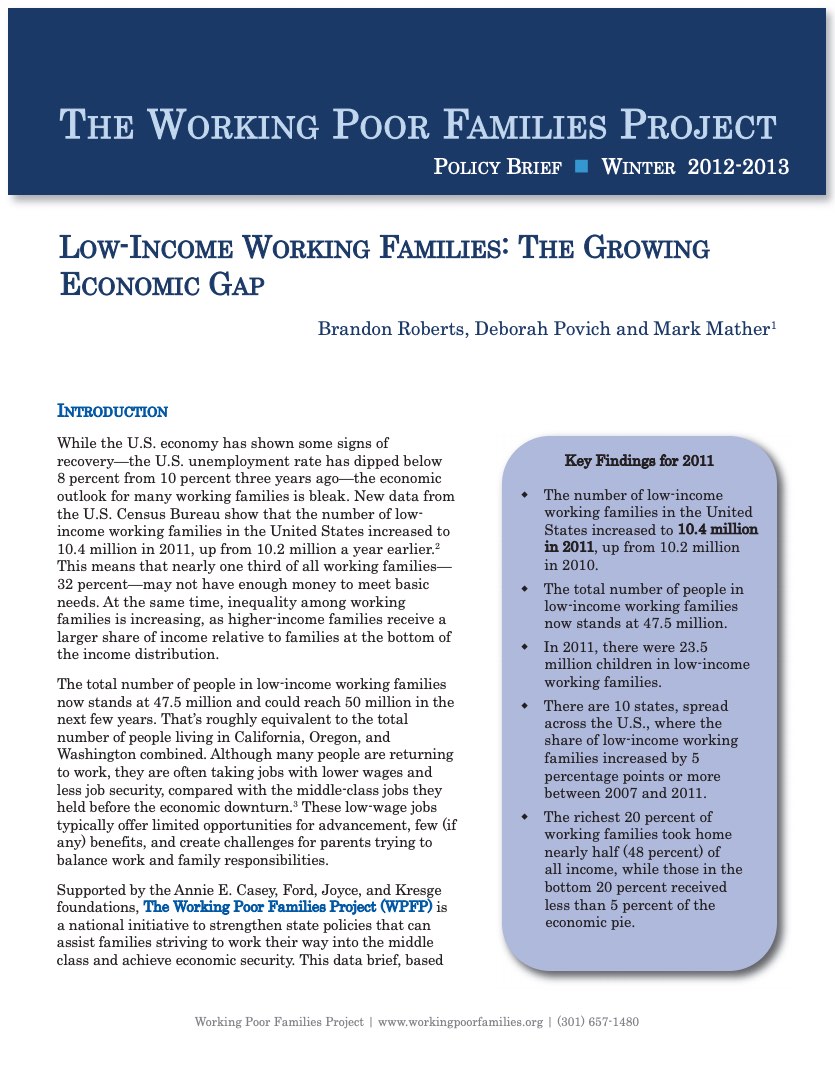
Project: Working Poor Families Project
(2013) Economic security is out of reach for a growing number of working families in the United States, according to a new analysis of 2011 data from the U.S. Census Bureau's American Community Survey. The number of low-income working families rose from 10.2 million in 2010 to 10.4 million in 2011, representing nearly one-third of all working families.
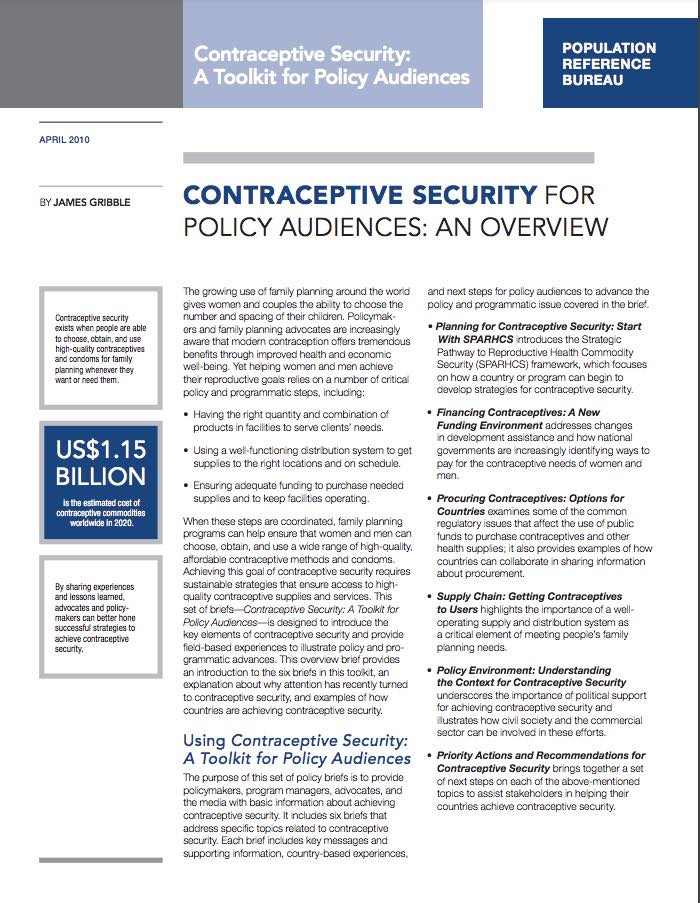
(2010) The growing use of family planning around the world gives women and couples the ability to choose the number and spacing of their children. Policymakers and family planning advocates are increasingly aware that modern contraception offers tremendous benefits through improved health and economic well-being.
(2010) This year's World Health Day (April 7) focuses on the importance of urban health. Urbanization is occurring so rapidly in some parts of the world that cities are not able to keep up with increased demand for environmental, health, and educational services, not to mention the employment, housing, and transportation needs of a population that may double in size in less than 25 years.