(2010) The growing use of family planning around the world gives women and couples the ability to choose the number and spacing of their children. Policymakers and family planning advocates are increasingly aware that modern contraception offers tremendous benefits through improved health and economic well-being.
(2007) Many developing countries possess abundant natural resources, but these resources can be threatened by population pressures and poverty, among other factors.
Invisible care work has become a collective issue, and the data confirms it: It's time to integrate into our vision of growth what actually keeps our societies going.
Dr. Foxen discusses the impact of the coronavirus pandemic on Latino communities, why life expectancy for Latinos is expected to drop by three years, and the challenges in collecting and tracking national and state COVID-19 data by race and ethnicity.
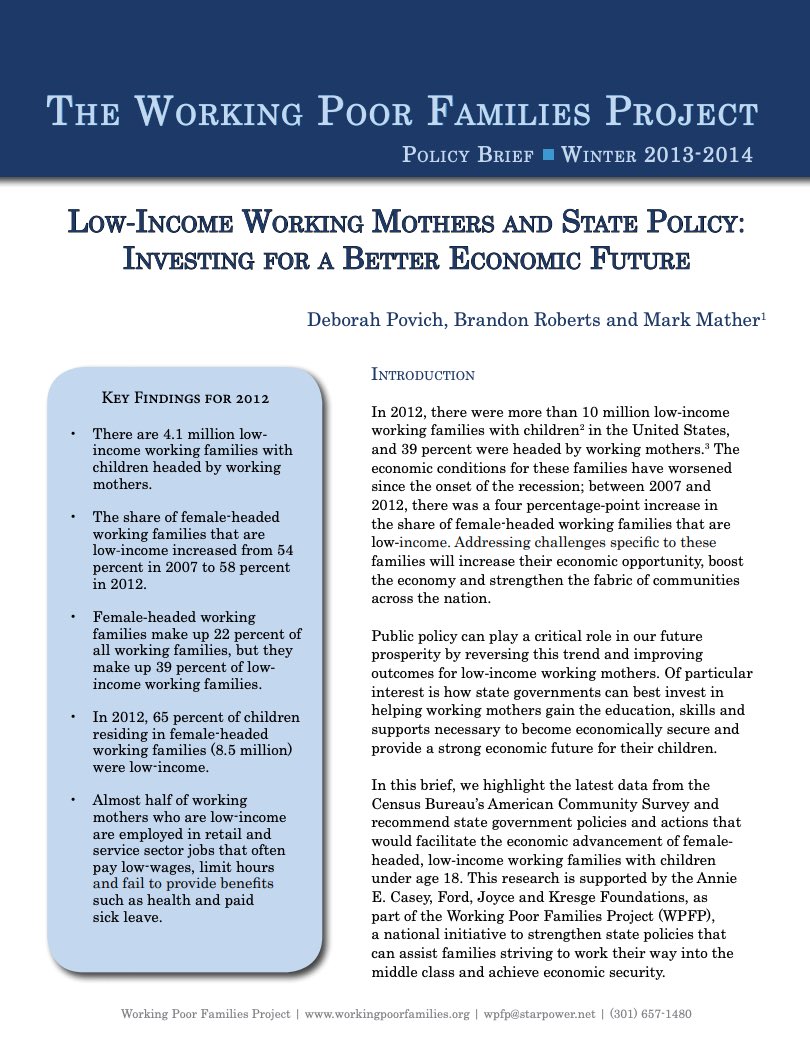
Policy Brief. Low-income Working Mothers And State Policy
U.S. working mothers have had a hard time in recent years: Between 2007 and 2012, the share of female-headed working families that are low-income increased from 54 percent to 58 percent, according to a Population Reference Bureau (PRB) analysis of data from the U.S. Census Bureau's American Community Survey.