
Changing the Face of Investigative Journalism in Bangladesh
Jesmin Papri, alumna of the PACE Women’s Edition program, discusses the successes, challenges, and opportunities of her work as a female reporter.
What motivated you to become a journalist?
I’ve always wanted to be the voice of the common people and to be by their side. Journalism is a means of easily conveying the message of the common people to policymakers. That is why I chose this profession—it gives me the opportunity to seek accountability from policymakers as a representative of ordinary people.
What is the most challenging part of being a journalist in Bangladesh?
Any profession in Bangladesh is challenging for women but being a woman journalist is even more challenging. With the exception of a handful of media houses in Bangladesh, women face problems with salary structure, working environment, and opportunities. Investigative work on any issue brings added difficulties for women because we usually work on entertainment or soft issues.
How did you become aware of your story?
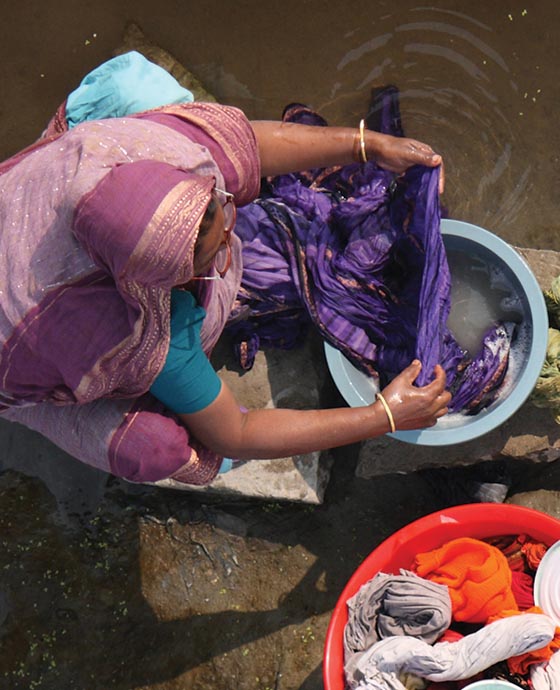
Several years after Cyclone Aila hit, I went to Satkhira, one of the southern districts of Bangladesh, for follow-up reporting. While talking to the women there, I learned that many were suffering from various diseases related to the uterus and were also cutting their uteruses at an early age. At first, I thought it was caused by physical illness, but after encountering a few such case studies in the same village, the issue raised doubts and questions in my mind. I shared my observations at a workshop on climate change hosted by the Management and Resources Development Initiative (MRDI). Later on, MRDI supported me in working on the issue.
What did it take to report your story?
I talked to women from at least 10 villages in the Satkhira district and analyzed data from several hospitals and private clinics. I also got information from remote villages where the communications system was so bad, I had to walk long distances.
Talking to the women about this sensitive issue was a big challenge and collecting information from hospitals was also not so easy. On some occasions, I had to take my two-year old twin girls with me—that was quite a challenge for them too.
Has anything changed as a result of your reporting?
I have received a lot of feedback from various quarters, including policymakers who said they will ensure there is safe water in the coastal areas. Many of my colleagues have also expressed interest in reporting further on this issue.
What did you gain from participating in the Women’s Edition program?
It was very productive, and I learned a lot from participants and resource persons from various countries. I learned about journalism culture and challenges facing reporters in other South Asian countries, which helped me to evaluate the scenario in my country. I also learned about the working experiences of fellow journalists, the nature of their assignments, and aspects of reporting and report writing. The most impactful part was learning how to overcome professional hurdles to produce quality work.
How has your career changed since you participated in the Women’s Edition?
This training had a positive impact on my career. Having international training has improved my skills and knowledge, as well as the quality of my reporting and how I work. Consequently, my office has relied on me and given me major assignments; this has enriched my CV.
What is your advice for other women journalists, particularly those interested in investigative reporting?
Just as women in Bangladesh face impediments at home and in the office, they encounter similar barriers in investigative journalism. Journalism requires you to be persistent and investigative journalism is highly challenging and time consuming. The lack of cooperation from authorities makes investigative journalism even tougher. So, essential groundwork must be done before going into the field to prepare for the challenges you may face. You have to stick to your goal.
What inspires you to continue your work?
Opportunities for journalism in Bangladesh are much better now and many media organizations have come forward with technical support for journalism. The impact of my work inspires me to do better. Feedback that victims have especially benefited from my reporting brings me peace in my mind. My family has been encouraging and inspires me all the time.
What are stories you hope to cover in the future?
Opportunities for journalism in Bangladesh are much better now and many media organizations have come forward with technical support for journalism. The impact of my work inspires me to do better. Feedback that victims have especially benefited from my reporting brings me peace in my mind. My family has been encouraging and inspires me all the time.
Related Posts
Understanding and Comparing Population Projections in Sub-Saharan Africa
The release of a new set of population projections by the Institute for Health Metrics and Evaluation (IHME) in July 2020 was greeted with extensive coverage in the media and stimulated fresh debate among demographers about calculation and communication of projections.