Addressing Cross-Generational Sex: A Desk Review of Research and Programs
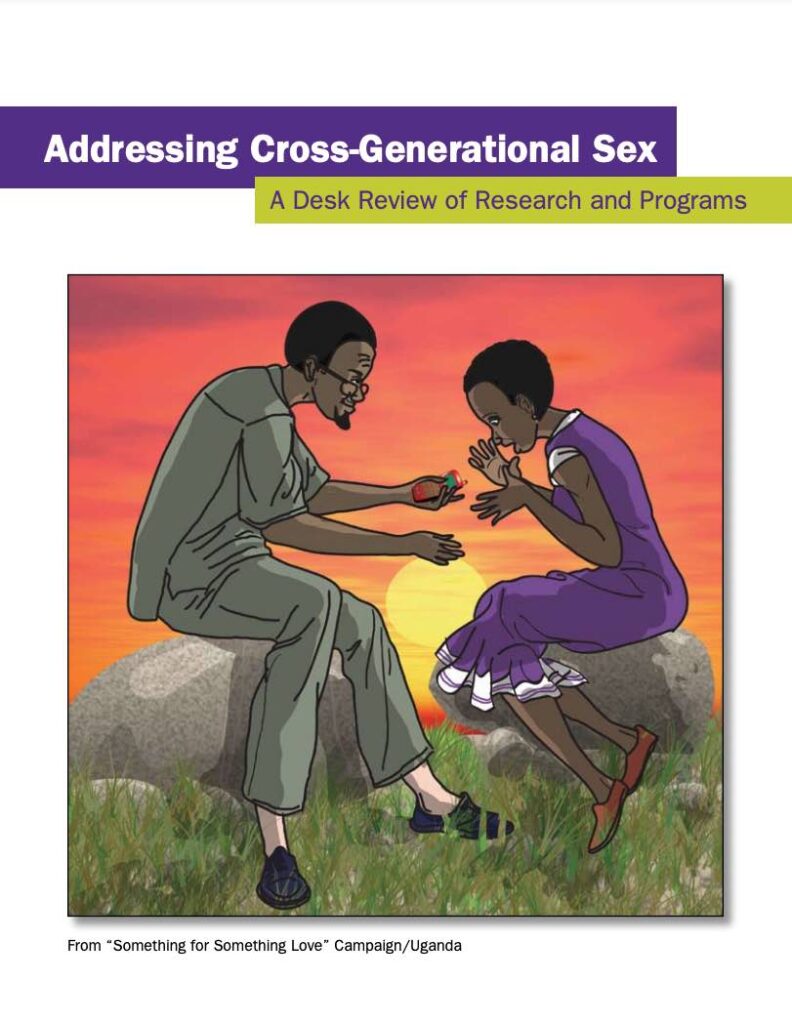
(August 2007) This publication, produced by the IGWG and the Interagency Youth Working Group (IYWG), presents definitions and prevalence of cross-generational sex, explores interventions and promising practices aimed at reducing risks associated with cross-generational sex outside of marriage, and makes recommendations for next steps.
Current interest in cross-generational sex is largely due to the feminization of the HIV and AIDS epidemic. The purpose of this review of cross-generational sex outside marriage, which was commissioned by USAID’s Bureau for Global Health, is to inform USAID staff on the range of programmatic approaches available to prevent or reduce cross-generational sex.
Cross-generational sex generally refers to relationships between older men and younger women, although some cross-generation relationships include older women and younger men. In the first type of relationship, young women are usually below age 20 and their male partners at least 10 years older. However, risk of infection with HIV increases with the age of the partner, and published papers provide comparative data on higher HIV prevalence in young women whose partner is five or more years older compared with young women whose partner is less than five years older.
The methodology comprised an analysis of the literature—both published and “gray literature” from nongovernmental organizations (NGOs)—and key informant interviews. The two aspects of the methodology were undertaken concurrently with the literature review identifying key informants and key informants providing further literature.
Related Posts
Why Americans Are Delaying Parenthood
Four studies offer new insights on the decision to have kids in a low birth rate era.

Power and Partnership: Supporting Youth Through the PACE Project
PACE’s approach to listening to and meaningfully supporting youth partners’ goals has developed into an intentional model.

Adolescents and Youth Are Key to Fully Achieving Universal Health Coverage
In 2021, adolescents and youth between ages 10 and 24 are estimated to make up approximately 24% of the world’s population.