
Prevention Science in Adolescent Health
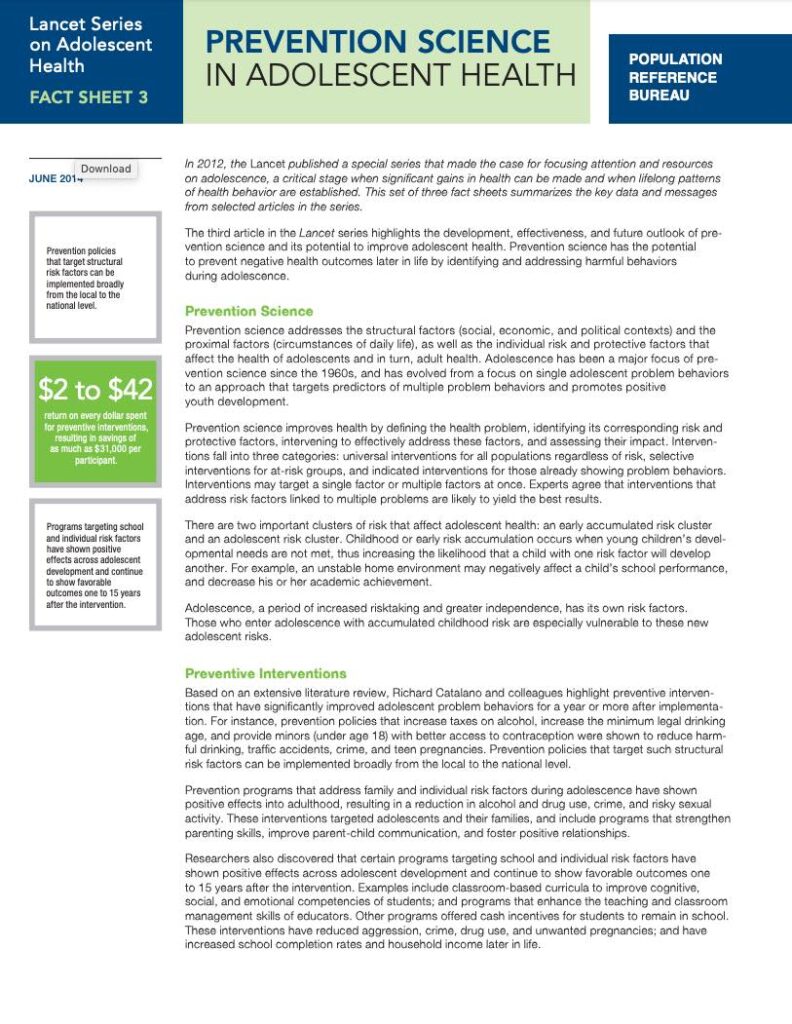
(July 2014) In 2012, the Lancet published a special issue on adolescent health to address some of these gaps and to call for greater attention and commitment to adolescent health. Together, the articles in this issue offer a cohesive approach to understanding and improving adolescent health within the larger context of global health.
To help expand the reach of this series, the Population Reference Bureau has developed three fact sheets outlining the key messages and information from selected articles.
Fact Sheet 3, Prevention Science in Adolescent Health, explains prevention science and how it applies to adolescent health. Adolescence has been a major focus of prevention science research and practice for over four decades. This fact sheet, based on a comprehensive analysis by Richard Catalano and colleagues, highlights some of the most promising preventive interventions to improve and protect adolescent health. Barriers to the application and expansion of prevention science in adolescent health are also described.
Jessica Kali, a policy analyst in International Programs at PRB, prepared this fact sheet.
Related Posts
Why Americans Are Delaying Parenthood
Four studies offer new insights on the decision to have kids in a low birth rate era.

Power and Partnership: Supporting Youth Through the PACE Project
PACE’s approach to listening to and meaningfully supporting youth partners’ goals has developed into an intentional model.

Adolescents and Youth Are Key to Fully Achieving Universal Health Coverage
In 2021, adolescents and youth between ages 10 and 24 are estimated to make up approximately 24% of the world’s population.