
Research-to-Action: Reducing Post-Harvest Loss Among Low-Income Farmers in India
In India, 60% of food is lost or wasted between the field and the end-consumer. The wastage is concentrated among a few crops, with fruits, vegetables and cereals being especially vulnerable. One of the biggest challenges facing farmers is the lack of affordable on-farm cold storage for their produce.
To address this issue, a team from the Indian Agricultural Research Institute (IARI) has designed and evaluated an off-grid, clean energy cooling system for low-income farmers. Research Technical Assistance Center (RTAC) team member Dr. Marlene Lee recently led a virtual Research-to-Action workshop to guide the IARI team in promoting the use of its research among key stakeholders. The IARI team, led by Dr. Sangeeta Chopra, Dr. Indra Mani and consultant Dr. Randy Beaudry, was selected by USAID to receive specialized assistance and its research was funded through USAID’s Partnerships for Enhanced Engagement in Research (PEER) project.
For the first time, the Research-to-Action workshop was conducted virtually because of travel restrictions caused by the COVID-19 pandemic. Over the course of seven weeks (July 23-Sept 11, 2020), RTAC facilitators, including consultants Dr. Fariyal Fikree (U.S.) and Devahuti Choudhury (India), led the IARI research team and its U.S. partner from Michigan State University through presentations, interactive exercises, and discussions via Zoom. The researchers also did follow-up work between sessions.
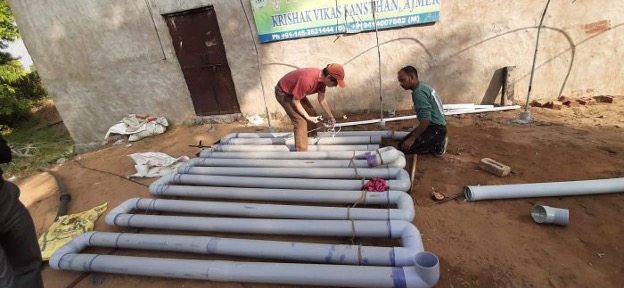
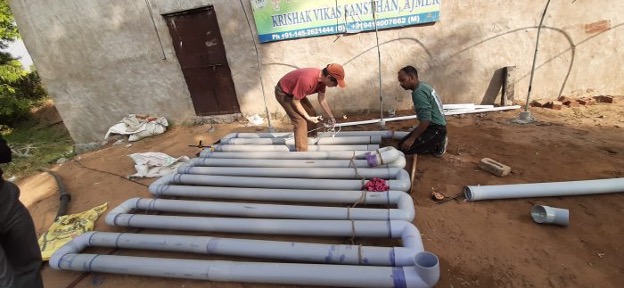
The IARI team had previously conducted research and built two prototype cooling structures in Haryana and Rajasthan (states in northern India) that do not require electricity. As part of the RTAC-led workshop, the research team set research-to-action goals, focusing on stakeholders at the national and subnational levels. They identified factors that influenced research utilization and designed and conducted interviews with stakeholder groups to better understand the perspectives of farmers and policymakers. Given the COVID-19 restrictions, the interviews were conducted via phone and Skype.
Looking ahead, the team has identified clear steps for putting this research into action, including providing recommendations for the 2020 revision of the Operational Guidelines for Mission for Integrated Development of Horticulture, establishing criteria to help farmers secure funding from the Agriculture Infrastructure Fund to build the on-farm cold storage structures, and developing the skills of local workers to build the structure and establish themselves as contractors.
To help ensure influential decisionmakers act on this research, the team plans to disseminate a policy paper, engage with policymakers in one-on-one meetings and conduct frontline demonstrations for farmers. To gain broader engagement, the team will also share the research at global and national conferences, through its website, YouTube, and other digital channels, and on radio and television programs in India.
Related Posts
Understanding and Comparing Population Projections in Sub-Saharan Africa
The release of a new set of population projections by the Institute for Health Metrics and Evaluation (IHME) in July 2020 was greeted with extensive coverage in the media and stimulated fresh debate among demographers about calculation and communication of projections.