
U.S. Births Increased in 2021. But Don't Call It a Comeback.
Editor’s Note: Read the author’s interview with CNN about this topic here.
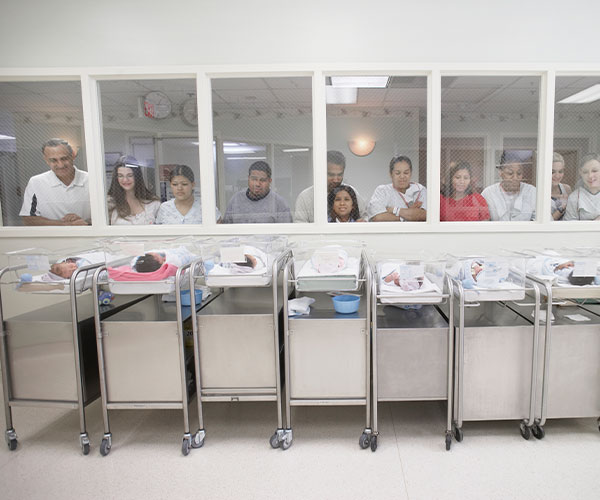
Preliminary data from the National Center for Health Statistics show that the number of births in the United States rose in 2021 to just under 3.66 million, after falling to 3.61 million in 2020. While it might be tempting to call this increase—representing nearly 46,000 births—a rebound, we’ll need to see another year of growth before we can call it a comeback.
2020, marked by the advent of the COVID-19 pandemic, saw the largest one-year dip in births in more than a quarter-century. And the preliminary 2021 figure, while an improvement from 2020, is still lower than 2019’s 3.75 million births.
What Might Have Caused a Birth Bump?
In general, people tend to have fewer children during recessions, and birth rates often bounce back when the economy does. But while the economy recovered quickly in 2021, the unemployment rate did not fall below 6% until May. A baby conceived in or after May 2021 would not be born until 2022 (barring preterm birth), so a healthier economy is an unlikely explanation for last year’s modest bump. However, economic stimulus payments and other expanded safety net programs may have helped people feel secure enough to have a child.
The pandemic also disrupted reproductive health care for millions of women. Some clinics closed. Some people didn’t have time—given new child-care responsibilities due to shuttered schools—to go to appointments. Others lacked broadband internet access for telehealth appointments. Could the 2021 birth increase reflect these disruptions? According to researchers, in January 2021, more than 1 in 5 women said they would have been using a different method of birth control if not for the pandemic.
In addition, women with social and economic disadvantages faced even more barriers to contraceptive care. New research suggests that, combined with hindered access to abortions, limited contraceptive access might have led to higher birth rates among women with lower incomes.
What Else Do the 2021 Data Tell Us?
One other important, but perhaps less noticed, trend in the 2021 data is that the preterm birth rate is the highest it’s been since at least 2007 (as far back as we can go with comparable data). We know that maternal stress and COVID-19 can increase the risk of preterm birth, so it is possible that the high preterm birth rate in 2021 is at least partly related to the pandemic.
Related Posts
Understanding and Comparing Population Projections in Sub-Saharan Africa
The release of a new set of population projections by the Institute for Health Metrics and Evaluation (IHME) in July 2020 was greeted with extensive coverage in the media and stimulated fresh debate among demographers about calculation and communication of projections.