
U.S. Fertility Rates Higher Among Minorities
(January 2003) In 2001 there were about 4 million births in the United States and a total fertility rate (TFR) of 2.1 births per woman. Minorities contributed 42 percent of all births, although they made up only 31 percent of the population. One reason minorities accounted for a disproportionate share of births is that a larger proportion of minority women are in their childbearing ages, but minority women also have more children than non-Hispanic white women on average. In 2001, non-Hispanic whites had an average of 1.9 births per woman, compared with 2.0 births among Asian Americans, 2.1 births among American Indians, 2.2 births among non-Hispanic blacks, and 3.2 births among Hispanics. With an average of more than three births per woman, the 2001 total fertility rate among Hispanics rivaled that of the U.S. population in the early 1960s during the tail end of the baby boom.
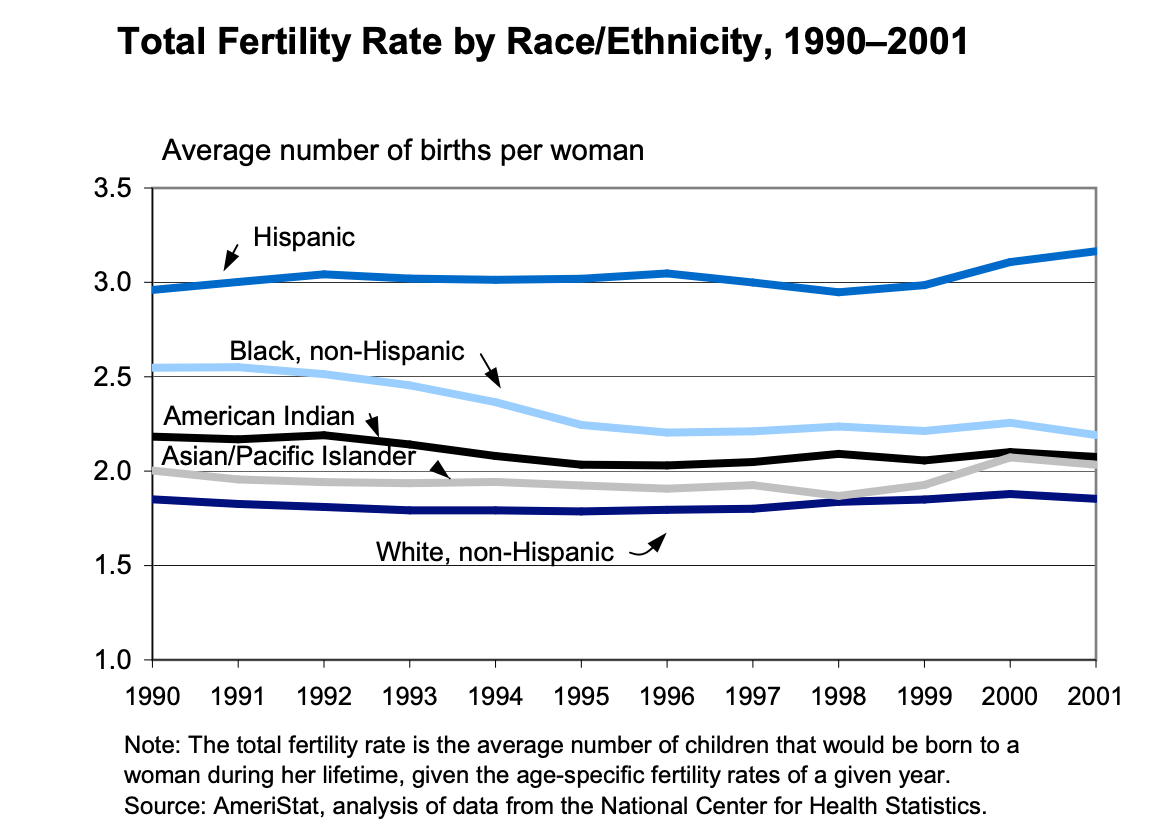 Blacks are the only group who experienced a substantial decline in fertility rates during the past decade, with a drop in the TFR from 2.5 in 1990 to 2.2 in 2001. Since 1993, the absolute number of Hispanic births has exceeded the births to black women, a trend that is likely to continue as the Hispanic population grows.
References
J.A. Martin et al., “Births: Final Data for 2001,” National Vital Statistics Report 51, no. 2 (2001); and S.J. Ventura et al., “Births: Final Data for 1997,” National Vital Statistics Report 47, no. 18 (1999).
Related Posts
Census Issues, Impact of Dobbs Decision, and Population Aging Among Highlights of 2024 Population Association of America Conference
PRB staff offer summaries of new research and insightful sessions at the annual demography meeting.

How Accurate Was the 2020 Census—and Why Should You Care?
Significant undercounts in the 2020 Census could have serious consequences for underrepresented groups and individual states.
How Will We Measure the Accuracy of the 2020 Census?
Getting an accurate 2020 Census count is important because census numbers impact daily life in the United States in many ways.

Why Are They Asking That? What Everyone Needs to Know About 2020 Census Questions
By law, the U.S. government is required to count the number of people living in the United States every 10 years.