
Urban Population to Become the New Majority Worldwide
(July 2007) For the first time, more than half the world’s population will be living in cities and towns by next year, according to the State of World Population 2007 report from the United Nations. Less developed regions will hit the half-way point later, but likely before 2020. The urban percentage of the world’s population is projected to reach 60 percent by 2030 (see figure). The urban share is likely to rise from 75 percent to 81 percent in more developed countries between 2007 and 2030, and from 44 percent to 56 percent in less developed countries.
Percent Urban, 2007, 2015, and 2030
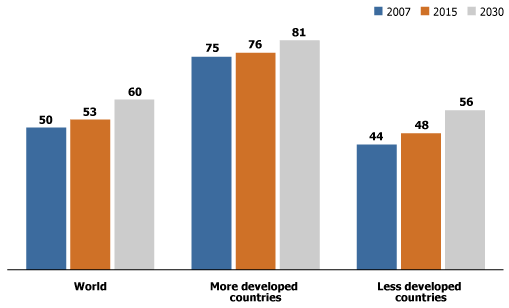
Source: United Nations Population Fund, State of World Population 2007; and United Nations Population Division, World Urbanization Prospects: The 2005 Revision (2006).
The 3.3 billion global urban population is expected to grow to 4.9 billion by 2030.
Growth in smaller cities and towns is expected to account for most of the urban population increase. Urbanized areas in Africa and Asia are forecast to grow most rapidly, doubling in population between 2000 and 2030, according to the UN Population Fund, which released the report.
Rural populations, meanwhile, are forecast to decrease by 28 million between 2005 and 2030, because of mortality among the older rural residents and migration of many younger residents to urban areas.
References
United Nations Population Division, World Urbanization Prospects: The 2005 Revision (2006), accessed online at www.un.org, on July 16, 20007.
United Nations Population Fund, State of World Population 2007: Unleashing the Potential of Urban Growth, accessed online at www.unfpa.org, on July 16, 2007.
Related Posts
Understanding and Comparing Population Projections in Sub-Saharan Africa
The release of a new set of population projections by the Institute for Health Metrics and Evaluation (IHME) in July 2020 was greeted with extensive coverage in the media and stimulated fresh debate among demographers about calculation and communication of projections.