
When Births Fall, Readiness Can't
Experiences from rural Maine and South Korea show why falling birth rates don’t eliminate the need for emergency-ready maternal and newborn care
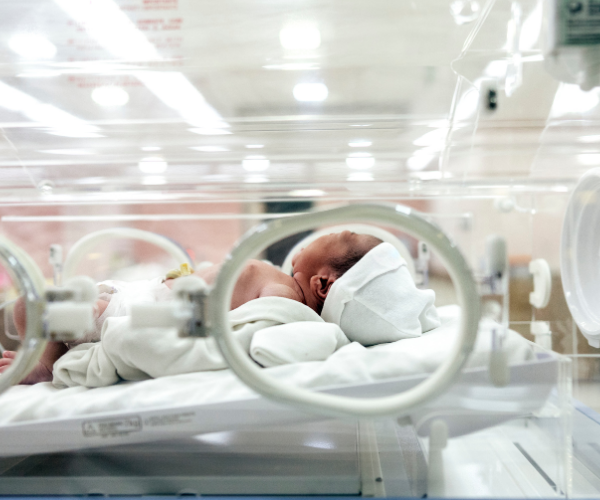
In over half of all countries, fertility now sits below the replacement rate of 2.1 births per woman. This shift is changing the environment for maternal and newborn care, raising questions about how systems built for growth should adapt. Falling patient volume collides with workforce shortages, financial pressures, and geographic constraints, even as the need for routine, emergency, and highly specialized care doesn’t fall in proportion to birth rates.
Recent reporting has brought attention to this challenge in two very different settings. In rural Maine, The Maine Monitor—and later, This American Life—told the story of a woman who faced an obstetric emergency less than a month after her local hospital stopped delivering babies. In South Korea, The New York Times reported on gaps in access to intensive care for newborns amid an acute shortage of neonatal specialists. The cases differ in scale, geography, and specialty, but both raise a broader question: How should maternal and newborn health systems adapt as the populations they serve change?
Houlton, Maine: One Emergency, One Month Later
In May 2025, Houlton Regional Hospital in rural northern Maine closed its labor and delivery unit. Twenty-nine days later, a woman with an otherwise low-risk pregnancy experienced a prolapsed umbilical cord—a rare emergency that can quickly threaten a baby’s life. The nearest hospital still providing routine deliveries was 45 miles away.
Because the unit had closed so recently, key clinical staff—including an obstetrician and former labor and delivery nurse—were still available, and the hospital was able to perform an emergency C-section. Both mother and baby survived.
The closure occurred as births dropped and health-system pressures mounted. Aroostook County recorded 585 births in 2024, down 15% from 2015, while its total population fell about 3% over the same period. Houlton Regional Hospital’s own delivery volume also decreased in more recent years, from 115 births in 2020 to 83 in 2024. Amid these demographic shifts, hospital leaders spoke of difficulty recruiting experienced staff and growing financial pressures.
Houlton is part of a broader contraction in obstetric care. In Maine, 11 of the state’s 28 birthing units closed between 2014 and 2025. Nationally, a 2025 study found that the share of rural hospitals without obstetric services grew from 43% in 2010 to 52% in 2022.
But declining demand for routine deliveries does not erase the need for emergency response. A national survey of rural hospitals without obstetric units found that 28% had handled a birth in their emergency department in the previous year, and most reported needing additional training or resources to manage obstetric emergencies. Houlton shows the resulting problem: Volume can fall enough to make a full labor and delivery unit hard to sustain, even as emergencies still require readiness.
South Korea: Declining Births, Enduring Need for Specialty Care
South Korea presents this challenge at a national scale and for more specialized care. Annual births fell from approximately 640,000 in 2000 to 238,300 in 2024, a decline of over 60%, and the average number of births per women went from 1.5 to 0.7. Over a similar period, the number of maternity health facilities fell 60%, dropping below 550 by 2019.
An August 2026 New York Times story described what happened when a newborn in Jeonju began turning blue shortly after birth at a small clinic. Staff believed a nearby NICU lacked a specialist following a recent resignation, while a second NICU had no available beds. The baby was transported about 30 minutes to a third hospital but died before receiving the necessary care. The clinic later learned that a specialist had, in fact, been on duty at the first NICU. The tragedy highlighted problems of coordination and real-time information exchange alongside shortages in neonatal capacity.
The difficulty finding appropriate care in Jeonju occurred within a health system facing shortages of neonatal specialists, particularly outside greater Seoul. Some hospitals outside the capital have only one specialist caring for more than 30 babies at once. According to the Times, South Korea currently has 77 NICUs staffed by about 240 specialists nationwide. The number of medical residents working in NICUs has also fallen 94% in recent years, according to government data cited by the Times. Neonatologists point to long hours, low pay, and insufficient support among the factors making the specialty difficult to sustain.
Access to neonatal intensive care also varies geographically. A 2022 study identified 10 of 39 perinatal care regions where more than 30% of residents could not reach a NICU or maternal-fetal intensive care unit within an hour.
At the same time, fewer births haven’t meant less need for intensive newborn care; in fact, Korean researchers have documented an increase in high-risk neonates. The share of preterm births increased from 2.5% in 1995 to 7.2% in 2016, while low-birthweight births rose from 2.6% in 1993 to 5.9% in 2016.
South Korea’s response to low fertility adds another dimension. Over the past two decades, the government has invested the equivalent of hundreds of billions of U.S. dollars on policies intended to raise fertility, yet it remains exceptionally low. This experience is consistent with PRB’s review of international efforts to increase fertility, which finds that such policies have generally produced modest effects and can endanger reproductive rights and individual decision-making.
Neonatal specialists have argued that efforts to encourage births have not been matched by sufficient attention to the infrastructure and workforce needed to care for the babies who are born. South Korea therefore illustrates a broader planning dilemma: Even as governments pursue policies intended to increase future birth rates, health systems must plan for the demographic reality they face now and are likely to face in the years ahead.
Volume Falls, Minimums Don’t
Houlton and South Korea point to the same underlying constraint: Essential capabilities depend on clinicians, equipment, and systems that must be available even when used infrequently, so falling volume can strain capacity without reducing the need for it.
This problem is not unique to systems where maternity care is largely delivered by private providers. Finland’s public healthcare system has also consolidated maternity services as births have decreased, reducing the number of maternity hospitals from 42 to 22 over two decades and centralizing very preterm births in hospitals with the required expertise. Alongside this shift, survival among live-born very preterm infants rose from 72% in 1987 to 90% in 2017, though improvements in neonatal care also contributed.
But Finland’s experience does not suggest that lower-volume units should simply close. A 2025 nationwide study found no clear association between delivery-unit volume and neonatal mortality, while modeling of further consolidation found that it could increase patient travel times and delay care, particularly in sparsely populated areas.
Finland therefore illustrates that the real question is not simply whether to preserve or consolidate services, but which services benefit from concentration, which capabilities must remain accessible, and how safe access can be maintained as care is reorganized.
Measuring Access as Care Changes
Facility counts alone cannot show whether adaptation is working. Closing a maternity unit may not harm access if alternatives are close and able to handle more cases; conversely, an open NICU may not provide meaningful access if beds, specialists, or transfers are unavailable. Measuring access therefore requires assessing whether patients can reach the appropriate level of care when they need it.
TABLE. Potential Measures of Access and Possible Responses as Services Change
| wdt_ID | wdt_created_by | wdt_created_at | wdt_last_edited_by | wdt_last_edited_at | What to assess | Possible measures | Possible responses |
|---|---|---|---|---|---|---|---|
| 1 | rWojnar | 14/09/2026 07:13 PM | murdinola | 14/09/2026 08:18 PM | Geographic access | Travel time to routine maternity care and higher-level maternal and neonatal care | Transport and accompaniment services for people who live far from delivery facilities |
| 2 | rWojnar | 14/09/2026 07:13 PM | rWojnar | 14/09/2026 07:13 PM | Emergency access | Ability to stabilize and transfer obstetric or neonatal emergencies within clinically appropriate time frames | Emergency protocols, equipment, and staff competencies at hospitals that no longer provide routine deliveries; formalized emergency transport |
| 3 | rWojnar | 14/09/2026 07:13 PM | rWojnar | 14/09/2026 07:13 PM | Appropriate level of care | Share of high-risk births occurring at appropriately equipped facilities | Planned regionalization of high-risk births to facilities with specialized capacity |
| 4 | rWojnar | 14/09/2026 07:13 PM | rWojnar | 14/09/2026 07:13 PM | Specialist access | Availability and response time for obstetric and neonatal specialists | Telemedicine networks connecting local providers with specialists; regional specialist coverage |
These measures should also be examined across geographic areas and population groups to identify where reorganization creates or widens gaps.
The goal is not to deny demographic change by preserving every existing facility, nor to assume that declining volume makes a service unnecessary. At hand is whether systems can reorganize while preserving access, safety, and appropriate care.
Beyond Childbirth: Where the Pattern Repeats
Maternal and newborn care is one example of a broader challenge that can arise as populations contract. Similar tensions may affect schools and childcare, emergency and hospital care, services for older adults, and transportation—areas where declining demand can make some services harder to sustain without eliminating the need for reliable access.
As births decrease, health systems may need to consolidate some routine services while preserving the emergency readiness, specialist capacity, and transportation systems required for safe care. Demographic change can often be anticipated; the charge is to plan for it before essential care is lost.
Related Posts
Understanding and Comparing Population Projections in Sub-Saharan Africa
The release of a new set of population projections by the Institute for Health Metrics and Evaluation (IHME) in July 2020 was greeted with extensive coverage in the media and stimulated fresh debate among demographers about calculation and communication of projections.