
Scaling Up a Mobile Obstetric Triage and Referral System in Liberia
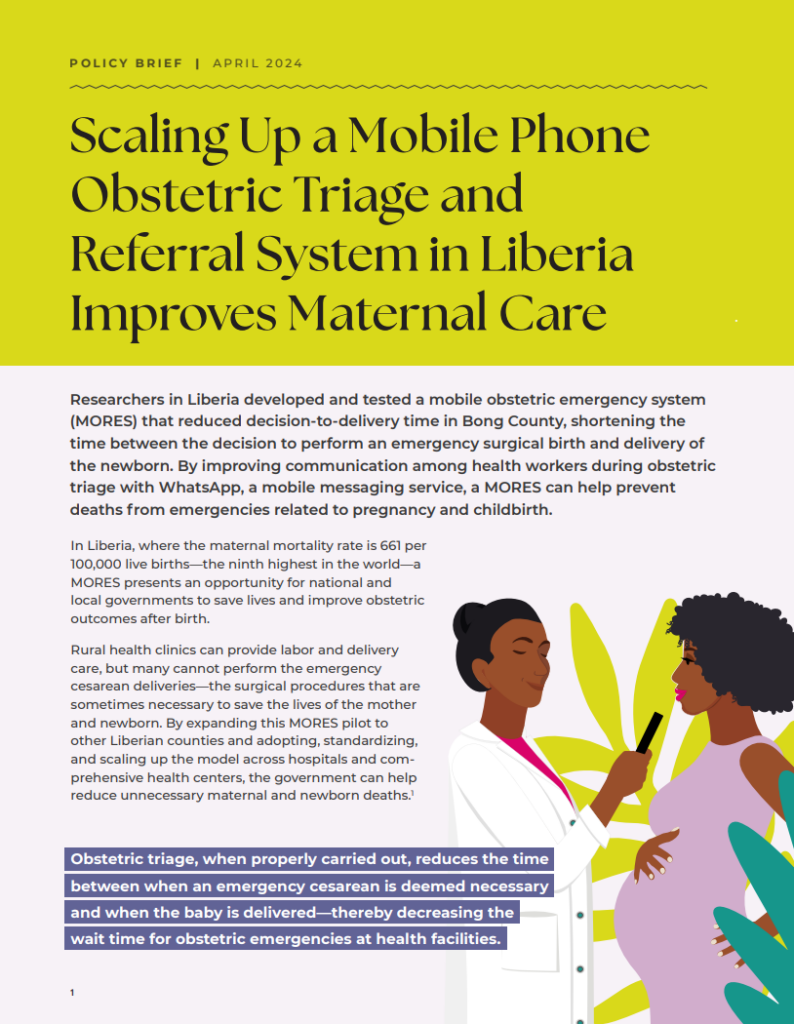
Researchers from the University of Liberia College of Health Sciences, in partnership with the University of Michigan School of Nursing and the Kwame Nkrumah University of Science and Technology, developed and tested a mobile obstetric emergency system (MORES) that reduced decision-to-delivery time in Bong County, Liberia, shortening the time between the decision to perform an emergency surgical birth and delivery of the newborn. By improving communication among health workers during obstetric triage with WhatsApp, a mobile messaging service, a MORES can help prevent deaths from emergencies related to pregnancy and childbirth.
This brief provides additional information on cesareans and triage and how better communication can be lifesaving for mothers and newborns. In addition to sharing details of the research and an example of closed-loop communication system at work, the brief provides two recommendations for the Liberian Ministry of Health to reduce decision-to-delivery times and improve perinatal outcomes, thereby saving lives.
Related Posts
Research Identifies New Strategies to Reduce Undercount of Young Children in U.S. 2020 Census
PRB identifies factors predicting where children under age 5 are more likely to be missed in the 2020 Census and develops a new undercount risk measure for young children.

Health Sector Reform: How It Affects Reproductive Health
(June 2003) Many less developed countries are reforming their health systems in an effort to achieve public health goals more affordably and effectively.
Report. Health Sector Reform: How It Affects Reproductive Health
This report also in French and Spanish. (June 2003) Many less developed countries are reforming their health systems in an effort to achieve public health goals more affordably and effectively.