
Who Cares for the Caregivers?
Policy changes could reduce the disproportionate burden of care work on American women, researchers said.
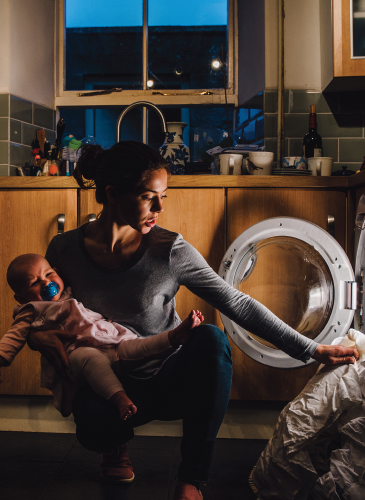
U.S. society and policy disproportionately burden women with unpaid (or underpaid) caregiving responsibilities. In her new book “Holding It Together: How Women Became America’s Safety Net,” author Jessica Calarco (University of Wisconsin-Madison) draws on five years of research to show how thinly stretched American women are.
In June 2024, PRB convened an expert panel to discuss Calarco’s key findings and their implications for reproductive health care policy and explore additional research on abortion, contraception, fertility, gender, and motherhood. Calarco was joined by Tiffany Green (University of Wisconsin-Madison), Karen Benjamin Guzzo (University of North Carolina at Chapel Hill), and Jocelyn Foye (The Womxn Project), and nearly 200 attendees.
Women in the United States are often the primary caregivers for children, older parents, and others, even when they have full-time jobs, and even when men could share in the care work. This gender gap in caregiving can have significant negative economic consequences for women, especially when that work is unpaid or underpaid. Coupled with complex and inaccessible social safety net programs, the caregiving burden can limit women’s career opportunities, reduce women’s earnings potential, and increase financial hardship for women and their families.
Systemic inequality and discrimination have taken a financial, physical, and emotional toll on marginalized groups, such as Black women, Indigenous women, Hispanic and Latina women, disabled women, and transgender women. For example, Dr. Green shared that the practice of birth cost recovery (also referred to as the “birth tax”) in Wisconsin disproportionately affects Black families and creates financial burdens for fathers, hindering their ability to participate in their children’s lives.
U.S. policies have historically burdened women with caregiving responsibilities and offered limited protections compared with other nations. When asked “What can be done?”, panelists offered suggestions based on their research:
- Invest in policies that provide adequate support for caregivers, including affordable childcare, paid family leave, and health care.
- Design policies and programs to address the specific needs of women of color, who often face additional barriers to economic opportunity and social mobility.
- Invest in women’s health, including reproductive health care, which can improve women’s well-being and reduce the burden of caregiving.
- Challenge traditional gender roles and expectations that place the primary burden of caregiving on women.
- Conduct additional research to better understand the experiences of caregivers and to inform policy decisions.
By addressing the systemic challenges faced by caregivers, we can create a more economically vibrant, equitable, and healthy society.
Related Posts
Family Planning and the Gendered Impacts of Crises on Women: An Effective Tool Across Sectors to Support Women’s Empowerment and Build Resilience to Shocks
Holistic integrated solutions are key to address the interlinkages of the gendered impacts of crises.
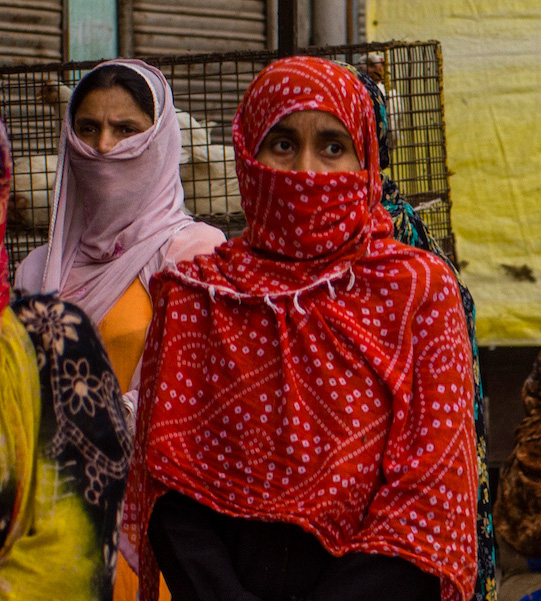
Research Identifies New Strategies to Reduce Undercount of Young Children in U.S. 2020 Census
PRB identifies factors predicting where children under age 5 are more likely to be missed in the 2020 Census and develops a new undercount risk measure for young children.

Health Sector Reform: How It Affects Reproductive Health
(June 2003) Many less developed countries are reforming their health systems in an effort to achieve public health goals more affordably and effectively.
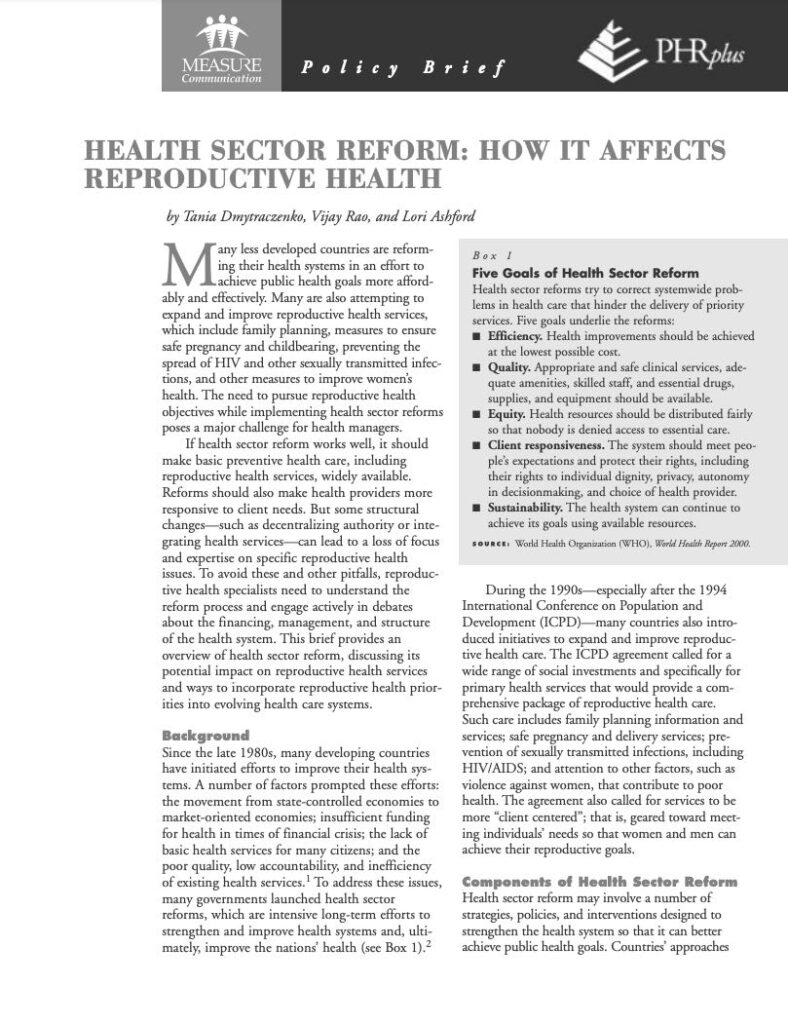
Report. Health Sector Reform: How It Affects Reproductive Health
This report also in French and Spanish. (June 2003) Many less developed countries are reforming their health systems in an effort to achieve public health goals more affordably and effectively.