
A Practical Guide to Population and Development
Throughout human history, the world’s population had grown slowly and by the beginning of the 20th century was only 1.6 billion people. Today, after only 110 years, the world’s population has surpassed 7.1 billion people.
During this time, the world has witnessed tremendous development—including innovations in health care, education, infrastructure, and technology—but more than 2 billion people still live in poverty and remain left out of this progress. The great challenge leaders of the world face today is to reduce poverty and inequity, and improve people’s lives without compromising the environment and the well-being of future generations.
At the same time, world population continues to increase by more than 80 million people a year, with most of the growth occurring in the world’s least developed countries. By 2050, according to the United Nation’s medium projection, the world’s population will increase to 9.6 billion people and will continue to grow through 2100. This continued growth has strong implications for health, well-being, and economic development. Leaders of nations everywhere must ask themselves: How does population growth affect national development and what must be done to manage the challenges of population growth?
The purpose of this guide is to answer those key questions, explore population growth and its factors and impacts, and identify some important investments policymakers and leaders can prioritize to foster development for their nations. The guide is structured as a series of critical questions about the links between population, fertility, development, economics, health, and the environment. Short illustrative examples of country experiences highlight the connections between population and development and the benefits of slower population growth for development. The guide identifies some of the investments that are needed in family planning; education; and infant, child, and adolescent health to benefit from the demographic transition.
Finally, the guide provides information about how to mobilize leaders to prioritize population and family planning for accelerated development. Through better understanding of the population-development connections as well as the right investments, leaders can ensure a better life for people today and future generations.
Related Posts
Webinar: Bridging Research and Policies: Enhancing Budgeting Processes for Africa's Demographic Dividend
PRB hosted a high-level webinar with budget experts, parliamentarians, and national directors to discuss the importance of the Demographic Dividend Sensitive Budgeting approach in enhancing budgeting processes across Africa.

Research Identifies New Strategies to Reduce Undercount of Young Children in U.S. 2020 Census
PRB identifies factors predicting where children under age 5 are more likely to be missed in the 2020 Census and develops a new undercount risk measure for young children.

Health Sector Reform: How It Affects Reproductive Health
(June 2003) Many less developed countries are reforming their health systems in an effort to achieve public health goals more affordably and effectively.
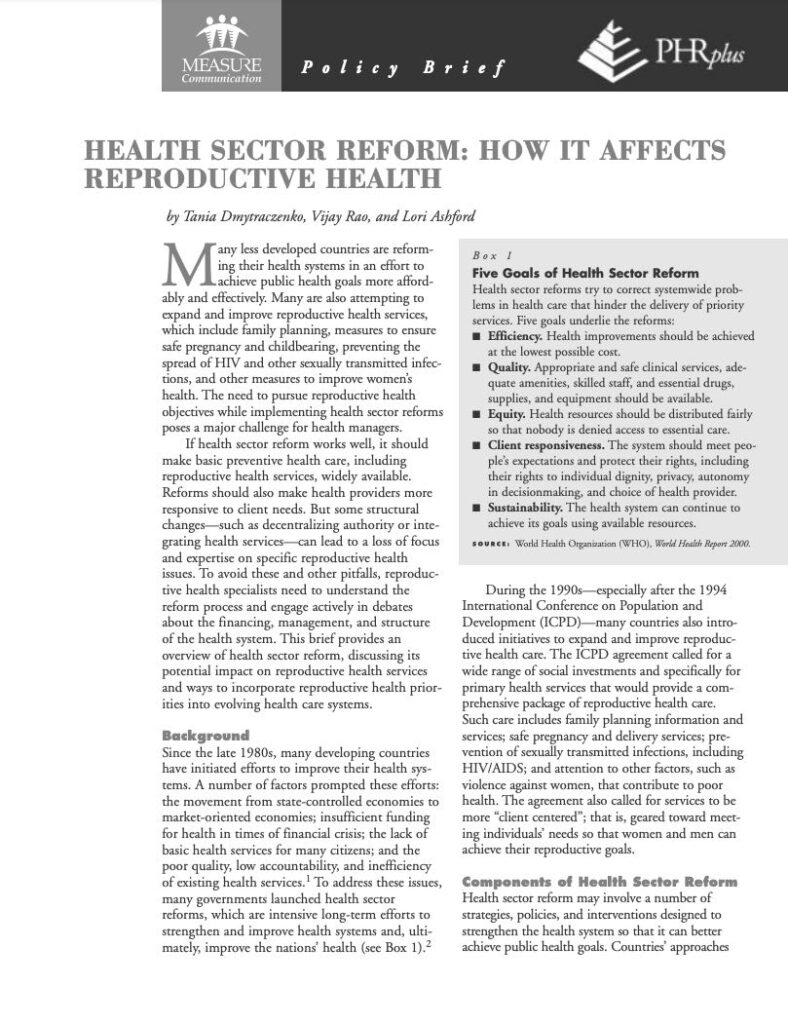
Report. Health Sector Reform: How It Affects Reproductive Health
This report also in French and Spanish. (June 2003) Many less developed countries are reforming their health systems in an effort to achieve public health goals more affordably and effectively.