406 Search Results Found For : " Ʊ׶ ó Ʈ ܡܡܡ٢ 3 }¦ڡ٥ڡ٦ ǰ ߱ġ عٶȿ ¶ ˸ó ¶ ɰó Ʈ󱸸 Ʈ ǰԻ̱Ʈ Ǹ Ʈ 100"


Did South Korea’s Population Policy Work Too Well?

(2010) Many developing countries adopted policies to slow population growth in the latter half of the 20th century in response to population growth rates that had risen to three or more times greater than those ever observed in industrialized countries.

View Details

Project: Center for Public Information on Population Research (CPIPR)

Webinar: Where Is the Workforce? Understanding the U.S. Labor Shortage and Working Toward Solutions

PRB, the Critical Labor Coalition, and special guest former U.S. Secretary of Labor R. Alexander Acosta discuss the latest data behind the shrinking U.S. workforce and explore potential policy solutions.

View Details

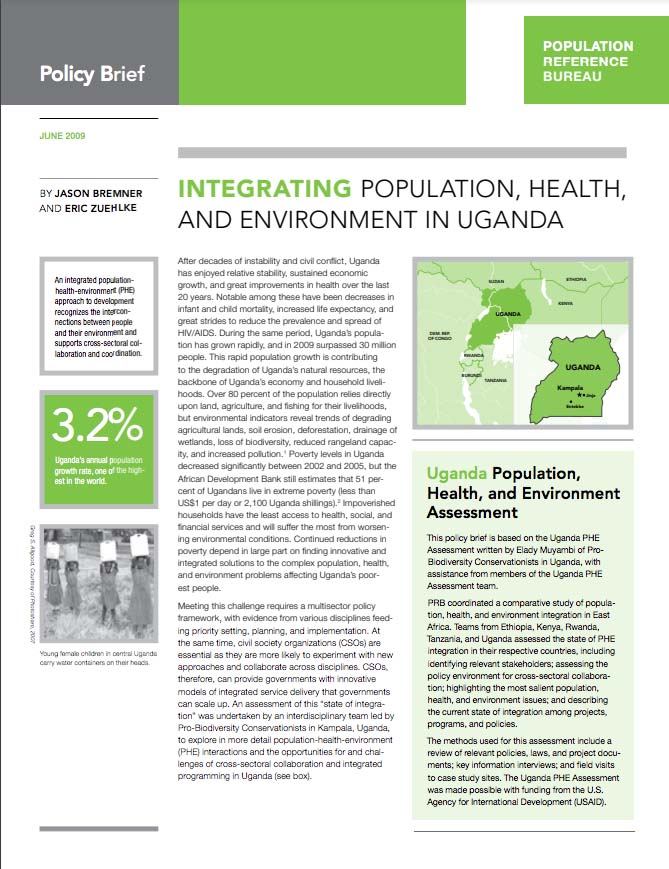
Policy Brief. Integrating Population, Health, and Environment in Uganda

(2009) After decades of instability and civil conflict, Uganda has enjoyed relative stability, sustained economic growth, and great improvements in health over the last 20 years.

View Details Array ( [ID] => 12953 [id] => 12953 [title] => 07132009-phe-uganda [filename] => 07132009-phe-uganda.pdf [filesize] => 442600 [url] => https://www.prb.org/wp-content/uploads/2021/01/07132009-phe-uganda.pdf [link] => https://www.prb.org/resources/integrating-population-health-and-environment-in-uganda/07132009-phe-uganda/ [alt] => [author] => 15 [description] => [caption] => [name] => 07132009-phe-uganda [status] => inherit [uploaded_to] => 12948 [date] => 2021-01-20 13:46:10 [modified] => 2021-01-20 13:46:10 [menu_order] => 0 [mime_type] => application/pdf [type] => application [subtype] => pdf [icon] => https://www.prb.org/wp-includes/images/media/document.png ) Download (0.4 MB)

Trends in Adolescent Fertility a Mixed Picture

(May 2013) The high rates of adolescent fertility have been a particular concern in many countries.

View Details

Project: Appalachia: Demographic and Socioeconomic Trends

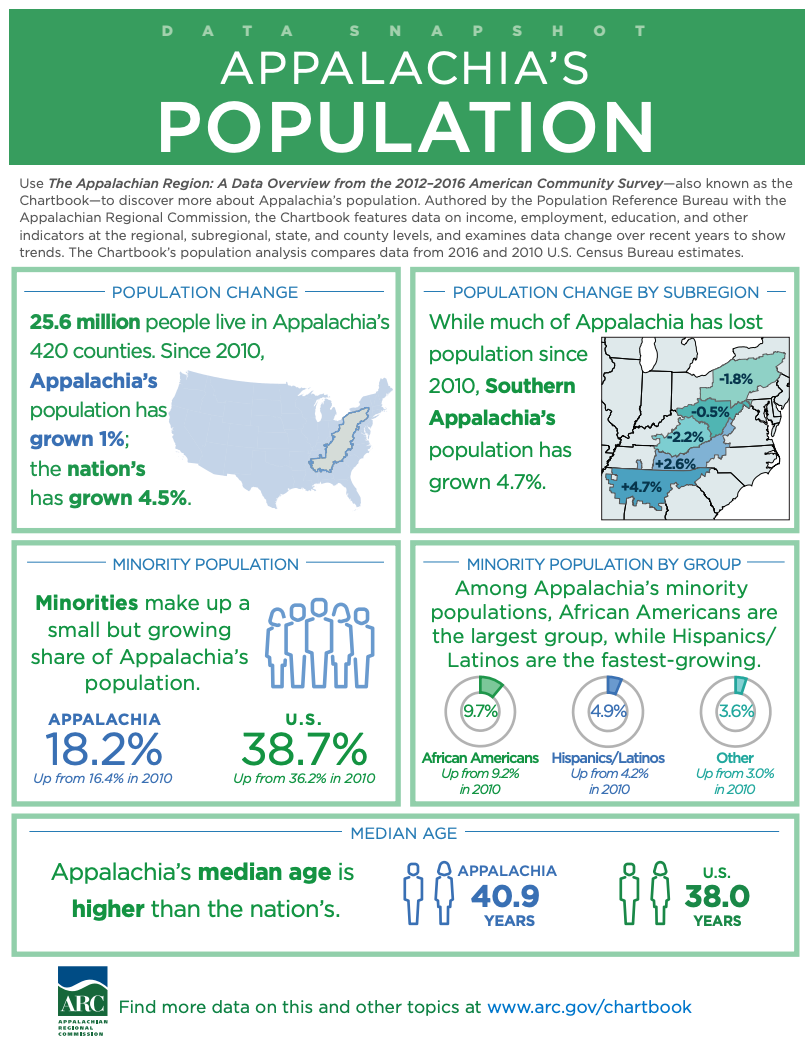
Data Snapshot. Appalachia’s Population (2012-2016)

(2018) Since 2010, Appalachia’s population has grown 1%; the nation’s has grown 4.5%. 25.6 million people live in Appalachia’s 420 counties.

View Details Array ( [ID] => 7112 [id] => 7112 [title] => ARC_Snapshot-AppalachiasPopulation [filename] => ARC_Snapshot-AppalachiasPopulation.pdf [filesize] => 661205 [url] => https://www.prb.org/wp-content/uploads/2018/04/ARC_Snapshot-AppalachiasPopulation.pdf [link] => https://www.prb.org/resources/appalachias-aging-population-more-residents-ages-65-fewer-ages-25-to-64-signals-challenges-ahead/arc_snapshot-appalachiaspopulation/ [alt] => [author] => 15 [description] => [caption] => [name] => arc_snapshot-appalachiaspopulation [status] => inherit [uploaded_to] => 7103 [date] => 2020-12-07 03:19:23 [modified] => 2020-12-07 03:19:23 [menu_order] => 0 [mime_type] => application/pdf [type] => application [subtype] => pdf [icon] => https://www.prb.org/wp-includes/images/media/document.png ) Download (0.6 MB)

New Fielding Methods and Innovations Are Planned for the 2020 Census

(2019) More than 300 million people live in the United States and getting an accurate count of each and every one of them is no easy feat. As the U.S. population has grown—from just under 4 million in 1790 to more than 329 million in 2019—the Census Bureau’s enumeration methods (how they count people) have evolved to adapt to new technologies, increase efficiency and accuracy, and help to control rising costs.

View Details

Project: IDEA: Informing Decisionmakers to Act

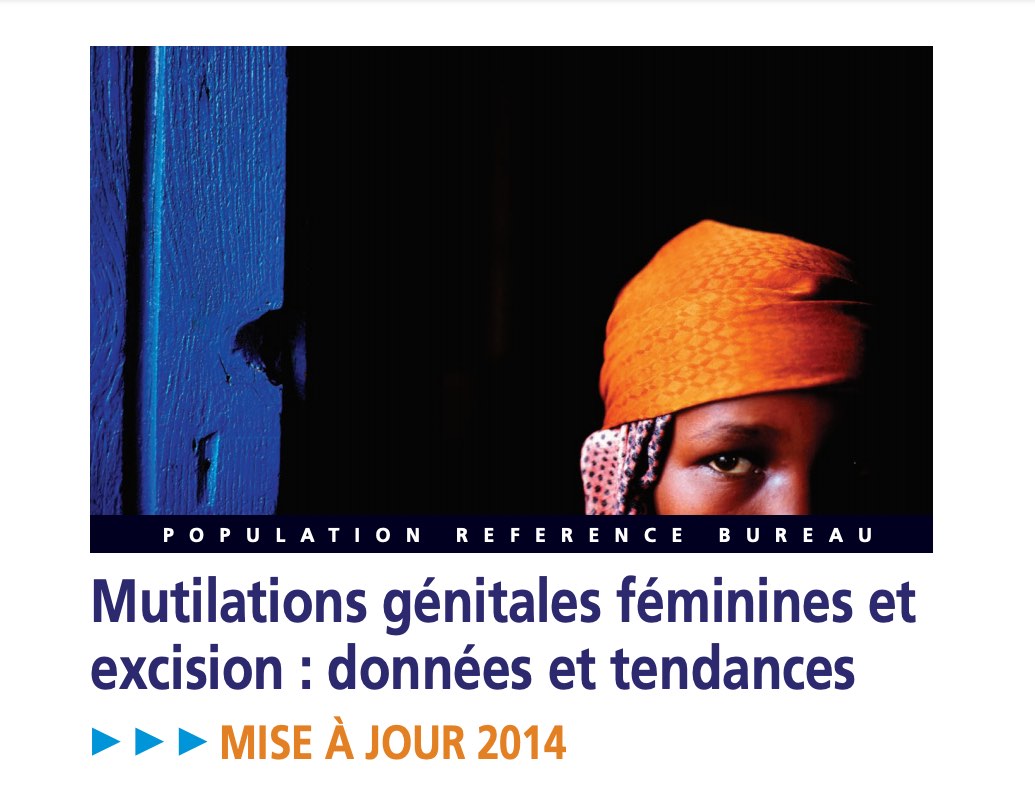
Mutilations génitales féminines et excision : données et tendances – mise à jour 2014

View Details Array ( [ID] => 17100 [id] => 17100 [title] => fgmc-wallchart2014-fr [filename] => fgmc-wallchart2014-fr.pdf [filesize] => 1451896 [url] => https://www.prb.org/wp-content/uploads/2014/07/fgmc-wallchart2014-fr.pdf [link] => https://www.prb.org/resources/mutilations-genitales-feminines-et-excision-donnees-et-tendances-mise-a-jour-2014/fgmc-wallchart2014-fr-2/ [alt] => [author] => 15 [description] => [caption] => [name] => fgmc-wallchart2014-fr-2 [status] => inherit [uploaded_to] => 17095 [date] => 2021-02-14 19:34:31 [modified] => 2021-02-14 19:34:31 [menu_order] => 0 [mime_type] => application/pdf [type] => application [subtype] => pdf [icon] => https://www.prb.org/wp-includes/images/media/document.png ) Download (1.4 MB)

Combien cela coûterait-il de couvrir les besoins en planification familiale dans les pays en développement ?

(2010) Quasiment 215 millions de femmes vivant dans des pays en voie de développement souhaiteraient éviter une grossesse mais n’utilisent pas de moyen de contraception efficace.

View Details