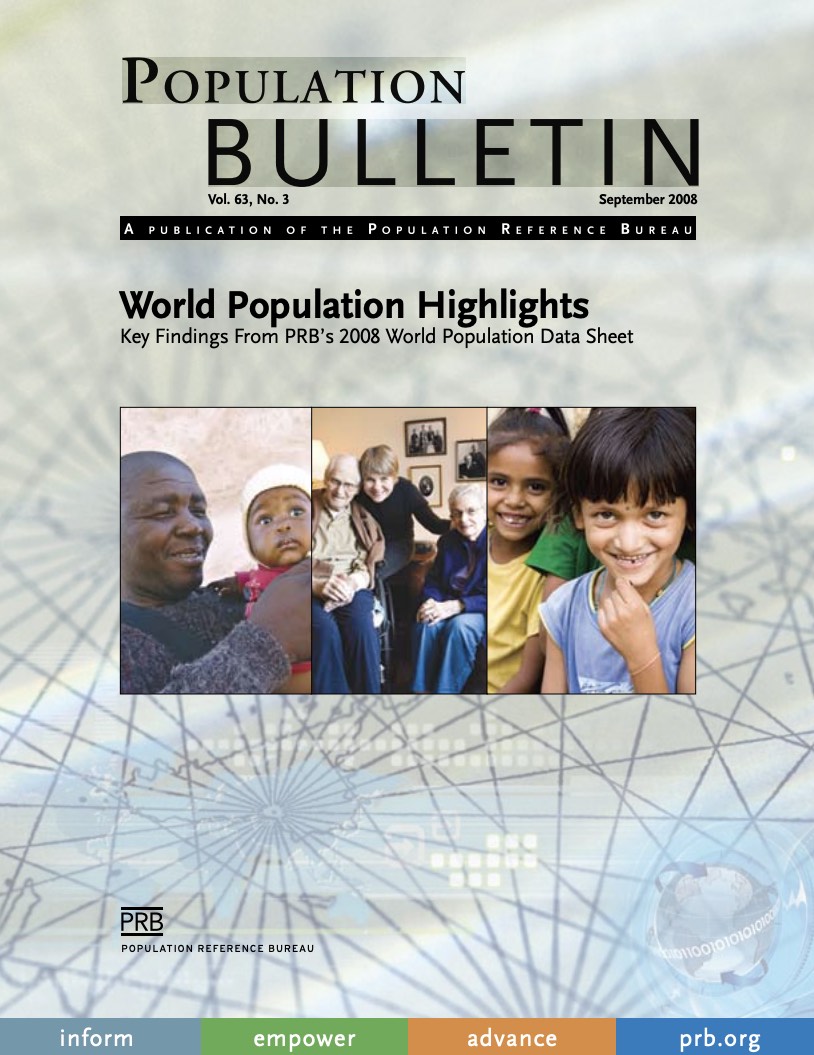
World Population Highlights: Key Findings From PRB’s 2008 World Population Data Sheet
(2008) In mid-2008, world population stood at 6.7 billion, up from 6.0 billion in 1999. The next milestone, 7 billion, will likely be passed in 2011 or 2012.
View Details
Array
(
[ID] => 13969
[id] => 13969
[title] => Population-bulletin-2008-63.3highlights
[filename] => Population-bulletin-2008-63.3highlights.pdf
[filesize] => 874499
[url] => https://www.prb.org/wp-content/uploads/2008/08/Population-bulletin-2008-63.3highlights.pdf
[link] => https://www.prb.org/resources/world-population-highlights-key-findings-from-prbs-2008-world-population-data-sheet/population-bulletin-2008-63-3highlights-2/
[alt] =>
[author] => 15
[description] => World Population Highlights: Key Findings From PRB's 2008 World Population Data Sheet
[caption] =>
[name] => population-bulletin-2008-63-3highlights-2
[status] => inherit
[uploaded_to] => 13955
[date] => 2021-01-25 14:07:26
[modified] => 2021-01-25 14:07:49
[menu_order] => 0
[mime_type] => application/pdf
[type] => application
[subtype] => pdf
[icon] => https://www.prb.org/wp-includes/images/media/document.png
)
Download
(0.9 MB)