Project: Combatting Noncommunicable Disease Risk Factors in Youth
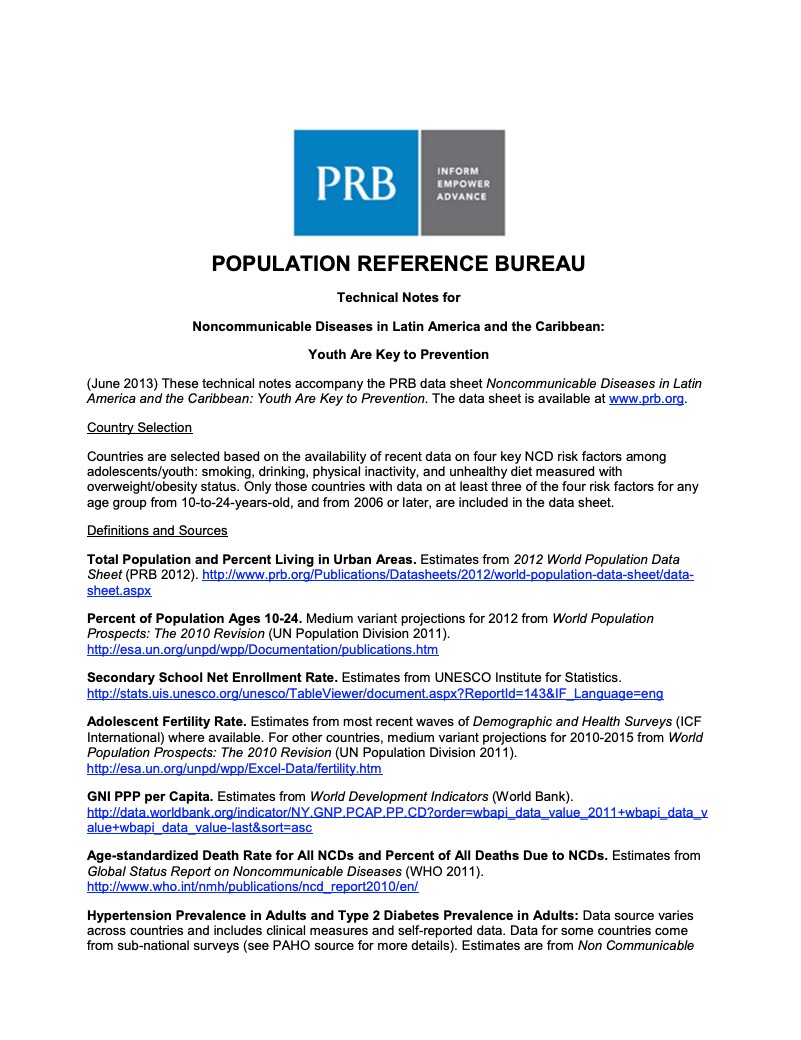
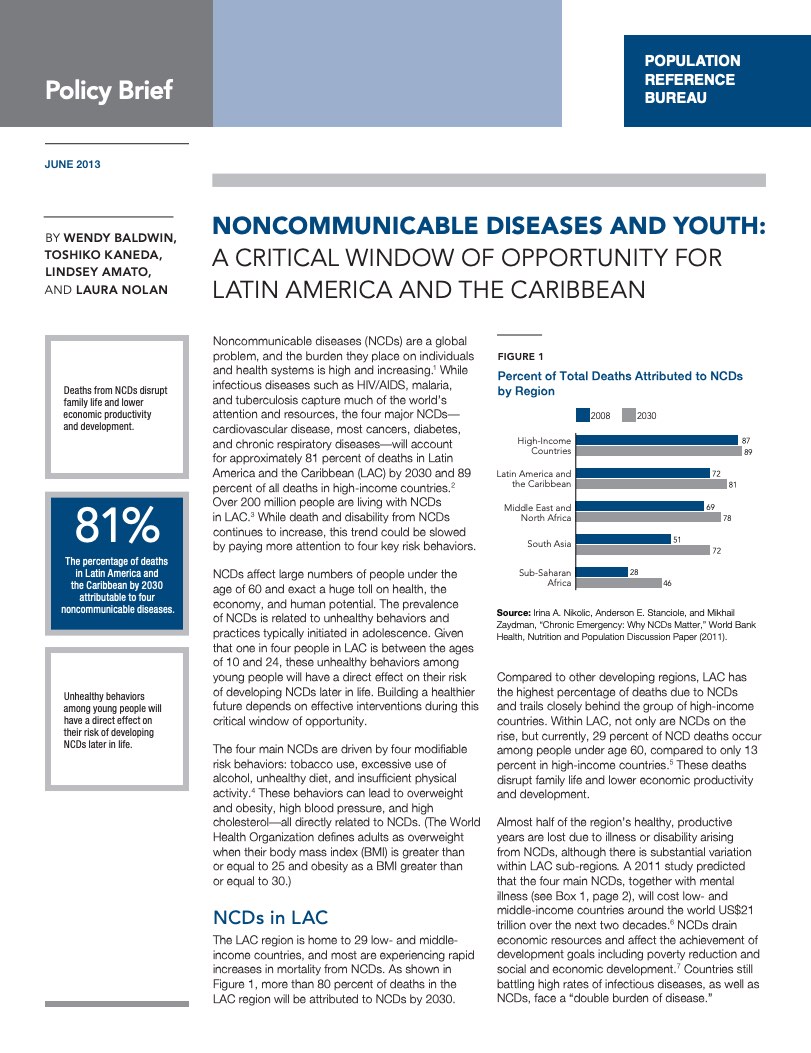
Policy Brief. Noncommunicable Diseases and Youth: A Critical Window of Opportunity for Latin America/Caribbean
(2013) Noncommunicable diseases (NCDs) are a global problem, and the burden they place on individuals and health systems is high and increasing.
View Details
Array
(
[ID] => 13100
[id] => 13100
[title] => noncommunicable-diseases-latin-america-youth-policybrief
[filename] => noncommunicable-diseases-latin-america-youth-policybrief.pdf
[filesize] => 1364888
[url] => https://www.prb.org/wp-content/uploads/2013/06/noncommunicable-diseases-latin-america-youth-policybrief.pdf
[link] => https://www.prb.org/resources/noncommunicable-diseases-latin-america-youth-policy-brief/noncommunicable-diseases-latin-america-youth-policybrief-2/
[alt] =>
[author] => 15
[description] =>
[caption] =>
[name] => noncommunicable-diseases-latin-america-youth-policybrief-2
[status] => inherit
[uploaded_to] => 13096
[date] => 2021-01-21 19:04:53
[modified] => 2021-01-21 19:04:53
[menu_order] => 0
[mime_type] => application/pdf
[type] => application
[subtype] => pdf
[icon] => https://www.prb.org/wp-includes/images/media/document.png
)
Download
(1.3 MB)