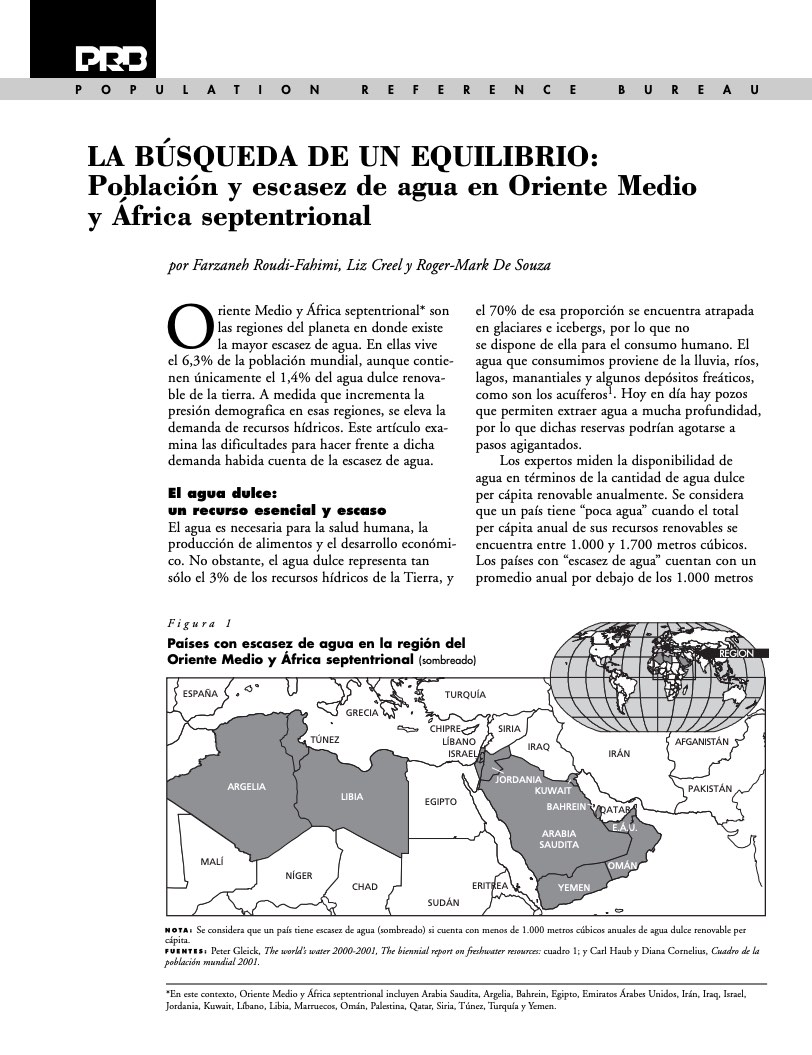
Report. Población y escasez de agua en Oriente Medio y África septentrional
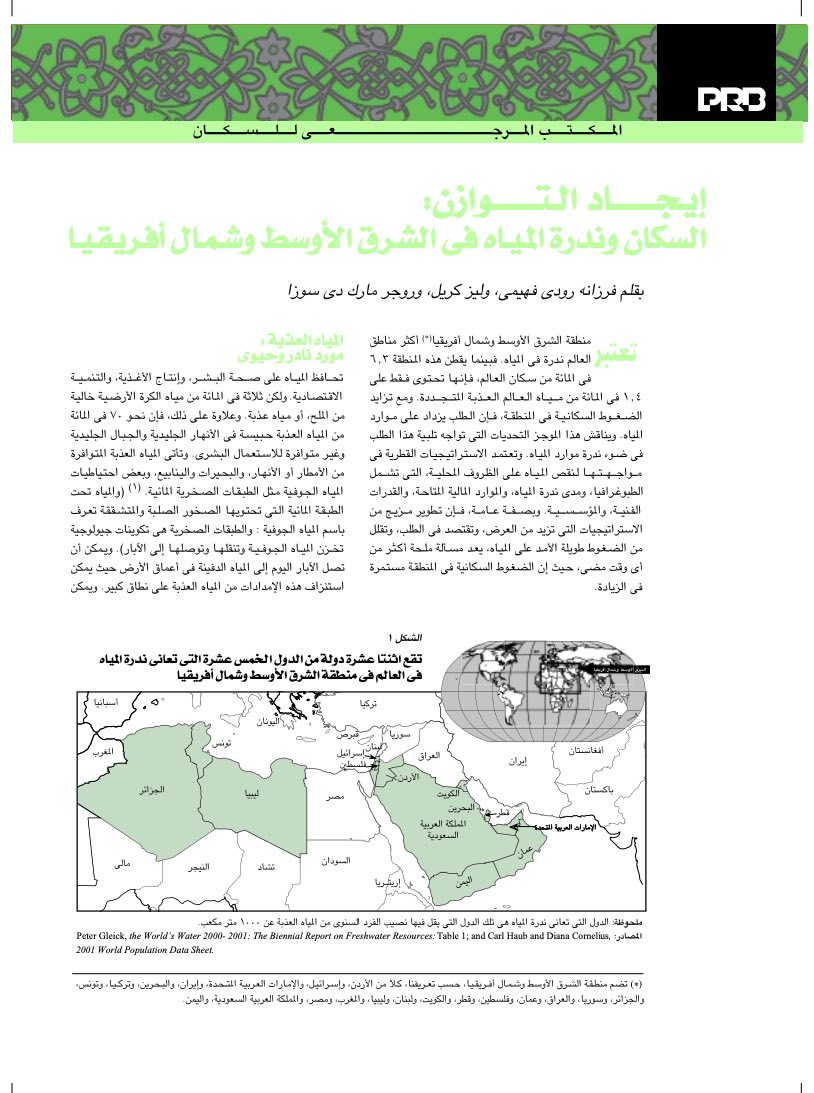
(2002) The Middle East and North Africa (MENA)* is the most water-scarce region of the world. Home to 6.3 percent of the world's population, the region contains only 1.4 percent of the world's renewable fresh water.
(2008) The prevalence of HIV/AIDS increased faster among Asians and Pacific Islanders in the United States than in any other group between 2001 and 2004.1
(2010) Over the past 20 years, the number of Latino children under age 18 living in the United States has doubled, making them one of the fastest-growing segments of the national population.
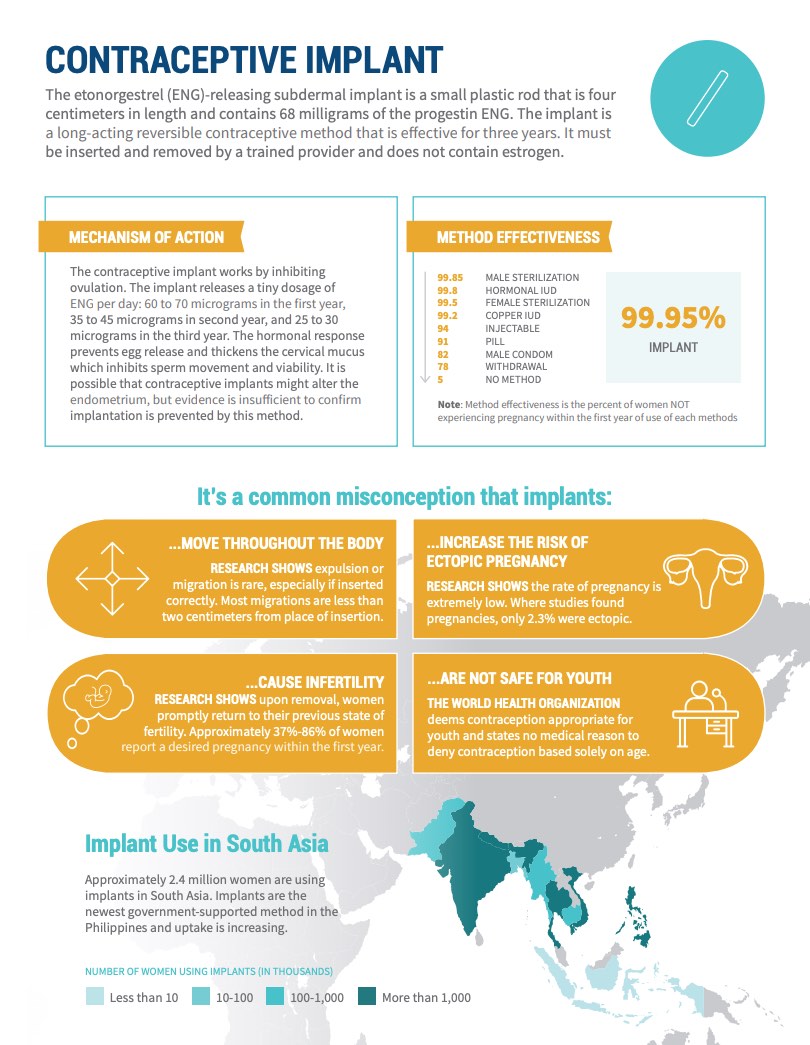
The etonorgestrel (ENG)-releasing subdermal implant is a small plastic rod that is four centimeters in length and contains 68 milligrams of the progestin ENG. The implant is a long-acting reversible contraceptive method that is effective for three years. It must be inserted and removed by a trained provider and does not contain estrogen.
View Details
Array
(
[ID] => 11384
[id] => 11384
[title] => PHL_Fact_Sheets_Implants
[filename] => PHL_Fact_Sheets_Implants.pdf
[filesize] => 574052
[url] => https://www.prb.org/wp-content/uploads/2021/01/PHL_Fact_Sheets_Implants.pdf
[link] => https://www.prb.org/resources/combined-oral-contraceptive/phl_fact_sheets_implants-2/
[alt] =>
[author] => 15
[description] => The etonorgestrel (ENG)-releasing subdermal implant is a small plastic rod that is four centimeters in length and contains 68 milligrams of the progestin ENG. The implant is a long-acting reversible contraceptive method that is effective for three years. It must be inserted and removed by a trained provider and does not contain estrogen.
[caption] =>
[name] => phl_fact_sheets_implants-2
[status] => inherit
[uploaded_to] => 11375
[date] => 2021-01-09 05:09:01
[modified] => 2021-01-09 05:18:43
[menu_order] => 0
[mime_type] => application/pdf
[type] => application
[subtype] => pdf
[icon] => https://www.prb.org/wp-includes/images/media/document.png
)
Download
(0.6 MB)
Report. Population and Water Scarcity in the Middle East and North Africa (Arabic)
(2002) The Middle East and North Africa (MENA)* is the most water-scarce region of the world. Home to 6.3 percent of the world's population, the region contains only 1.4 percent of the world's renewable fresh water.
View Details
Array
(
[ID] => 11899
[id] => 11899
[title] => FindingTheBalance_Arabic
[filename] => FindingTheBalance_Arabic.pdf
[filesize] => 1159342
[url] => https://www.prb.org/wp-content/uploads/2021/01/FindingTheBalance_Arabic.pdf
[link] => https://www.prb.org/resources/report-population-and-water-scarcity-in-the-middle-east-and-north-africa/findingthebalance_arabic-2/
[alt] =>
[author] => 15
[description] => Population and Water Scarcity in the Middle East and North Africa
[caption] =>
[name] => findingthebalance_arabic-2
[status] => inherit
[uploaded_to] => 11894
[date] => 2021-01-12 04:02:08
[modified] => 2021-01-12 04:07:01
[menu_order] => 0
[mime_type] => application/pdf
[type] => application
[subtype] => pdf
[icon] => https://www.prb.org/wp-includes/images/media/document.png
)
Download
(1.1 MB)
India Releases Latest Census Results, Showing Population Catching Up to China
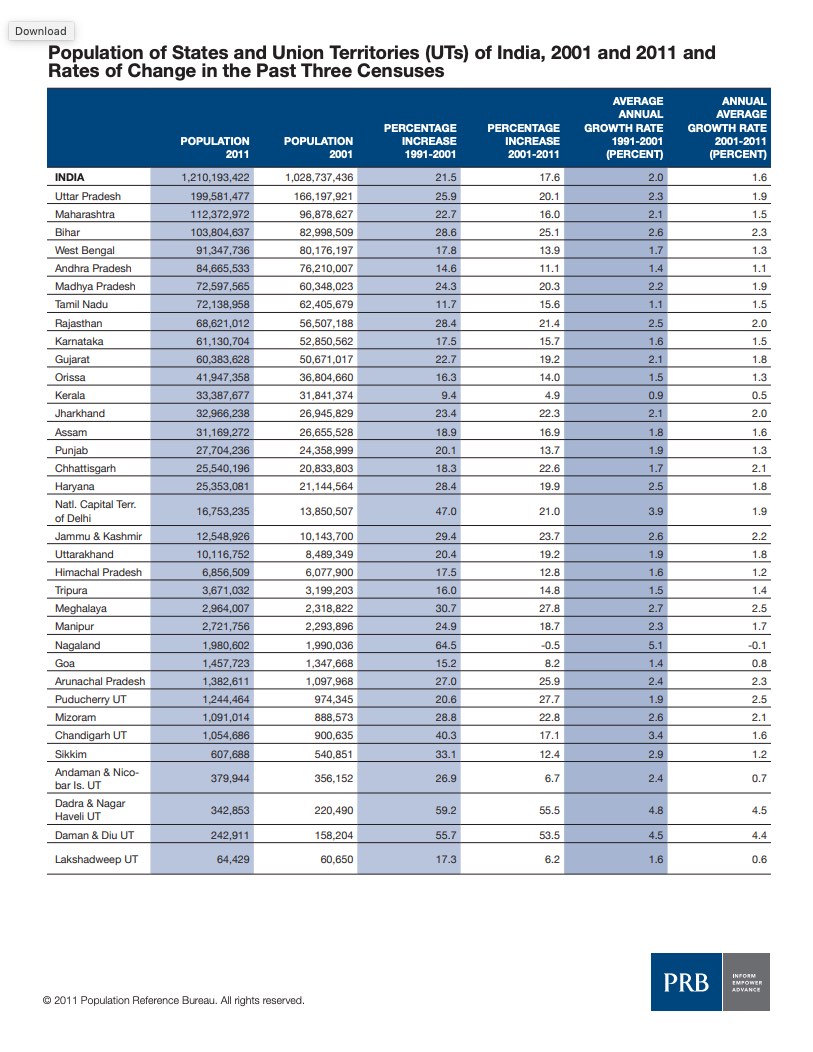
(2011) Together, China and India account for 37 percent of the world’s population. Both countries have conducted censuses over the past year, and when they report their census results, figures such as the widely accepted world population total are at risk of changing.