Policy Brief: Population and Food Security: Africa’s Challenge (Part 1)
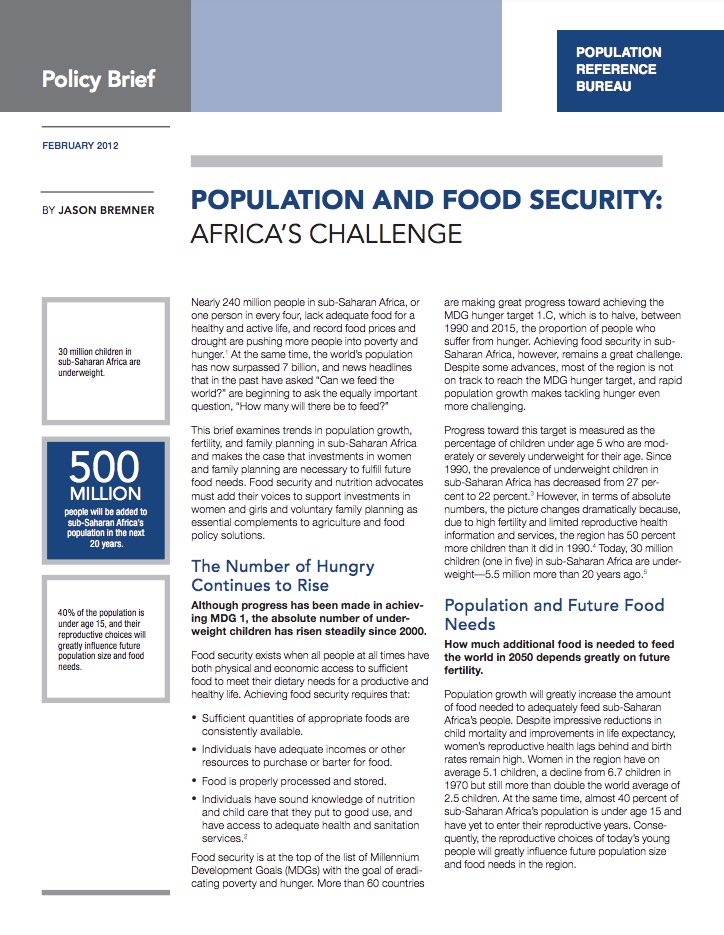
(2012) Nearly 240 million people in sub-Saharan Africa, or one person in every four, lack adequate food for a healthy and active life, and record food prices and drought are pushing more people into poverty and hunger.1 At the same time, the world’s population has now surpassed 7 billion, and news headlines that in the past have asked “Can we feed the world?” are beginning to ask the equally important question, “How many will there be to feed?”
View Details
Array
(
[ID] => 13125
[id] => 13125
[title] => 03082012-population-food-security-africa
[filename] => 03082012-population-food-security-africa.pdf
[filesize] => 663308
[url] => https://www.prb.org/wp-content/uploads/2012/03/03082012-population-food-security-africa.pdf
[link] => https://www.prb.org/resources/population-and-food-security-africas-challenge-part-2/03082012-population-food-security-africa/
[alt] =>
[author] => 15
[description] =>
[caption] =>
[name] => 03082012-population-food-security-africa
[status] => inherit
[uploaded_to] => 13117
[date] => 2021-01-21 21:06:21
[modified] => 2021-01-21 21:06:21
[menu_order] => 0
[mime_type] => application/pdf
[type] => application
[subtype] => pdf
[icon] => https://www.prb.org/wp-includes/images/media/document.png
)
Download
(0.6 MB)