535 Search Results Found For : "g_레버리지거래(WWW,BYB,PW)_레버리지매매_레버리지투자=레버리지리딩㈢에스티아이 sqh/page/48/page/47/page/48/page/50/page/49/page/50/page/52/page/51/page/53/page/54/page/53//page/54/page/53/page/51/page/49/page/47/page/46/page/47/page/46/page/44/page/42/page/44/page/43/page/41/page/40/page/38/page/36/page/34/page/35/page/33/page/34/page/32/page/34"


Shifting Latino Ethnic and Racial Identity

(2010) Over the past several decades, the U.S. Census Bureau has used variations in its attempt to classify and enumerate Latinos.

View Details

Project: Demography and Economics of Aging and Alzheimer’s Disease

Unequal Health Care Access and Quality Contribute to U.S. Racial Health Disparities Among Older Adults

Older Black adults are less likely than their white peers to have private insurance and more likely to rely on Medicaid or Medicare as their only health insurance.
View Details

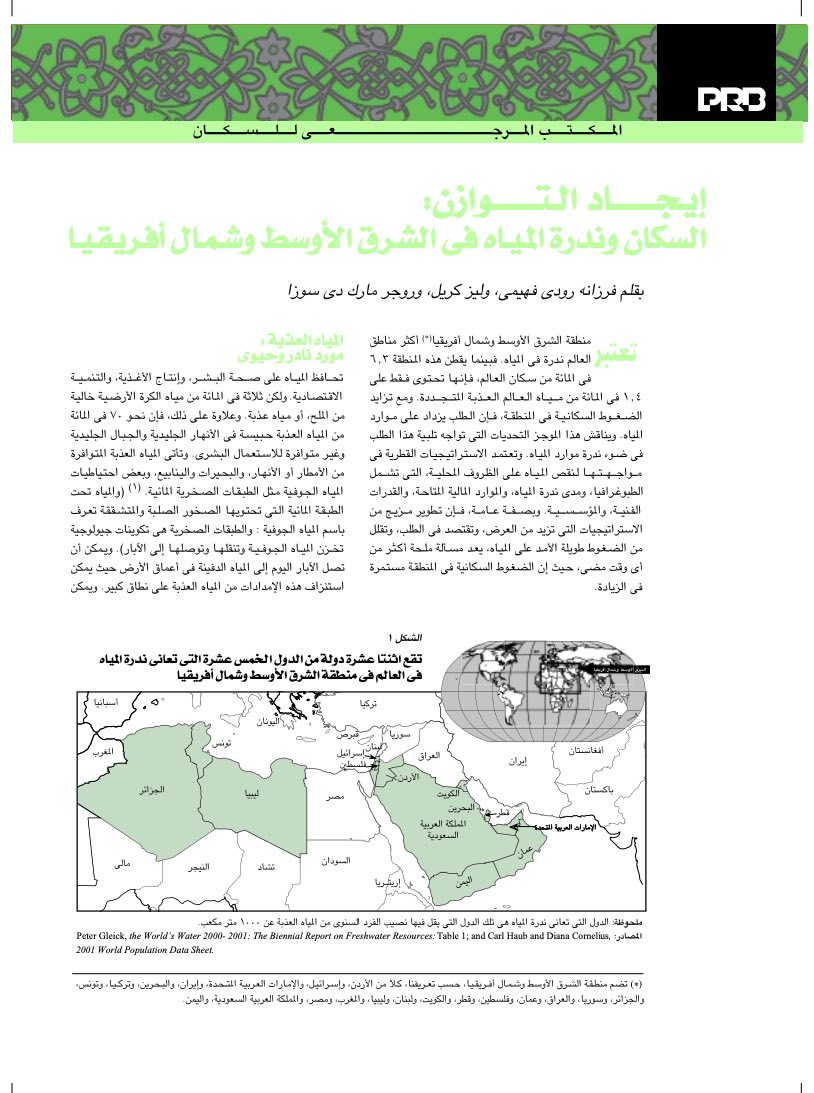
Report. Population and Water Scarcity in the Middle East and North Africa (Arabic)

(2002) The Middle East and North Africa (MENA)* is the most water-scarce region of the world. Home to 6.3 percent of the world's population, the region contains only 1.4 percent of the world's renewable fresh water.
View Details Array ( [ID] => 11899 [id] => 11899 [title] => FindingTheBalance_Arabic [filename] => FindingTheBalance_Arabic.pdf [filesize] => 1159342 [url] => https://www.prb.org/wp-content/uploads/2021/01/FindingTheBalance_Arabic.pdf [link] => https://www.prb.org/resources/report-population-and-water-scarcity-in-the-middle-east-and-north-africa/findingthebalance_arabic-2/ [alt] => [author] => 15 [description] => Population and Water Scarcity in the Middle East and North Africa [caption] => [name] => findingthebalance_arabic-2 [status] => inherit [uploaded_to] => 11894 [date] => 2021-01-12 04:02:08 [modified] => 2021-01-12 04:07:01 [menu_order] => 0 [mime_type] => application/pdf [type] => application [subtype] => pdf [icon] => https://www.prb.org/wp-includes/images/media/document.png ) Download (1.1 MB)

Project: PACE: Policy, Advocacy, and Communication Enhanced for Population and Reproductive Health

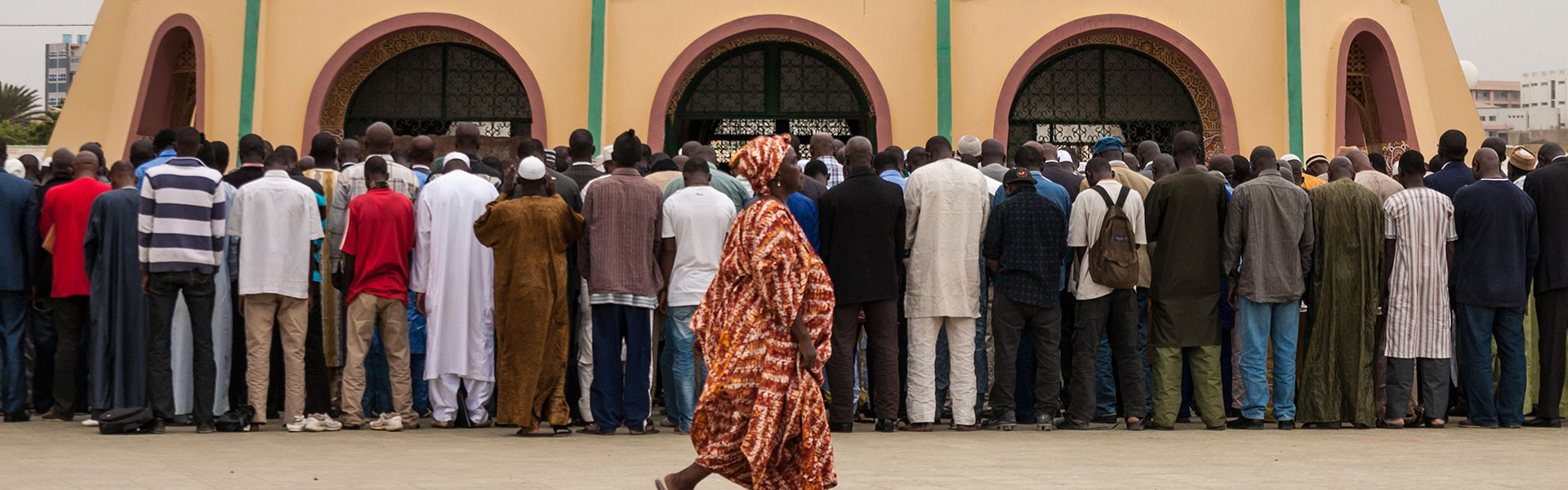
Senegal ENGAGE Presentation Focuses on Religion and Family Health

Le Sénégal s’Engage: la Religion et la Santé familiale (Senegal Engage: Religion and Family Health) is a new ENGAGE presentation that serves as an advocacy tool to connect reproductive health and family planning issues with faith-based attitudes and beliefs.
View Details

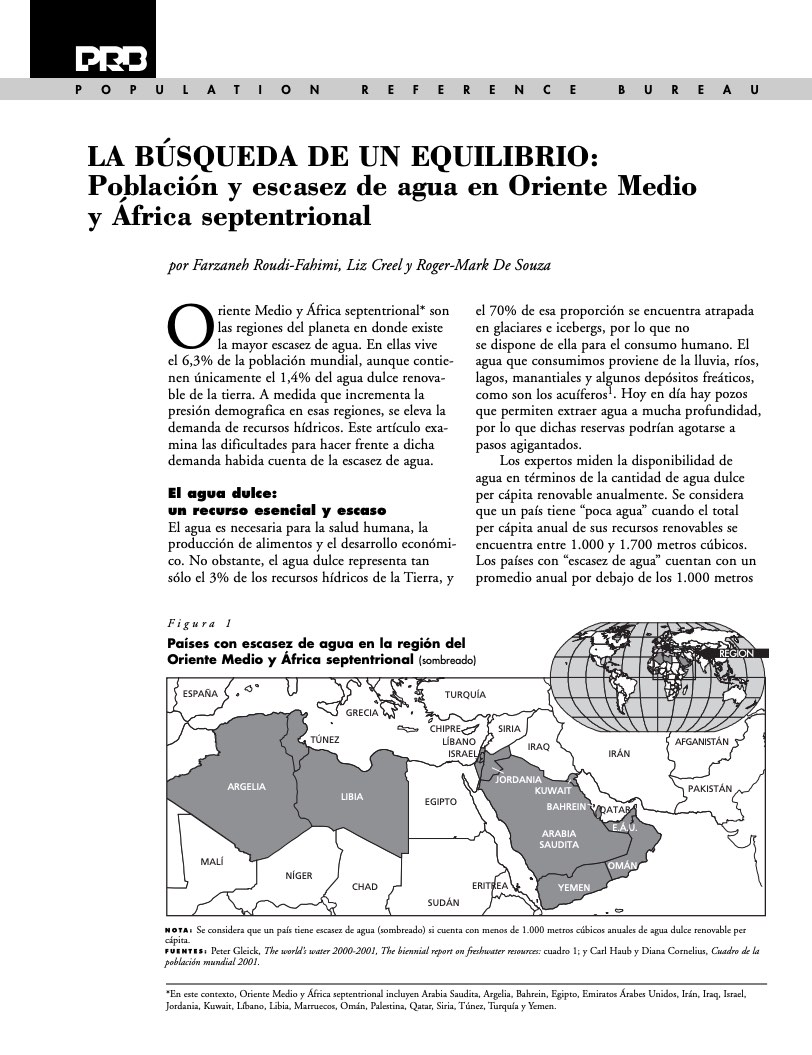
Report. Población y escasez de agua en Oriente Medio y África septentrional

(2002) The Middle East and North Africa (MENA)* is the most water-scarce region of the world. Home to 6.3 percent of the world's population, the region contains only 1.4 percent of the world's renewable fresh water.

View Details Array ( [ID] => 11898 [id] => 11898 [title] => MENAWater_SP [filename] => MENAWater_SP.pdf [filesize] => 523879 [url] => https://www.prb.org/wp-content/uploads/2021/01/MENAWater_SP.pdf [link] => https://www.prb.org/resources/report-population-and-water-scarcity-in-the-middle-east-and-north-africa/menawater_sp-2/ [alt] => [author] => 15 [description] => [caption] => [name] => menawater_sp-2 [status] => inherit [uploaded_to] => 11894 [date] => 2021-01-12 04:02:05 [modified] => 2021-01-12 04:02:05 [menu_order] => 0 [mime_type] => application/pdf [type] => application [subtype] => pdf [icon] => https://www.prb.org/wp-includes/images/media/document.png ) Download (0.5 MB)

Path to Prosperity: Empower, Educate, and Employ Youth to Realize the Demographic Dividend

Investments in young people are crucial to achieving a demographic dividend. The demographic dividend provides a framework for promoting investments in youth as fertility declines and population age structure changes. Sustained investments in voluntary family planning, health, education, and job growth can help to guide a country towards a demographic dividend.

View Details

La conduite sexuelle et l’utilisation de contraceptifs parmi les jeunes en Afrique de l’Ouest

(2009) De par le monde, les jeunes – surtout les jeunes femmes – connaissent un fort taux de VIH et de grossesse non désirée à cause de leurs connaissances limitées concernant la santé sexuelle et reproductive.

View Details

Clean Water’s Historic Effect on U.S. Mortality Rates Provides Hope for Developing Countries

The introduction of water filtration and chlorination in major U.S. cities between 1900 and 1940 accounted for about one-half of the 30 percent decline in urban death rates during those years, according to research published in the February 2005 issue of the journal Demography.
View Details

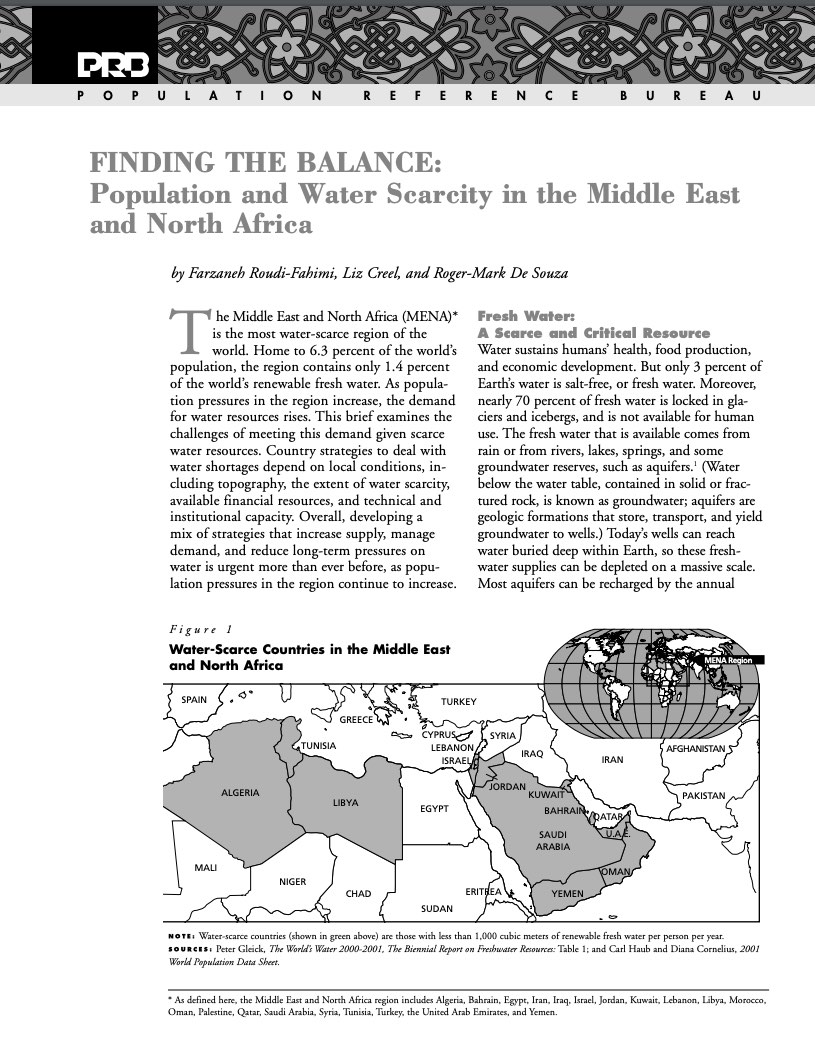
Report. Population and Water Scarcity in the Middle East and North Africa

(2002) The Middle East and North Africa (MENA)* is the most water-scarce region of the world. Home to 6.3 percent of the world's population, the region contains only 1.4 percent of the world's renewable fresh water.

View Details Array ( [ID] => 11900 [id] => 11900 [title] => FindingTheBalance_Eng [filename] => FindingTheBalance_Eng.pdf [filesize] => 788635 [url] => https://www.prb.org/wp-content/uploads/2021/01/FindingTheBalance_Eng.pdf [link] => https://www.prb.org/resources/report-population-and-water-scarcity-in-the-middle-east-and-north-africa/findingthebalance_eng-2/ [alt] => [author] => 15 [description] => Population and Water Scarcity in the Middle East and North Africa [caption] => [name] => findingthebalance_eng-2 [status] => inherit [uploaded_to] => 11894 [date] => 2021-01-12 04:02:11 [modified] => 2021-01-12 04:03:27 [menu_order] => 0 [mime_type] => application/pdf [type] => application [subtype] => pdf [icon] => https://www.prb.org/wp-includes/images/media/document.png ) Download (0.8 MB)