493 Search Results Found For : "population"


2011 World Population Data Sheet

(2011) Global population will reach 7 billion later in 2011, just 12 years after reaching 6 billion in 1999.

View Details Array ( [ID] => 14966 [id] => 14966 [title] => wpds-2011-population-data-sheet_eng [filename] => wpds-2011-population-data-sheet_eng.pdf [filesize] => 1128816 [url] => https://www.prb.org/wp-content/uploads/2011/07/wpds-2011-population-data-sheet_eng.pdf [link] => https://www.prb.org/resources/2011-world-population-data-sheet/wpds-2011-population-data-sheet_eng-2/ [alt] => [author] => 15 [description] => [caption] => [name] => wpds-2011-population-data-sheet_eng-2 [status] => inherit [uploaded_to] => 5384 [date] => 2021-01-30 21:15:56 [modified] => 2021-01-30 21:15:56 [menu_order] => 0 [mime_type] => application/pdf [type] => application [subtype] => pdf [icon] => https://www.prb.org/wp-includes/images/media/document.png ) Download (1.1 MB)

Rapid Population Growth, Crowded Cities Present Challenges in the Philippines

(2003) Fast-paced population growth and rampant urbanization represent some of the major population concerns in the Philippines, a country of 80 million people where the average number of children born to a woman is close to four and where a sizeable 37 percent of the population is under age 15.
View Details

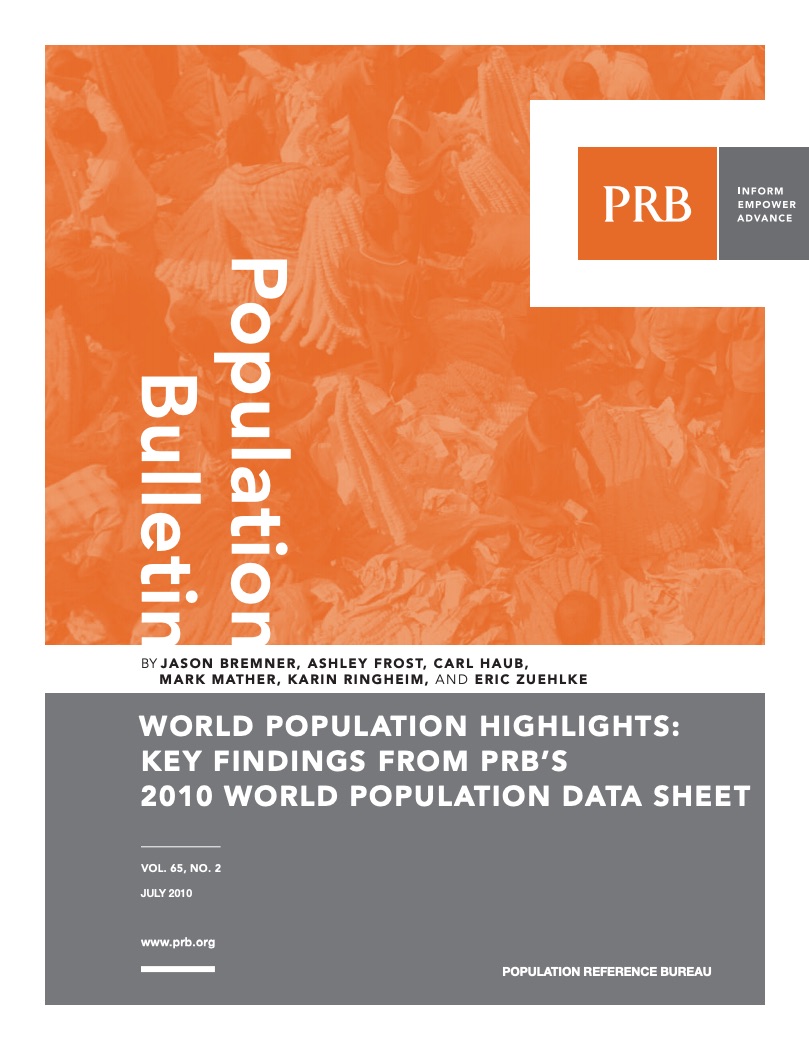
World Population Highlights: Key Findings From PRB’s 2010 World Population Data Sheet

View Details Array ( [ID] => 14759 [id] => 14759 [title] => Population-bulletin-2010-wpds-65.2highlights [filename] => Population-bulletin-2010-wpds-65.2highlights.pdf [filesize] => 701843 [url] => https://www.prb.org/wp-content/uploads/2010/07/Population-bulletin-2010-wpds-65.2highlights.pdf [link] => https://www.prb.org/resources/world-population-highlights-key-findings-from-prbs-2010-world-population-data-sheet/population-bulletin-2010-wpds-65-2highlights-2/ [alt] => [author] => 15 [description] => [caption] => [name] => population-bulletin-2010-wpds-65-2highlights-2 [status] => inherit [uploaded_to] => 14755 [date] => 2021-01-30 16:45:47 [modified] => 2021-01-30 16:45:47 [menu_order] => 0 [mime_type] => application/pdf [type] => application [subtype] => pdf [icon] => https://www.prb.org/wp-includes/images/media/document.png ) Download (0.7 MB)

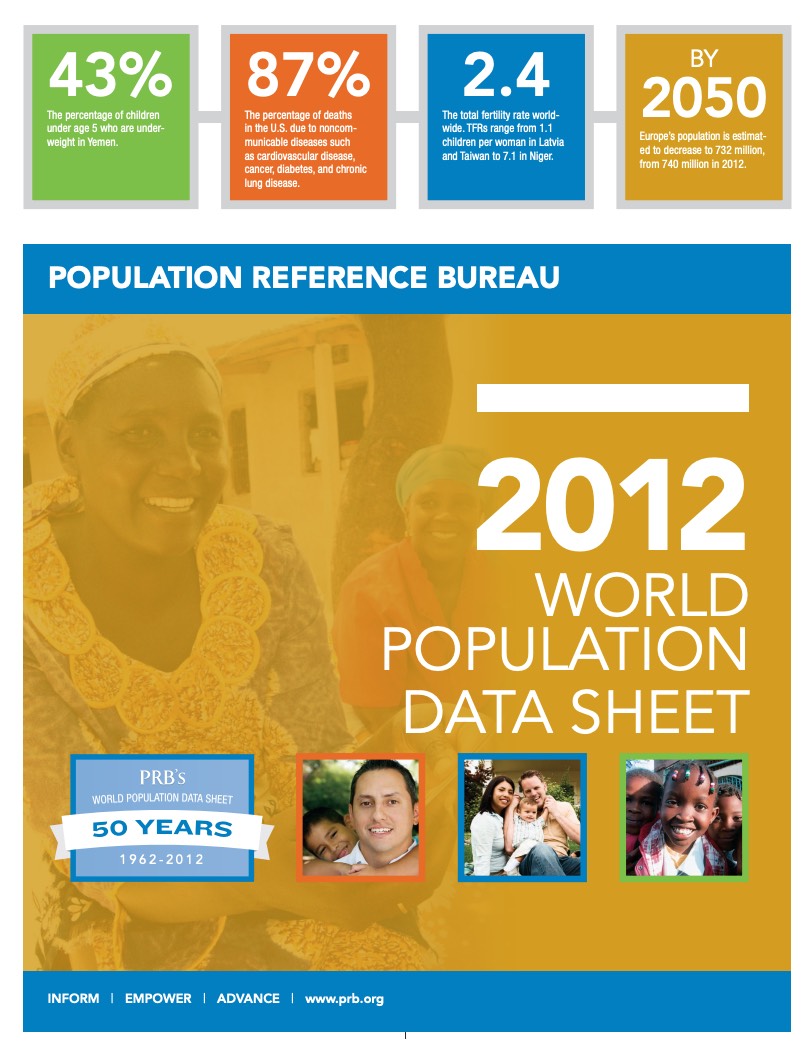
2012 World Population Data Sheet (PDF)

Nearly all future population growth will be in the world's less developed countries, and the poorest of these countries will see the greatest percentage increase.

View Details Array ( [ID] => 15098 [id] => 15098 [title] => 2012-population-data-sheet_eng [filename] => 2012-population-data-sheet_eng.pdf [filesize] => 1405711 [url] => https://www.prb.org/wp-content/uploads/2012/07/2012-population-data-sheet_eng.pdf [link] => https://www.prb.org/resources/2012-world-population-data-sheet/2012-population-data-sheet_eng-2/ [alt] => [author] => 15 [description] => [caption] => [name] => 2012-population-data-sheet_eng-2 [status] => inherit [uploaded_to] => 5682 [date] => 2021-01-31 01:12:58 [modified] => 2021-01-31 01:12:58 [menu_order] => 0 [mime_type] => application/pdf [type] => application [subtype] => pdf [icon] => https://www.prb.org/wp-includes/images/media/document.png ) Download (1.4 MB)

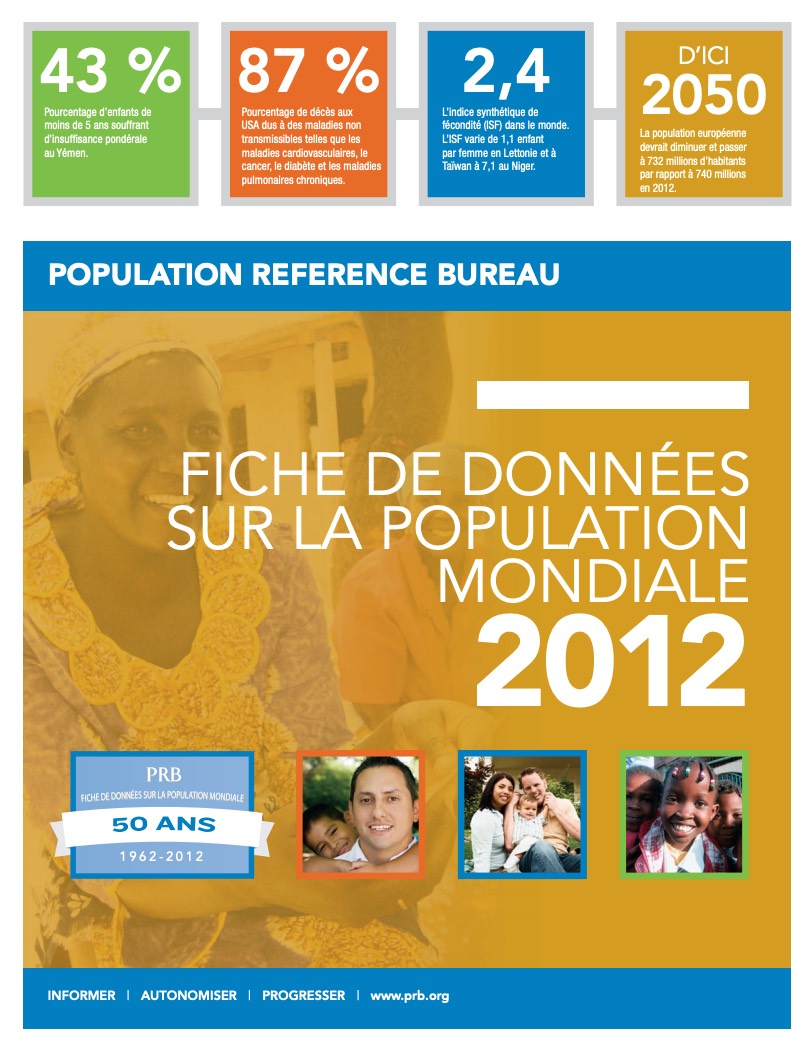
Fiche de données sur la population mondiale 2012 (PDF)

Nearly all future population growth will be in the world's less developed countries, and the poorest of these countries will see the greatest percentage increase.

View Details Array ( [ID] => 15097 [id] => 15097 [title] => 2012-population-data-sheet_french [filename] => 2012-population-data-sheet_french.pdf [filesize] => 3216423 [url] => https://www.prb.org/wp-content/uploads/2012/07/2012-population-data-sheet_french.pdf [link] => https://www.prb.org/resources/2012-world-population-data-sheet/2012-population-data-sheet_french-2/ [alt] => [author] => 15 [description] => [caption] => [name] => 2012-population-data-sheet_french-2 [status] => inherit [uploaded_to] => 5682 [date] => 2021-01-31 01:12:56 [modified] => 2021-01-31 01:12:56 [menu_order] => 0 [mime_type] => application/pdf [type] => application [subtype] => pdf [icon] => https://www.prb.org/wp-includes/images/media/document.png ) Download (3.1 MB)

Project: IDEA: Informing Decisionmakers to Act

New Kenyan Population Policy a Model for Other Countries

(2014) In 2012, the government of Kenya passed a landmark policy to manage its rapid population growth. The new population policy aims to reduce the number of children a woman has over her lifetime from 5 in 2009 to 3 by 2030.2

View Details

2012 World Population Data Sheet

Nearly all future population growth will be in the world's less developed countries, and the poorest of these countries will see the greatest percentage increase.

View Details Array ( [ID] => 15098 [id] => 15098 [title] => 2012-population-data-sheet_eng [filename] => 2012-population-data-sheet_eng.pdf [filesize] => 1405711 [url] => https://www.prb.org/wp-content/uploads/2012/07/2012-population-data-sheet_eng.pdf [link] => https://www.prb.org/resources/2012-world-population-data-sheet/2012-population-data-sheet_eng-2/ [alt] => [author] => 15 [description] => [caption] => [name] => 2012-population-data-sheet_eng-2 [status] => inherit [uploaded_to] => 5682 [date] => 2021-01-31 01:12:58 [modified] => 2021-01-31 01:12:58 [menu_order] => 0 [mime_type] => application/pdf [type] => application [subtype] => pdf [icon] => https://www.prb.org/wp-includes/images/media/document.png ) Download (1.4 MB)

Population Losses Mount in U.S. Rural Areas

(2008) Despite rapid population growth in parts of the U.S. South and West, 43 percent of all counties lost population since 2000-nearly twice the number of counties that lost population during the 1990s (1,346 counties vs. 689 counties).
View Details

Project: PACE: Policy, Advocacy, and Communication Enhanced for Population and Reproductive Health

Population Age Structure and Pathways to Inclusive, Effective Governance

Among countries with a youthful population, a window of opportunity to achieve key development goals opens across four sectors―health, education, the economy, and governance―as fertility declines and the age structure of the population gets older.

View Details