
From Research to Policy: Why the NTA Africa Conference Matters Now
Conditions for policy change will be shaped at the annual meeting in Saly, Senegal.

In July 2026, policymakers, researchers, and civil society actors from across Africa and the world will gather in Senegal for the fourth edition of the NTA Africa Conference. At first glance, it may appear to be a scientific conference focused on demographic and economic analysis. In reality, the NTA Africa Conference represents something much more important: a space where Africa’s development challenges are being reframed, not only in terms of data but also in decision-making.
Across the continent, countries are undergoing profound demographic transformations. These shifts are placing increasing pressure on health systems, education, labor markets, and social protection. At the same time, the care economy—largely invisible in traditional economic frameworks—has become central to how societies function, absorb shocks, and sustain human capital. The challenge is no longer simply to understand these dynamics but to translate them into policy.
A Conference at the Intersection of Research and Decision-Making
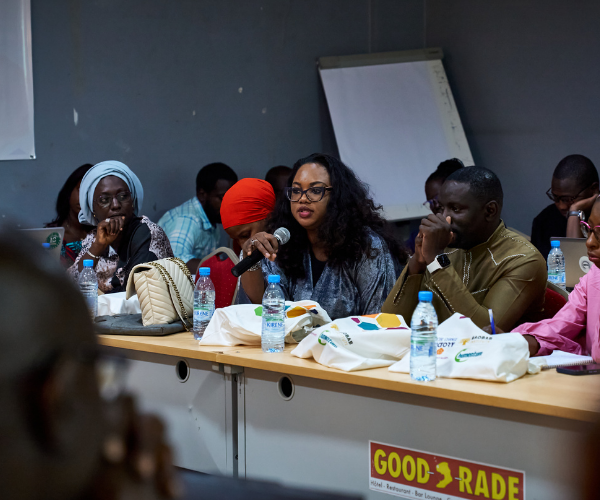
The NTA Africa Conference has evolved into a unique platform that brings together researchers, ministers, parliamentarians, technical staff from ministries and, increasingly, civil society actors. This positioning is critical. For many years, discussions on the demographic dividend and generational economics remained largely within academic and technical circles. While the analytical tools have become more sophisticated, their translation into policy has remained uneven.
What distinguishes this conference is precisely its ambition to bridge that research-to-policy gap. The NTA Africa Conference’s 2023 edition marked an important shift. For the first time, high-level policy dialogue was placed at the center of the conference, with active participation from parliamentarians and decisionmakers across sectors. Discussions moved beyond presenting results, toward questioning how these results could—or could not—inform public action. At the same time, unpaid care work and its role in demographic and economic transitions emerged as a central theme, highlighting both its importance and continued invisibility in policy frameworks.
The Role of PRB: Translating Evidence Into Policy Dialogue
Within this evolving space, PRB plays a specific and deliberate role. PRB does not produce core economic models or demographic tools. Instead, our work focuses on something equally essential: ensuring that evidence can be understood, debated, and used by those who shape policy.
Since 2023, PRB has led a regional training initiative bringing together researchers, technicians, and practitioners from across francophone West Africa. The initiative’s objective is to strengthen strategic communication for policy change on unpaid care work. Participants have deepened their understanding of the evidence and developed the capacity to:
- Identify relevant policy audiences.
- Frame messages based on data.
- Engage in structured policy dialogue.
This initiative has also created a new type of space—one where researchers, policymakers, and practitioners can jointly reflect on how evidence becomes actionable. At the 2023 conference, the effort translated into concrete outcomes. Participants contributed directly to high-level discussions, helping shape messages addressed to decisionmakers.
What Changes in 2026: Expanding the Policy Space
The 2026 NTA Africa Conference builds on this momentum—and goes further. In addition to scientific sessions, a full day will be dedicated to the use of data and tools by non-specialists, including parliamentarians, civil society organizations, development partners, and other stakeholders involved in policy processes.
This evolution is a critical. If demographic and care-related challenges are to be addressed effectively, they cannot remain confined to technical expertise. They must be understood across institutions and by all actors involved in shaping and implementing policy. This includes those who vote on budgets, advocate for policy change, and are directly affected by these decisions. The objective is not to simplify the data but to make its implications visible and actionable.
From Education to Action: The Role of Tools
Significant progress has been made over the past several years in developing tools that allow countries to better understand the interactions between demographic dynamics, economic structures, and care systems. These tools—such as Budgeting Sensitive to the Demographic Dividend and related approaches—make it possible to integrate demographic structures into planning and budgeting, identify gaps between needs and resource allocation, and anticipate future pressures on social systems.
However, the existence of these tools does not automatically lead to change. What matters is how they are used, by whom, and within what kind of policy dialogue. This context is precisely where the connection between research, tools, and communication becomes essential.
A Starting Point: From Mali to a Broader Transformation
To understand how these tools emerged and why they matter, it is useful to start with a concrete experience. The story begins in Mali, where early work on demographic and economic analysis revealed both the potential of these approaches and the challenges of translating them into policy. From this starting point, a broader effort has developed to refine the analytical frameworks, structure the tools, and expand their relevance across countries.
This evolution is presented through a series of articles that trace the origins of these approaches, explain how they are structured, and explore their implications for Africa’s future. Together, they provide a foundation for understanding what is now possible—and what remains to be done.
Looking Ahead
The NTA Africa Conference is a space where the conditions for policy change are being shaped. As discussions on demographic change and the care economy gain visibility, the question is no longer whether these issues matter—it is whether institutions, actors, and policy processes are ready to act on them.
Bridging this gap requires more than data; it requires shared understanding, dialogue, and the capacity to translate evidence into decisions. This is the space that PRB builds—at the intersection of research, policy, and society.
Related Posts
Five Facts and Trends We're Watching in 2026
Care, the future of work and AI, and other themes we're keeping an eye on in the new year

In Dakar, a New Generation Steps Forward to Lead Their Countries' Development
Supporting localization isn’t about stepping back—it’s about showing up differently. In Dakar, we witnessed what’s possible when we stop talking about youth leadership and start listening to it.
To Fix the Care Economy, the United States Should Look Internationally
On this World Population Day, we’re examining the state of the care economy in the United States—and looking abroad for ways to strengthen it.

The Nation’s Preexisting Condition: How Rising Inequality Exacerbated the Economic Toll of the Coronavirus
In 2019, many economic indicators seemed to be pointing in the right direction. The unemployment rate had fallen to its lowest level since 1969, the poverty rate fell to the lowest level in 60 years, and the Dow Jones Industrial Average reached an all-time high.

Aging and Health in China: What Can We Learn From the World’s Largest Population of Older People?
The United Nations projects that there will be 366 million older Chinese adults by 2050, which is substantially larger than the current total U.S. population of 331 million.