
RTAC Partners Share End-of-Project Accomplishments and Impacts
PRB’s work focused on increasing the use of USAID-funded research findings in programs and policies
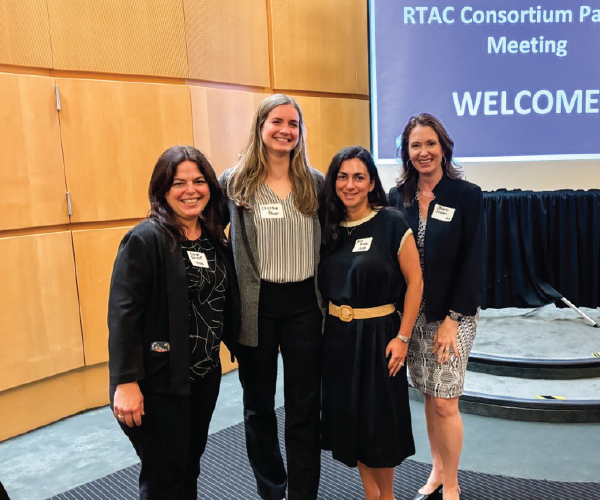
At a final partner meeting on Sept. 11, Senior Policy Advisors Christine Power and Rachel Yavinsky shared PRB’s accomplishments and impacts during the six years of leading research translation activities under the Research Technical Assistance Center (RTAC), a project led by NORC at the University of Chicago working to support USAID Missions, Bureaus, and Independent Offices to make evidence-based decisions.
PRB’s work focused on increasing the use of USAID-funded research findings in programs and policies and cumulated in 11 capacity-building research-to-action workshops, 18 targeted communication products produced in multiple languages and on diverse topics, and a comprehensive Research Translation Toolkit, among many other activities.
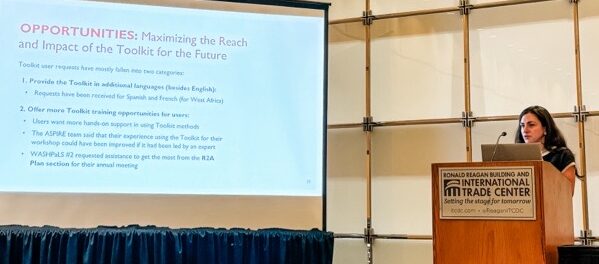
As RTAC’s Communications Manager, Power led presentations on the accomplishments and lessons learned from RTAC’s website along with an overview of PRB’s work on research translation, while Yavinsky, PRB’s RTAC lead, shared highlights from the evolution of the Research Translation Toolkit. Other consortium partners, including Duke University, University of Notre Dame, and the ResilientAfrica Network, discussed learnings from the project, including successes in localization and building capacity among researchers from low- and middle-income countries and reflections on working with USAID as an academic partner.
“Working on the RTAC project taught us a lot about maximizing the impact of development research,” Yavinsky said after the event. “We were able to impart this knowledge to many different researchers studying different topics around the world, which gave us a glimpse into diverse areas of inquiry and allowed us to apply our methods to diverse subjects and locations.”
Related Posts
Understanding and Comparing Population Projections in Sub-Saharan Africa
The release of a new set of population projections by the Institute for Health Metrics and Evaluation (IHME) in July 2020 was greeted with extensive coverage in the media and stimulated fresh debate among demographers about calculation and communication of projections.