
What we should talk about when we talk about healthy population aging
One question I didn't get to answer at AARP's 2025 Global Thought Leadership Conference
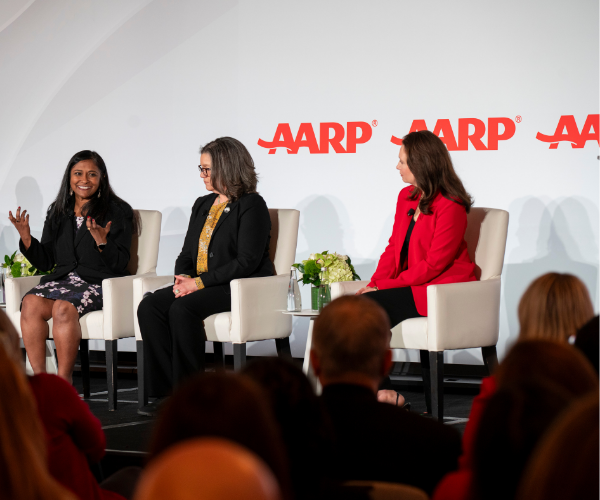
I had the opportunity to participate as a panelist at AARP’s annual Global Thought Leadership Conference on March 18, where we discussed how people in our aging world might live longer, healthier lives. One question we didn’t get to was a fill in the blank: “We can’t leave this conversation about healthy longevity without talking about ________.” Can you guess what my answer would have been?
I would have said “depopulation.” There are over 60 shrinking countries globally, according to UN data, and the United States isn’t in that group. But the national and subnational numbers tell a very different story. Data from the U.S. Census Bureau show that 1,876 U.S. counties grew in population from mid-2022 to mid-2023, but 1,268 saw population losses. The U.S. South has been a steadily growing region due to internal and international migration, but even there, 950 counties grew while 472 shrank.
Because of these radically different subnational trends, the issues and opportunities that regional, county, and city leaders face vary tremendously across the United States. To help inform smarter responses, PRB is starting a partnership with our friends at Population Europe for some cross-Atlantic learning about regional population trends and depopulation. We welcome conversations about funding and additional partnerships, so please reach out if you’d like to participate in this exciting initiative.
Related Posts
Understanding and Comparing Population Projections in Sub-Saharan Africa
The release of a new set of population projections by the Institute for Health Metrics and Evaluation (IHME) in July 2020 was greeted with extensive coverage in the media and stimulated fresh debate among demographers about calculation and communication of projections.