
2019 World Population Data Sheet
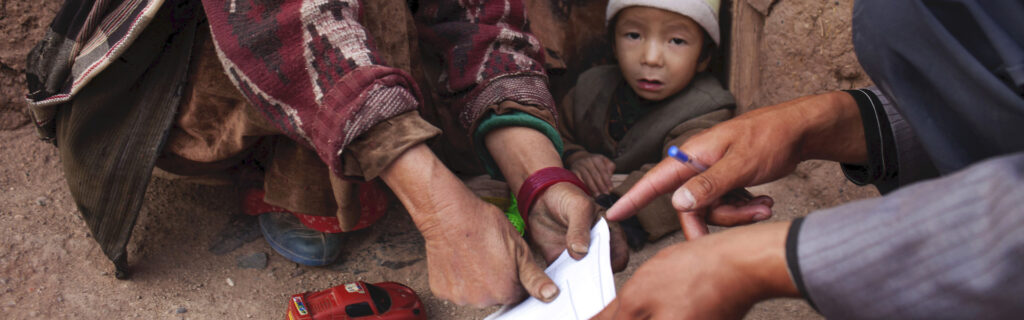
Europe and Asia Aging Rapidly, While Africa Is Home to the World’s Largest Youth Population
Fertility rates in the United States dropped to their lowest level in recorded history, with women having an average of 1.7 births in their lifetime. That’s one of the key findings in PRB’s 2019 World Population Data Sheet.
View Current World Population Data
Explore the Census throughout History
For Educators: 2019 World Population Data Lesson Plan
BUY 2019 WORLD POPULATION DATA PDF
BUY WORLD POPULATION DATA SHEET ON AMAZON
FOR EDUCATORS, STUDENTS, AND NONPROFIT ORGANIZATIONS
We estimate that by 2050, India will surpass China as the world’s most populous country with an estimated 1.67 billion people, while more people will be living in Nigeria than the United States. Aging trends in many parts of the world held steady over previous years, with countries in Asia and Europe having some of the world’s oldest populations, and countries in Africa being home to some of the youngest.
The 2019 Data Sheet identifies demographic trends around the world, including:
Population Shifts
- We estimate Germany and the United Kingdom will fall out of the top 20 most populous countries by 2050, while the Democratic Republic of the Congo (DRC) will rocket up from the world’s 16th most populous country in 2019 to 9th place by 2050. The DRC’s anticipated growth will make it the 3rd most populous country in Africa by 2050, supplanting Egypt from its current position in the top three.
- Nigeria and Ethiopia will retain their positions in Africa’s top two most populous nations in 2050, with Nigeria’s population expected to double—from 201.0 million to 401.3 million people, overtaking the United States.
Fertility Rates
- Niger’s total fertility rate, or average births per woman over their lifetime, is 7—the highest in the world.
- At just 0.9 births per woman, Macao has the lowest total fertility rate in the world, followed by South Korea and Andorra, both at 1. Women in the United States have an average of 1.7 births in their lifetime, while women in China average 1.6; India, 2.2; and Kenya, 3.6.
- Albania, Chad, and South Sudan have the lowest percentages of married women ages 15 to 49 using modern contraceptive methods, at 5 percent or lower.
Age
- Men and women’s life expectancy at birth is the highest in Hong Kong (82 years for males, 88 years for females) and lowest in Central African Republic (50 years for males, 54 years for females).
- Countries in Africa are home to some of the world’s youngest populations, those ages 15 or below, including Niger (50 percent); Angola, Chad, and Mali (48 percent); and Uganda and Somalia (47 percent). In contrast, 27 percent of India’s population is age 15 or below. China’s young population is at 18 percent, and in the United States, it’s 19 percent.
- Asia and Europe are home to some of the world’s oldest populations, those ages 65 and above. They include Japan (28 percent), Monaco (26 percent), and Italy (23 percent). Twelve percent of China’s population is age 65 or above. That share is 16 percent in the United States, 6 percent in India, and 3 percent in Nigeria.
Census
As part of the 2020 census round, which runs from 2015 to 2024, 22 countries were scheduled to take a census in 2019, including Cameroon, Haiti, Kenya, Sudan, and Nicaragua, and 52 countries plan to count their populations in 2020. Among them are Brazil, China, Indonesia, Mexico, Mongolia, the Philippines, Russia, the United States, and Zambia.
While countries today face many challenges in their census taking, from conflict to expense, they’re not likely to have to fend off wolves like enumerators in Siberia during Russia’s 1926 census. And today’s technology makes it much easier for countries to receive and analyze that data so decisionmakers can craft policies, allocate funding, and plan emergency responses informed by the most up-to-date population information.
Related Posts
American Community Survey Resources, Shortcuts, and Tools Workshop
Expert data users from PRB, the U.S.

Research Identifies New Strategies to Reduce Undercount of Young Children in U.S. 2020 Census
PRB identifies factors predicting where children under age 5 are more likely to be missed in the 2020 Census and develops a new undercount risk measure for young children.

Health Sector Reform: How It Affects Reproductive Health
(June 2003) Many less developed countries are reforming their health systems in an effort to achieve public health goals more affordably and effectively.
Report. Health Sector Reform: How It Affects Reproductive Health
This report also in French and Spanish. (June 2003) Many less developed countries are reforming their health systems in an effort to achieve public health goals more affordably and effectively.