Demographers Are Changing How We Understand Infectious Disease
New research shows how age, place, and social patterns drive the spread and death toll of flu, HIV, and COVID-19
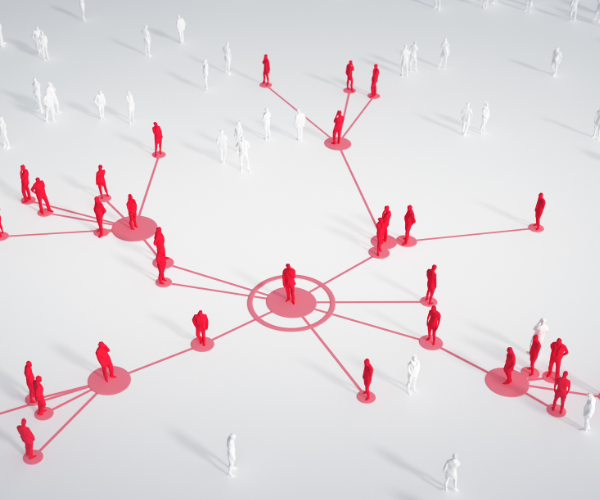
On March 10, the University of Wisconsin-Madison’s Center for Demography and Ecology brought together researchers in demography and public health to examine how population dynamics, social behavior, and data systems shape infectious disease transmission and mortality.
“There is a striking mismatch between the global burden of infectious disease and the amount of demographic research devoted to understanding it,” Malia Jones of the University of Wisconsin-Madison noted in her opening remarks. “But fortunately, there is a small but growing group of scholars bringing demographic theory and methods to infectious disease questions.”
Presenters shared new findings on influenza immunity, post-pandemic social contact patterns, spatial networks of HIV risk, and the measurement of COVID-19 deaths.
Early-Life Flu Exposure May Shape Mortality Decades Later
Ayesha Mahmud of the University of California, Berkeley opened with research on immune imprinting, which suggests that a person’s first childhood flu infection shapes how their immune system responds to the virus later in life.
Unlike measles, influenza can infect people repeatedly. The virus mutates over time and occasionally undergoes sudden, dramatic shifts, producing new strains such as H1N1, H2N2, and H3N2. These strains fall into two broad families; prior research has shown that exposure to one strain tends to offer stronger protection against others in the same family, and that immune responses remain strongest against strains encountered early in life.
To study how imprinting shapes mortality, Mahmud and her collaborators combined U.S. influenza mortality data from 1968 to 2021 with historical records of circulating strains. They analyzed birth cohorts spanning more than a century and estimated which strains individuals were most likely to encounter first. Because different strains dominated at different times—H1N1 after 1918, H2N2 from 1957 to 1968, and H3N2 after 1968—cohorts born in different eras likely had different first exposures.
One unexpected finding: The 1918 virus was more genetically similar to the 2009 pandemic H1N1 strains than to the H1N1 strains that circulated in the decades between. People first exposed in 1918 who were still alive in 2009 showed unexpectedly lower mortality that year. In contrast, younger cohorts imprinted with other strains showed higher-than-expected mortality as they aged.
“We see imprinting protection, but it’s really, really narrow,” Mahmud said.
The findings suggest that as younger cohorts—who appear to have less protective imprinting against certain strains—age into the highest-risk years for flu death, the overall burden of the disease could grow. Mahmud’s simulations suggest that the combination of demographic aging and cohort differences in immune imprinting could increase influenza mortality in older age groups in the future.
Social Contact Has Not Fully Recovered From the Pandemic
Americans are still interacting with fewer people than before COVID-19. Audrey Dorélien of the University of Washington presented survey data from the Midwest showing that average contact levels remain lower than historical benchmarks—about seven contacts per person per day, compared to a pre-pandemic benchmark of 13.
Much of the reduction reflects lasting changes in work arrangements, with fewer in-person workplace interactions. Because many respiratory infections spread through interpersonal contact, these shifts may have ongoing effects on disease transmission.
Demographic patterns also emerged. Adolescents ages 15 to 19 reported the highest contact rates, while men reported slightly more contacts than women, driven largely by workplace interactions. Contact rates rose with household size and were higher among people in metropolitan areas.
Dorélien argued for broader collection and use of contact data in infectious disease research. Expanding this work across more regions and populations could help researchers better anticipate how future outbreaks might unfold.
Spatial Networks Shape HIV Risk Among Sexual Minority Men
Susan Cassels of the University of California, Santa Barbara presented research on how geography and social networks shape HIV risk among sexual minority men in Los Angeles. Gay, bisexual, and other men who have sex with men represent about 2% of the U.S. population but account for roughly two-thirds of new HIV infections in the United States—a disparity Cassels’s work aims to better explain.
Rather than mapping risk by where people with HIV reside, Cassels’ team focused on “activity space” data, capturing the full range of locations where individuals routinely spend time, including where they socialize, use substances, and seek health care. Participants mapped these locations using an online survey with embedded digital maps.
Using spatial clustering techniques, the team identified hotspots where certain activities occur more frequently than expected by chance. Lifestyle-related activities tended to occur across larger geographic areas, while health care activities were more spatially concentrated, likely because clinic locations are more fixed while daily activities are more flexible. The analysis also found racial differences in clustering patterns, including a higher likelihood for Black participants to live in or use substances within identified hotspots.
The findings could help public health officials design targeted prevention efforts based on where risk-related activities actually occur, rather than where people with HIV reside.
Machine Learning Identifies Potentially Uncounted COVID-19 Deaths
Andrew Stokes of Boston University presented research, since published in Science Advances, examining whether some COVID-19 deaths were misclassified under other causes during the pandemic. The analysis suggests that approximately 150,000 U.S. COVID-19 deaths may have gone uncounted.
Earlier studies found gaps between reported COVID deaths and excess mortality but could not determine whether those deaths were misclassified COVID cases or indirect effects of the pandemic. Stokes and his collaborators trained a machine learning model on hospital deaths (where diagnoses were more reliable), then applied it to deaths outside hospital settings. The model used causes of death listed on certificates along with demographic and geographic characteristics.
Potential undercounting was more common among people with lower levels of education; among Hispanic, American Indian and Alaska Native, Asian, and Black individuals; and among those whose race or ethnicity was listed as unknown on death certificates.
“Getting those counts accurate is very important for policy and public health promotion,” Stokes said. Improving death investigation systems, particularly outside hospital settings, will be essential for accurately tracking mortality in future public health emergencies.
Demography’s Role in Understanding Infectious Disease
The four studies point to a common conclusion: Predicting and responding to infectious disease requires understanding not just the pathogen, but the populations it moves through. Generational patterns in flu immunity, persistent changes in social contact, geographic clustering of HIV risk, and gaps in COVID mortality data all reflect demographic dynamics that standard epidemiological models might miss.
As Mahmud noted, a key challenge ahead is understanding how demographic shifts interact with biological factors to shape future disease burdens. Knowing who is at risk—and why—will be as important as understanding the diseases themselves.
References
- Kylee A. Hoffman, Chadi M. Saad-Roy, and Ayesha S. Mahmud, “Childhood Immune Imprinting Shapes Cohort and Period Influenza Mortality,” Science Advances 12, no. 15 (2026).
- “Analyzing Midwest Social Contact Patterns,” University of Minnesota School of Public Health.
- Susan Cassels, Sean C. Reid, and Sofia Kaloper, “Housing Insecurity, Migration and HIV Among Sexual Minority Men in the U.S.” BMC Research Notes 19, no. 157 (2026).
- Mathew V. Kiang et al., “Applying Machine Learning to Identify Unrecognized COVID-19 Deaths Recorded as Other Causes of Death in the United States,” Science Advances 12, no. 12 (2026).
Related Posts
As Dementia Rises, More Older Americans Are Getting Care at Home. It's Not Without Challenges.
Families face the financial burden of paying out-of-pocket for care not covered by Medicare and Medicaid and the emotional toll of day-to-day caregiving.

Webinar: How Women Became America’s Safety Net (PRB Book Talk)
A conversation with author Jessica Calarco on her new book, Holding It Together

The Demography of Dementia and Dementia Caregiving
Dementia is one of the nation’s most expensive old-age health conditions and the most time consuming for family caregivers.

Family Caregiving for Older People
(2016) In the United States, the vast majority of care that allows older people to live in their own homes is provided by family members who do not receive pay for their services.