
Population Bulletin, vol. 73, no. 1. Family Planning Equity Among Youth: Where Are We Now?
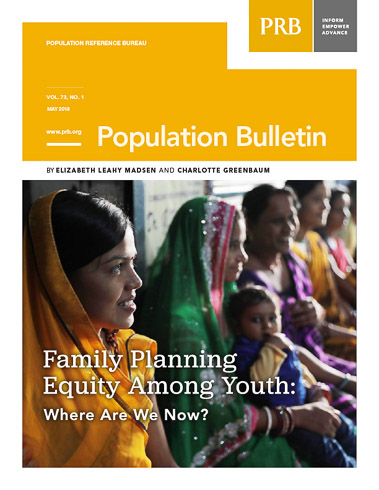
While the gap in demand satisfied for modern family planning between rich and poor young women is improving, equitable access to family planning is still challenging. Wealth-based inequity remains persistent in most regions of sub-Saharan Africa, even accounting for factors such as educational attainment, urban/rural residence, and age.
PRB’s Population Bulletin, revised as of June, 2019 from the original version, assesses whether demand satisfied for family planning, as a key indicator of universal access to sexual and reproductive health, is equitable among young women ages 15 to 24 in low- and middle-income countries, and to what extent that inequity has changed over time. We consider these questions at the global, regional, and national levels, drawing on survey data from 33 countries. The results show that globally, education and marital status affect demand satisfied for family planning among young women at least as much as wealth. Further, increases in contraceptive use, rather than decreases in unmet need, have been the primary factor driving recent improvements in demand satisfied among young women.
Related Posts
Family Planning and the Gendered Impacts of Crises on Women: An Effective Tool Across Sectors to Support Women’s Empowerment and Build Resilience to Shocks
Holistic integrated solutions are key to address the interlinkages of the gendered impacts of crises.
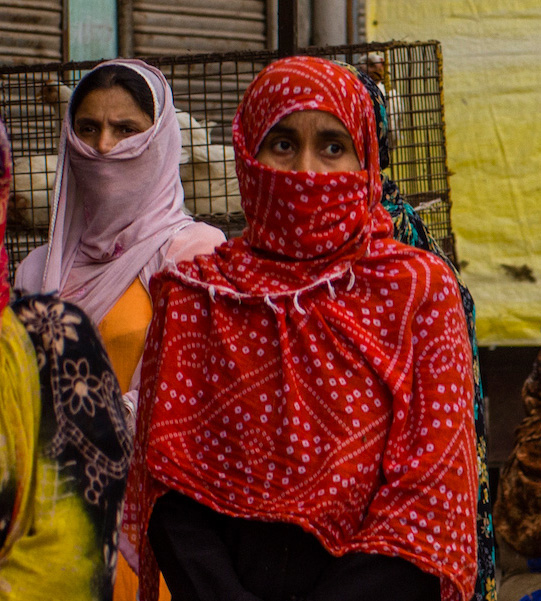
Research Identifies New Strategies to Reduce Undercount of Young Children in U.S. 2020 Census
PRB identifies factors predicting where children under age 5 are more likely to be missed in the 2020 Census and develops a new undercount risk measure for young children.

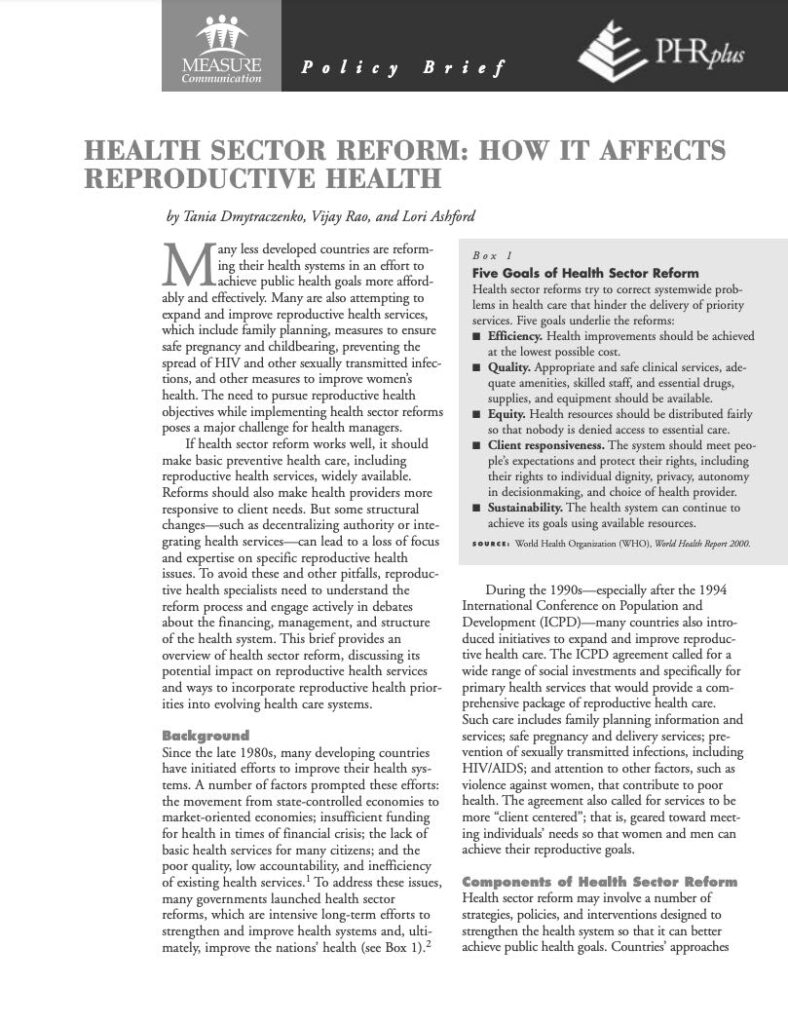
Health Sector Reform: How It Affects Reproductive Health
(June 2003) Many less developed countries are reforming their health systems in an effort to achieve public health goals more affordably and effectively.
Report. Health Sector Reform: How It Affects Reproductive Health
This report also in French and Spanish. (June 2003) Many less developed countries are reforming their health systems in an effort to achieve public health goals more affordably and effectively.