Births Outside Marriage Now Common in Many Countries in Europe
(2010) The link between marriage and childbearing has greatly weakened worldwide, evidenced by a sharp rise in births outside marriage in most developed countries.

(2010) The link between marriage and childbearing has greatly weakened worldwide, evidenced by a sharp rise in births outside marriage in most developed countries.
Project: BRIDGE: Bringing Information to Decisionmakers for Global Effectiveness
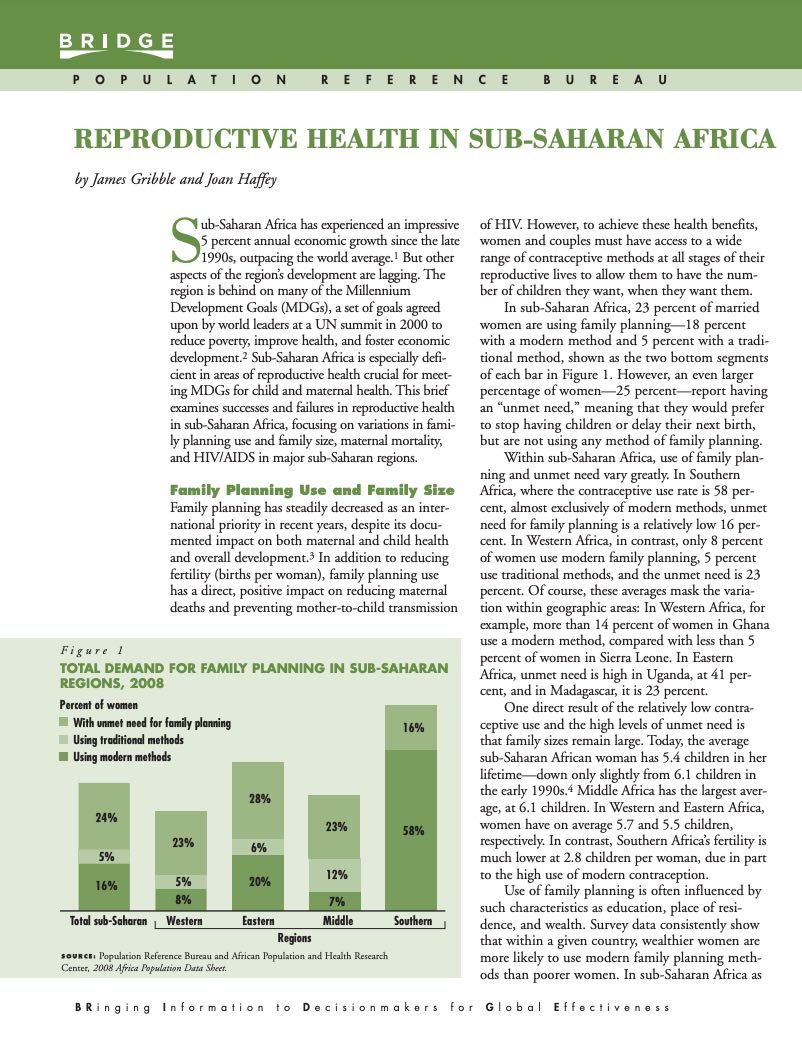
(2008) Sub-Saharan Africa has experienced an impressive 5 percent annual economic growth since the late 1990s, outpacing the world average.
Project: Empowering Evidence-Driven Advocacy
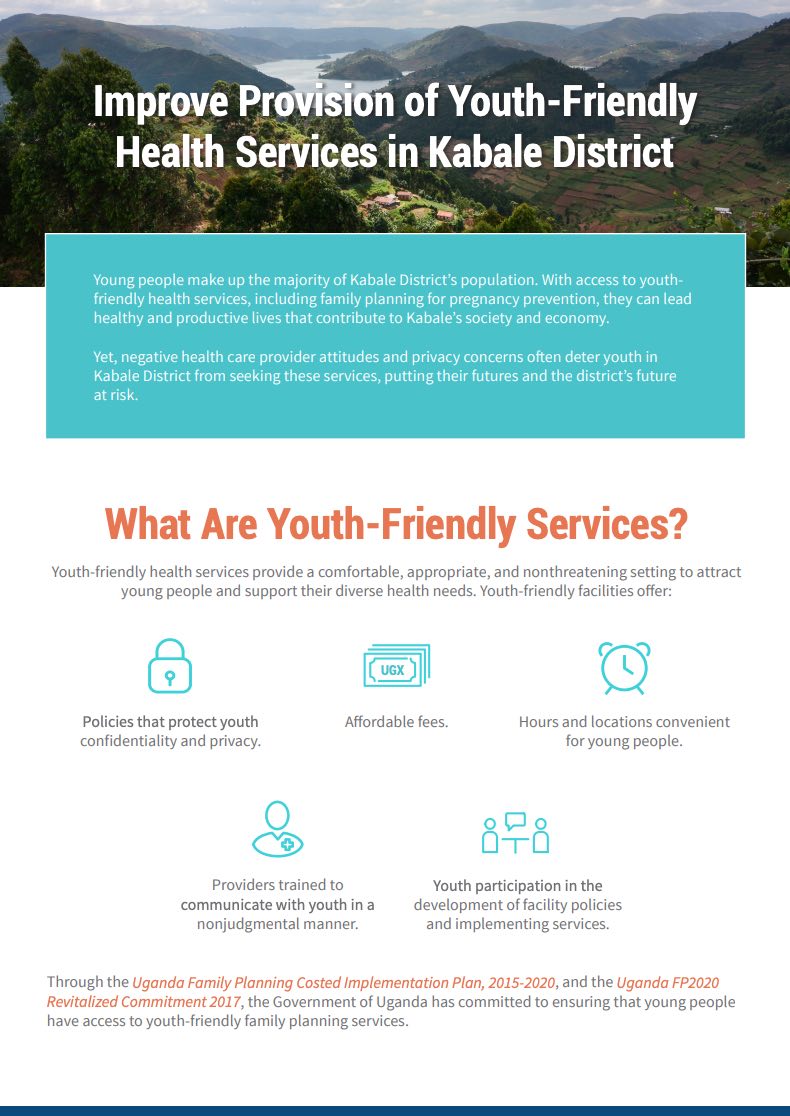
Young people make up the majority of Kabale District’s population. With access to youth-friendly health services, including family planning for pregnancy prevention, they can lead healthy and productive lives that contribute to Kabale’s society and economy.
(2009) Recent political developments in Iran highlight the country's demographic and social shifts over the past 20 years. One in three Iranians is between the ages of 15 and 29.
(2003) Poor access to health facilities and low-quality health care delivery may be among the reasons that Zambia is facing increasing levels of maternal deaths.
(2011) Many studies have recommended integrating reproductive health and HIV services because sexually active individuals have overlapping needs: They are at risk of both unintended pregnancies and HIV infection. A 2009 World Health Organization review of the studies on this issue found that integrating family planning and HIV services leads to higher-quality and better-used services and is cost-effective.
(2011) Today's smokers are more strongly influenced by genetic factors than in the past, and that influence makes it more difficult for them to quit, according to a new study of twins published in the December issue of the journal Demography.
(2015) Women’s participation in government gives them a direct say in the policies, laws, and regulations that affect their lives. Canada, for the first time in its history, has achieved gender parity in the federal cabinet: Newly elected Prime Minister Justin Trudeau divided the cabinet posts evenly between men and women—15 each—and made news headlines. When asked to explain his decision, Trudeau told reporters: “Because it’s 2015.”1