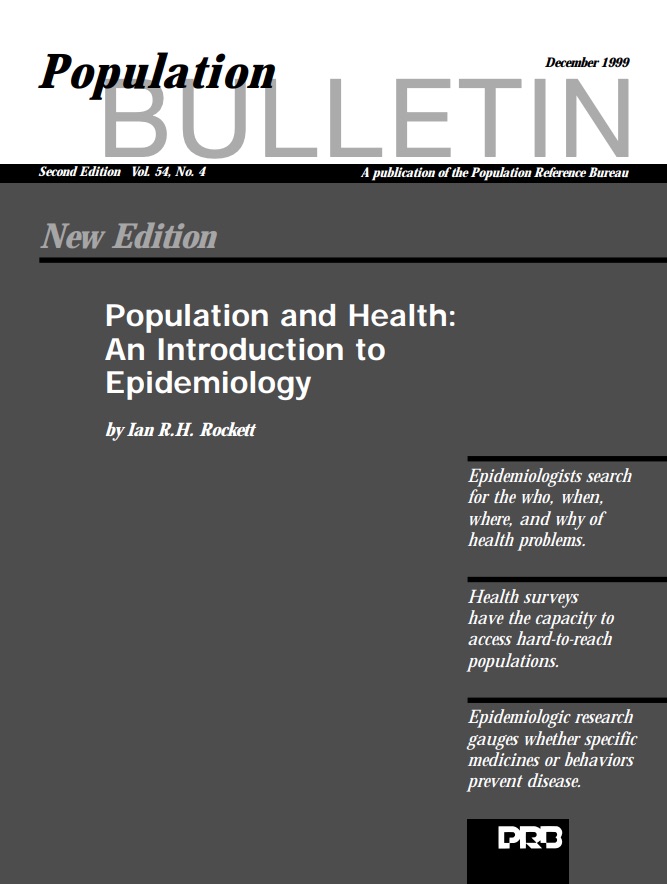
Population Bulletin vol. 54, no. 4: Population and Health–An Introduction to Epidemiology
(1999) Most people are concerned about their health. When they are well, they wonder how to remain that way.
View Details
Array
(
[ID] => 14556
[id] => 14556
[title] => Population-Bulletin-54.4PopHealthEpidemiology
[filename] => Population-Bulletin-54.4PopHealthEpidemiology.pdf
[filesize] => 266631
[url] => https://www.prb.org/wp-content/uploads/1999/12/Population-Bulletin-54.4PopHealthEpidemiology.pdf
[link] => https://www.prb.org/resources/population-and-health-an-introduction-to-epidemiology/population-bulletin-54-4pophealthepidemiology-2/
[alt] =>
[author] => 15
[description] =>
[caption] =>
[name] => population-bulletin-54-4pophealthepidemiology-2
[status] => inherit
[uploaded_to] => 5537
[date] => 2021-01-28 03:40:24
[modified] => 2021-01-28 03:40:24
[menu_order] => 0
[mime_type] => application/pdf
[type] => application
[subtype] => pdf
[icon] => https://www.prb.org/wp-includes/images/media/document.png
)
Download
(0.3 MB)