Cities No Longer Lead Fertility Decline in Sub-Saharan Africa, New Research Reveals
Why would the shift to smaller families slow or stop in sub-Saharan African cities, where fertility remains so much higher than in other parts of the world?

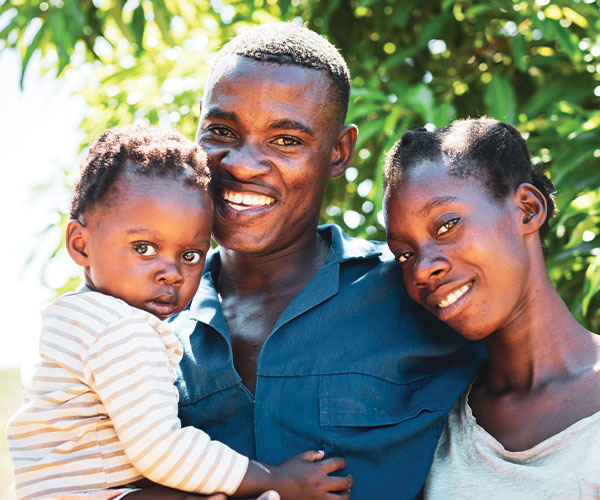
Why would the shift to smaller families slow or stop in sub-Saharan African cities, where fertility remains so much higher than in other parts of the world?
Project: PACE: Policy, Advocacy, and Communication Enhanced for Population and Reproductive Health
This web feature expands the concept of the demographic dividend to project four potential sets of benefits—in addition to economic growth, it outlines benefits in child survival, education, and political stability.
(2008) The aging of baby boomers and the fact that women's labor force participation has already peaked are expected to slow U.S. labor force growth in the near future.
Project: PACE: Policy, Advocacy, and Communication Enhanced for Population and Reproductive Health
(2017) As Kenya faces drought and recurring food insecurity, building resilience among the nation’s vulnerable populations is more important than ever before.
On Sept. 28, 2007, as part of the Population Reference Bureau's Policy Seminar Series, Dr. Paul Ehrlich discussed ways in which demography can greatly increase its policy impact in areas as diverse as climate change, the conservation of natural capital, and, of course, population reduction.
(Video Series) The birth rate is one of the most basic and important measures in demography. But its relevance is not limited to just demographers.
Project: Center for Public Information on Population Research (CPIPR)
(2015) Studies show that a growing number of U.S. families have incomes so low that the difficulties of their living situations may be masked by thinking of the poor as a homogeneous group.
Since the early 1960s, many countries have instituted large-scale programs to provide contraceptive access and services to their populations.

Project: Empowering Evidence-Driven Advocacy
More than half of the current Indian population is under the age of 30—that’s 732 million people! Meeting the needs of India’s large youth population is critical.