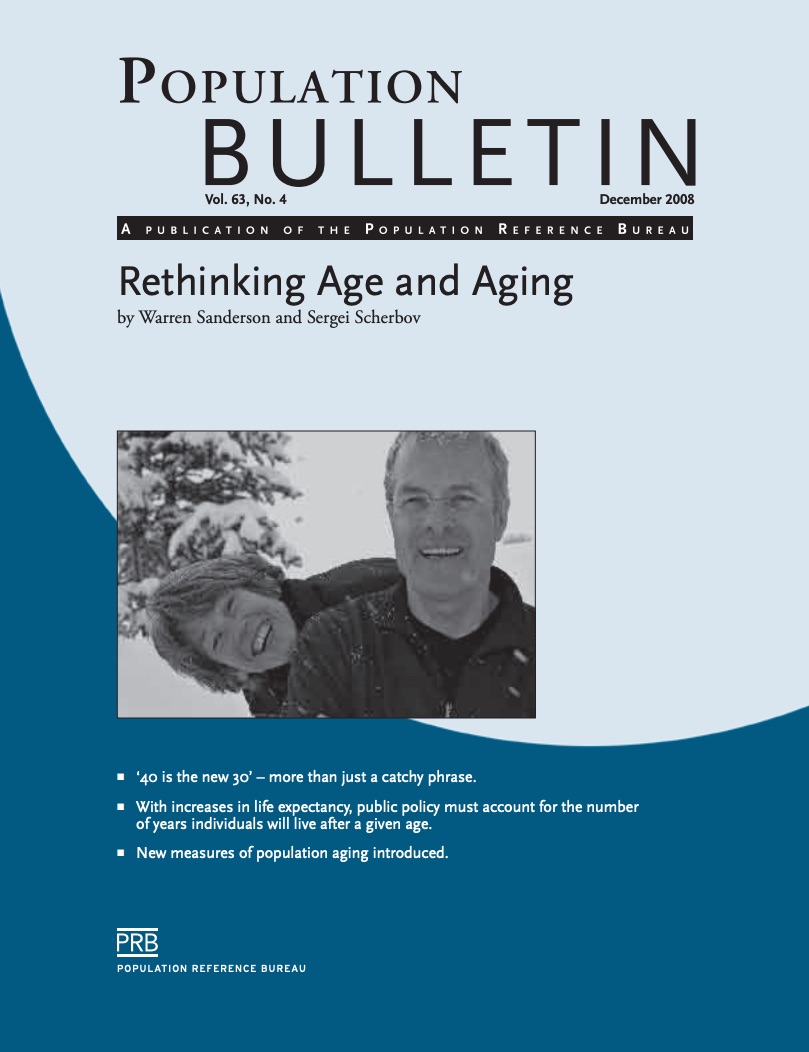
Population Bulletin, vol. 63, no. 4: Rethinking Age and Aging
(December 2008) According to the United Nations (UN), "Population ageing is unprecedented, without parallel in human history and the twenty-first century will witness even more rapid ageing than did the century just past."
View Details
Array
(
[ID] => 13592
[id] => 13592
[title] => Population-Bulletin-2008-63.4-aging
[filename] => Population-Bulletin-2008-63.4-aging.pdf
[filesize] => 626900
[url] => https://www.prb.org/wp-content/uploads/2021/01/Population-Bulletin-2008-63.4-aging.pdf
[link] => https://www.prb.org/resources/rethinking-age-and-aging/population-bulletin-2008-63-4-aging-2/
[alt] =>
[author] => 15
[description] =>
[caption] =>
[name] => population-bulletin-2008-63-4-aging-2
[status] => inherit
[uploaded_to] => 13590
[date] => 2021-01-24 15:03:42
[modified] => 2021-01-24 15:03:42
[menu_order] => 0
[mime_type] => application/pdf
[type] => application
[subtype] => pdf
[icon] => https://www.prb.org/wp-includes/images/media/document.png
)
Download
(0.6 MB)