The Growing Owner/Renter Gap in Affordable Housing in the U.S.
(2013) National trends mask a growing owner/renter gap in the amount of money spent on housing, relative to household income.

(2013) National trends mask a growing owner/renter gap in the amount of money spent on housing, relative to household income.
(2005) The number of people on Earth, where they live, and how they live all affect the condition of the environment.
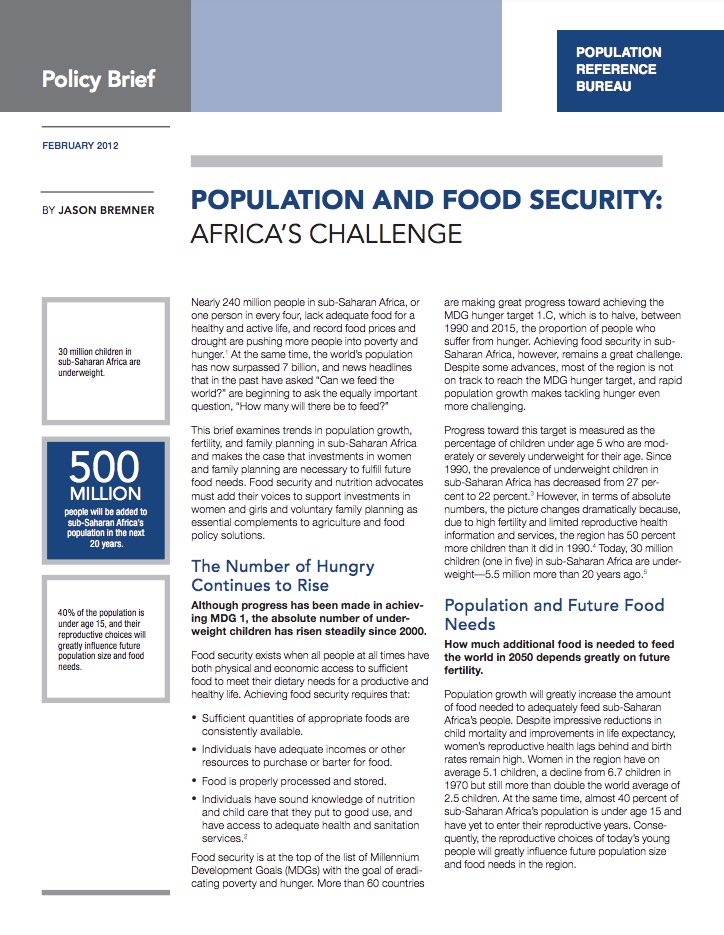
(2012) Nearly 240 million people in sub-Saharan Africa, or one person in every four, lack adequate food for a healthy and active life, and record food prices and drought are pushing more people into poverty and hunger.1 At the same time, the world’s population has now surpassed 7 billion, and news headlines that in the past have asked “Can we feed the world?” are beginning to ask the equally important question, “How many will there be to feed?”
(2014) Ukraine, a former republic of the Soviet Union, has undergone a series of dramatic demographic changes since its independence in 1991. Most significant, its birth rate declined sharply following independence, mirroring similar developments in other former Soviet republics.
(2011) For more than 20 years, since the first data collection in Sudan in 1989, the Demographic and Health Survey (DHS) team at Macro International has been tracking the prevalence of female genital cutting (FGC), also known as female genital mutilation and female circumcision.
Project: PACE: Policy, Advocacy, and Communication Enhanced for Population and Reproductive Health
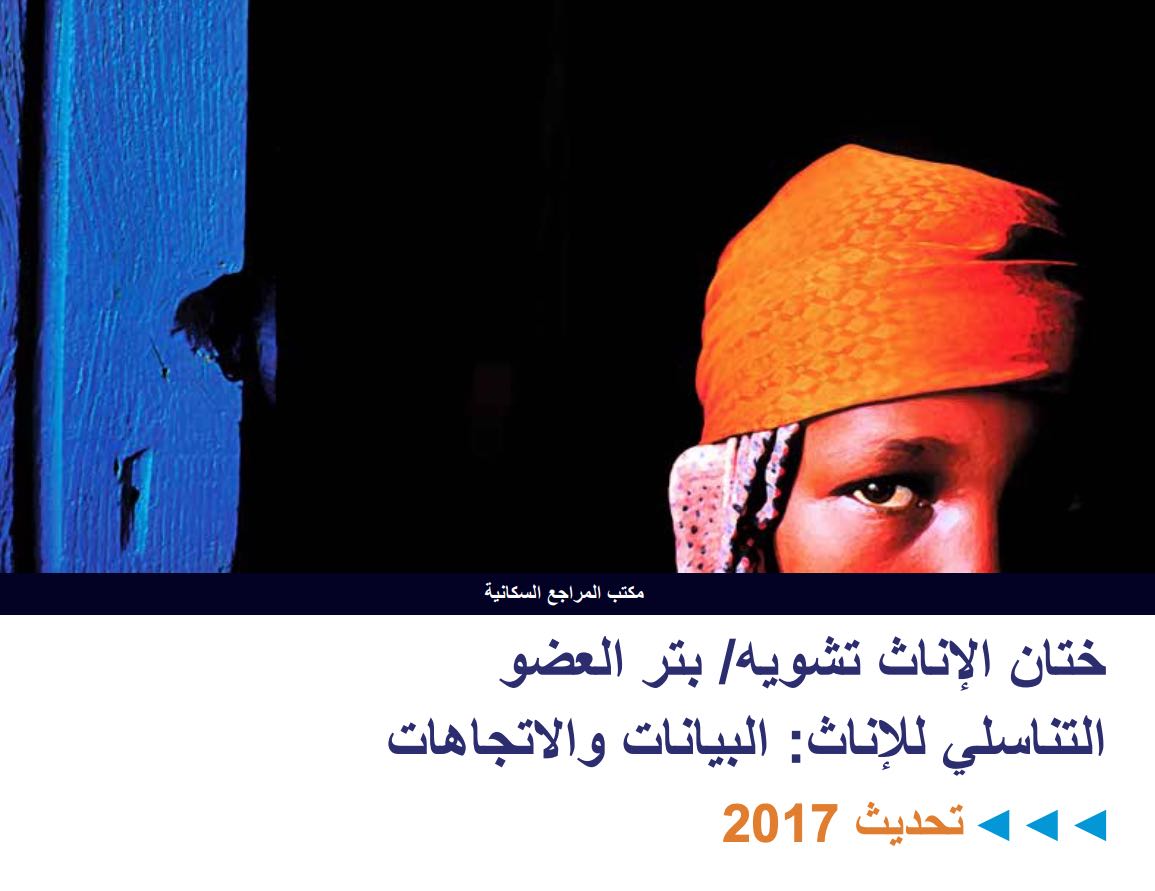
Female Genital Mutilation/Cutting: Data and Trends Update 2017, produced with support from the U.S. Agency for International Development, provides the latest data on the practice in 29 developing countries with representative and comparable data—although FGM/C occurs worldwide.
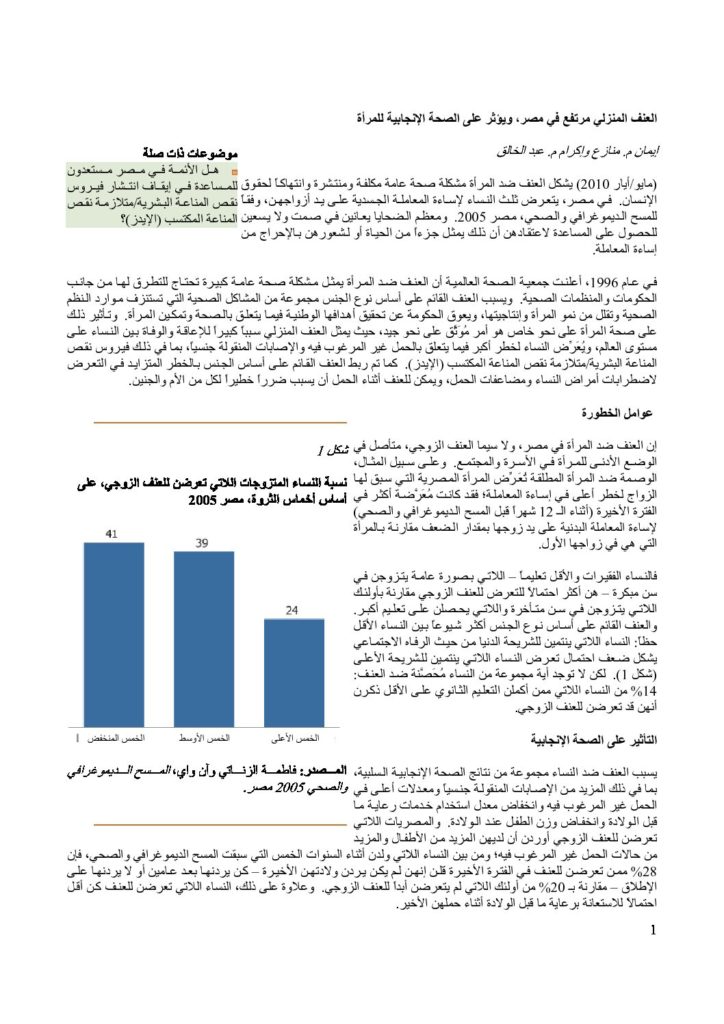
(2010) Violence against women is a costly and pervasive public health problem and a violation of human rights. In Egypt, a third of women are physically abused by their husbands, according to the 2005 Egypt Demographic and Health Survey (DHS).
(2009) The financial decisions facing older adults as they reach retirement age are increasingly more difficult.