
A New Tool Helps African Countries Budget for Demographic Change
Mali’s experience with Budgeting Sensitive to Demographic Dividend

For years, many African nations have faced the challenge of how to take advantage of their booming youth populations to drive economic growth. This concept, known as the demographic dividend, has been a key pillar of development plans, but a critical question remained: How do you actually measure and invest in it? Beginning in 2019, Mali became the first country to test a new tool that connects a country’s budget directly to its demographic future.
The Request
Called the Budgeting Sensitive to Demographic Dividend (BSDD) tool, this innovative approach was born out of a direct request from Mali’s policymakers, who were searching for a way to make their spending decisions more effective and evidence-based. They wanted to move beyond abstract plans and prove that investments in people could yield real returns.
Leading up to this request, the government of Mali had begun to focus on the country’s demographic future, beginning with the adoption of a new National Population Policy in 2017 that included the goal of working toward a demographic dividend. Additionally, the Sahel Women’s Empowerment and Demographic Dividend Project (SWEDD) founded an office in Mali for the purpose of establishing Mali’s National Demographic Dividend Observatory (ONDD). The office, which operated for 18 months, initiated discussions with the Senegal-based Regional Consortium for Research in Generational Economics (CREG) and enabled ONDD to focus on advocating and mobilizing resources for the creation of a budget tool.
The advocacy campaign’s primary targets included the Ministry of Finance and its technical structures at the decision-making level, including departments of development planning and budget, as well as other ministries.
In 2019, the Director-General of Budget and the SWEDD Project Coordinator in Mali met with the Director of Planning and the Coordinator of the Poverty Reduction Unit. During their discussions, the Director-General of Budget expressed the need for a “programming or budget simulation tool” to help achieve development policy objectives in addition to existing reports on the demographic dividend.
“It is challenging to convince ministerial departments when we have to reduce annual budgets, but having a tool to support our arguments would make the proposed budget structure more readily accepted by the various departments and public institutions,” he said. This request was reiterated during a training session in Senegal.
Malian Investment and Collaboration
Unlike many research endeavors, the fact that this one was rooted in a request from a policymaker helped it become the driving force behind the BSDD tool’s creation and led to a collaboration between CREG and key Malian officials.
Mali’s Directorate of Budget continued to demonstrate strong commitment. It maintained a genuine internalization of the process that contributed to the tool’s successful adoption, including through financing missions for the Directorate’s technical teams to work directly with researchers in Senegal to develop and test the tool.
The Launch and Increasing Budgetary Commitments
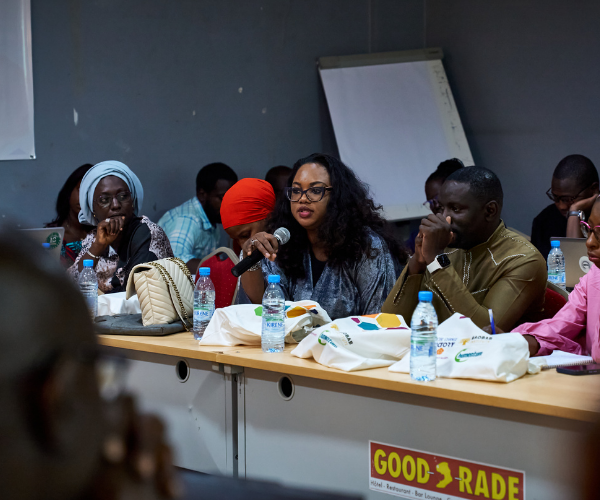
In 2020, the Malian Director of Budget called for the organization of a national conference for the launch of the following year’s budget process, which would be the first real-world test of the new BSDD results. This 2021 Budget Process Launch Conference included presentation of the findings from the initial steps of BSDD.
As part of the BSDD process, participants analyzed the effects of budget allocation using the nature of expenditure (functioning, investments, or transfers) and subfunction (health, education, security, and others) to learn how changes in spending could concretely improve lives. Looking at current expenditures through the lens of BSDD and Mali’s scores on the Demographic Dividend Monitoring Index (DDMI) helped to the potential impact of budgetary decisions on Mali’s people and economy.
For example, in 2020, the Economic Dependency Coverage Index (ICDE)—one of the scores that make up the DDMI—in Mali was about 45.3% because of the high dependency of youth and women due to their low participation in the job market and thus their low generation of revenues. The analysis also found that, all other things being equal, an increase of 1% in the share of investments budget allocated to the health sector leads to an increase in the overall DDMI of 0.06%. At the start of the conference, the proposed 2021 budget had allocated 26% of resources to human capital development. By the end of the conference, the government’s commitment for sectors such as health, education, social protection, and women’s empowerment increased 2 percentage points to 28% of the total budget.
The draft 2021 finance bill, created with the results from the BSDD launch, was approved by Mali’s National Assembly. The bill specifically highlighted the need to accelerate investments to capture the demographic dividend as a key justification for maintaining resources allocated to human capital development, even in a crisis context.
Challenges
Even with strong support from country leaders, Mali has faced significant challenges in implementing and institutionalizing BSDD.
One challenge to be faced by any country implementing this process is the amount of inputs needed to calculate the DDMI and perform retropolation, including budget expenditure reports going back several years; survey reports including Modular and Permanent Household Surveys and Demographic and Health Surveys; thematic yearbooks on health, education, demographic trends, and others; and demographic data from censuses. Data for more than 100 indicators is required to calculate an estimate for the DDMI alone, making it infeasible to go through this process annually.
At a certain point, budgeting decisions move beyond the control of the BSDD team members. Once the calculations are completed and recommendations are made, it is still necessary to convince relevant decisionmakers. After the budget planning conference and during the budget allocation process, many discussions are held with ministers and other high-level government leaders. The creators and implementers of BSDD attempted to present its results at the launch in 2021 in a way that would capture the attention of ministry leaders on the need for investing in population and human capital sectors, but they were not present for these conversations in Mali and are not able to control the extent to which BSDD results were included as key elements of those discussions and arbitrations.
Linking budget arbitration with development outcomes is still difficult. BSDD certainly helps make it possible but it remains difficult to track and monitor both budgetary changes as a result of the BSDD process and the impacts of those changes on the economy and people’s lives.
In addition, frequent political and institutional changes in Mali have directly impacted the continuity of development policies and implementation of BSDD. Compounding the impacts of the COVID-19 pandemic that arose in the months following BSDD’s launch, Mali has dealt with political and financial insecurity and terrorism, which continue to affect the way the public budget is allocated.
Many relevant decisionmakers have changed roles, which means the champions of the BSDD process and the institutional knowledge built around it can be lost. New officials may have different priorities or may not be familiar with the tool’s benefits. The government’s budget has increasingly prioritized defense and security.
Renewing Commitment
Despite these challenges, BSDD has proven potential. Following its launch, the term demographic dividend gained increasing prominence in Mali’s strategic documents, political discourse, and development partners’ cooperation frameworks. The BSDD approach has helped reshape the narrative around demographic issues in the country. The tool provides a powerful framework for evidence-based decision-making and serves as a model for other nations. Highlighting BSDD’s initial success of in Mali, advocates can continue to link it with current priorities in their countries, including security, gender, food security, and the care economy to show that, with the right tools, African countries can turn demographic trends from a challenge into their greatest asset.
Related Posts
Five Facts and Trends We're Watching in 2026
Care, the future of work and AI, and other themes we're keeping an eye on in the new year

In Dakar, a New Generation Steps Forward to Lead Their Countries' Development
Supporting localization isn’t about stepping back—it’s about showing up differently. In Dakar, we witnessed what’s possible when we stop talking about youth leadership and start listening to it.
To Fix the Care Economy, the United States Should Look Internationally
On this World Population Day, we’re examining the state of the care economy in the United States—and looking abroad for ways to strengthen it.

The Nation’s Preexisting Condition: How Rising Inequality Exacerbated the Economic Toll of the Coronavirus
In 2019, many economic indicators seemed to be pointing in the right direction. The unemployment rate had fallen to its lowest level since 1969, the poverty rate fell to the lowest level in 60 years, and the Dow Jones Industrial Average reached an all-time high.

Aging and Health in China: What Can We Learn From the World’s Largest Population of Older People?
The United Nations projects that there will be 366 million older Chinese adults by 2050, which is substantially larger than the current total U.S. population of 331 million.