Project: Appalachia: Demographic and Socioeconomic Trends
Socioeconomic Levels Vary Widely in Appalachia
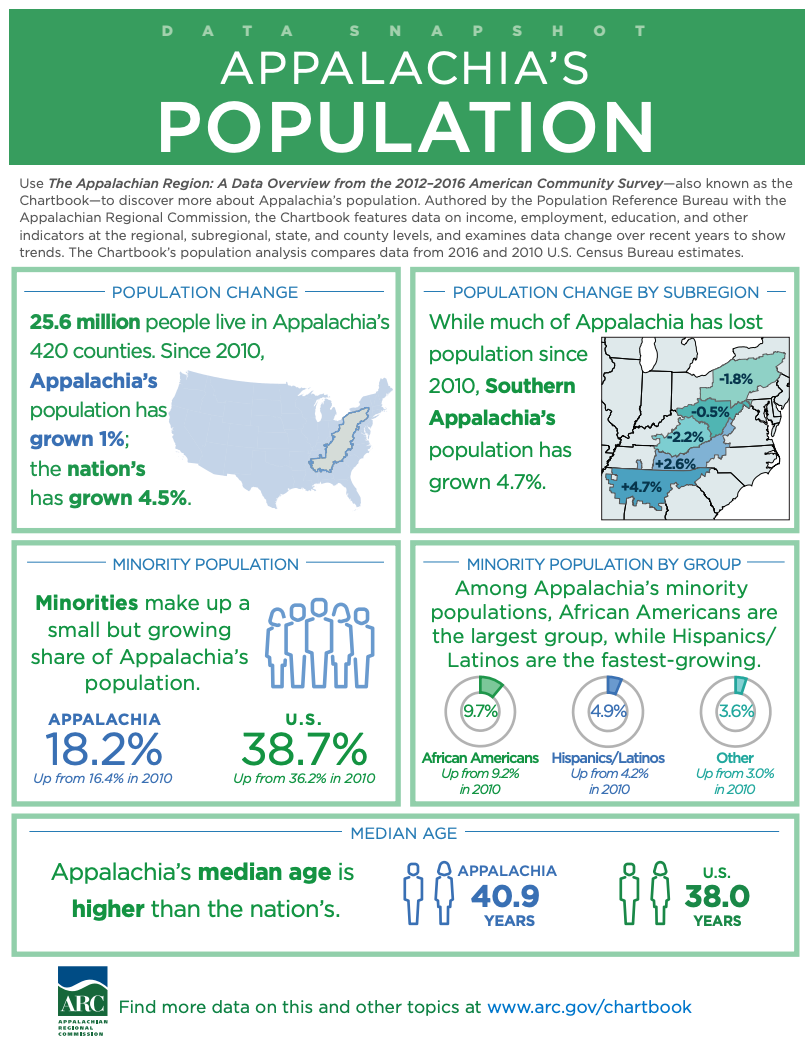
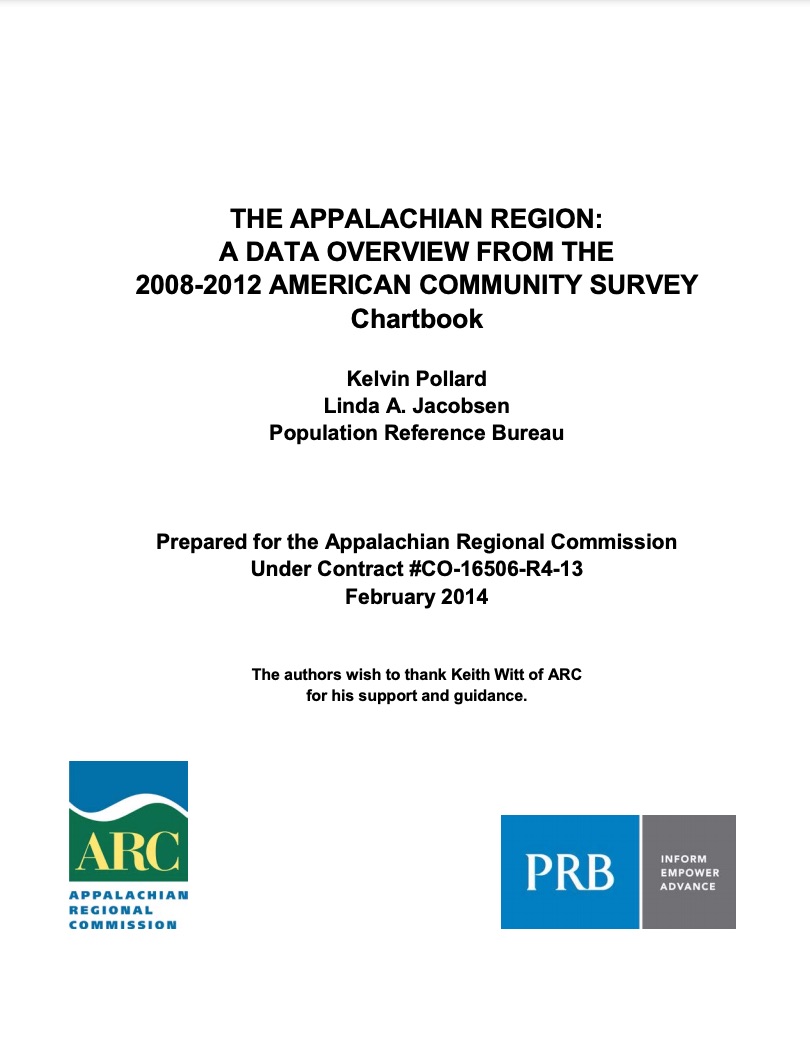
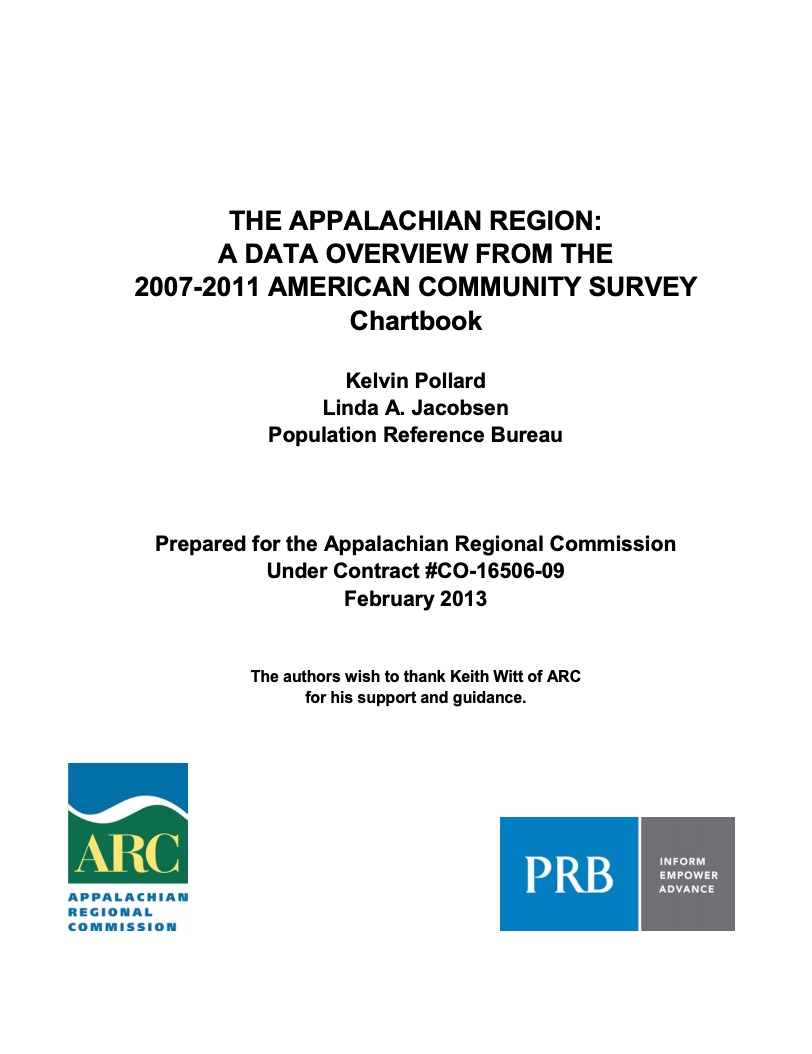
(2013) Appalachia's residents remain older, less educated, and less racially diverse than the United States as a whole, but those demographic and socioeconomic patterns vary widely within the region, according to The Appalachian Region: A Data Overview From the 2007-2011 American Community Survey, prepared by the Population Reference Bureau for the Appalachian Regional Commission.
View Details
Array
(
[ID] => 12516
[id] => 12516
[title] => appalachia-census-chartbook-2012-1
[filename] => appalachia-census-chartbook-2012-1.pdf
[filesize] => 6286780
[url] => https://www.prb.org/wp-content/uploads/2013/04/appalachia-census-chartbook-2012-1.pdf
[link] => https://www.prb.org/resources/socioeconomic-levels-vary-widely-in-appalachia/appalachia-census-chartbook-2012-1-2/
[alt] =>
[author] => 15
[description] =>
[caption] =>
[name] => appalachia-census-chartbook-2012-1-2
[status] => inherit
[uploaded_to] => 12513
[date] => 2021-01-18 15:15:06
[modified] => 2021-01-18 15:15:06
[menu_order] => 0
[mime_type] => application/pdf
[type] => application
[subtype] => pdf
[icon] => https://www.prb.org/wp-includes/images/media/document.png
)
Download
(6.1 MB)