Earthquake Magnifies Haiti’s Economic and Health Challenges
Even before the massive earthquake in January 2010, Haiti's nearly 10 million people ranked as the poorest in the Western Hemisphere.

Even before the massive earthquake in January 2010, Haiti's nearly 10 million people ranked as the poorest in the Western Hemisphere.
(2008) Research has shown that growing up in poverty leads to negative health, social, and economic consequences for children that often continue in adulthood.


(2020) The world is better equipped to fight a pandemic today than it was in 1918, when influenza swept the globe and infected up to one-third of the world’s population.1 While science and medical advances have given us new advantages in fighting disease, some demographic trends since 1918 may increase the risk for spreading contagions and our vulnerability to viruses.

Project: Evidence to End Female Genital Mutilation/Cutting
(2016) Efforts to end female genital mutilation/cutting (FGM/C) are a rising priority on many national and global agendas. Thus it is imperative to have a clear understanding of the scale and scope of the practice, and where it occurs, as well as the dynamics of change and the broader context surrounding it.
(2008) Media reports on the "exploding" middle class in India would lead any reader to believe that Indian society is undergoing a top-to-bottom transformation into a society of Western-style consumers. A recent Business Week article quoted a McKinsey Global Institute study that claimed that India, in one generation, would become a nation of upwardly mobile middle-class households, consuming goods ranging from high-end cars to designer clothing.
Project: American Community Survey and Decennial Census Support Services
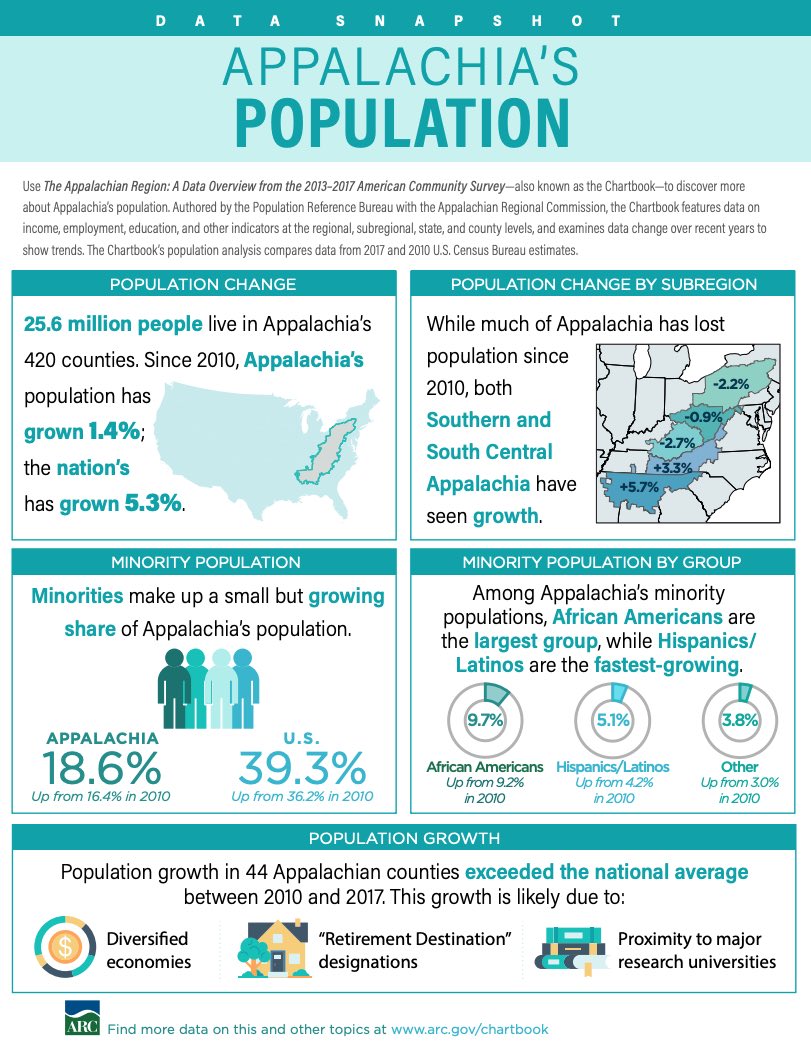
25.6 million people live in Appalachia's 420 counties. Since 2010, Appalachia's population has grown 1.4%; the nation's has grown 5.3%.
Project: American Community Survey and Decennial Census Support Services
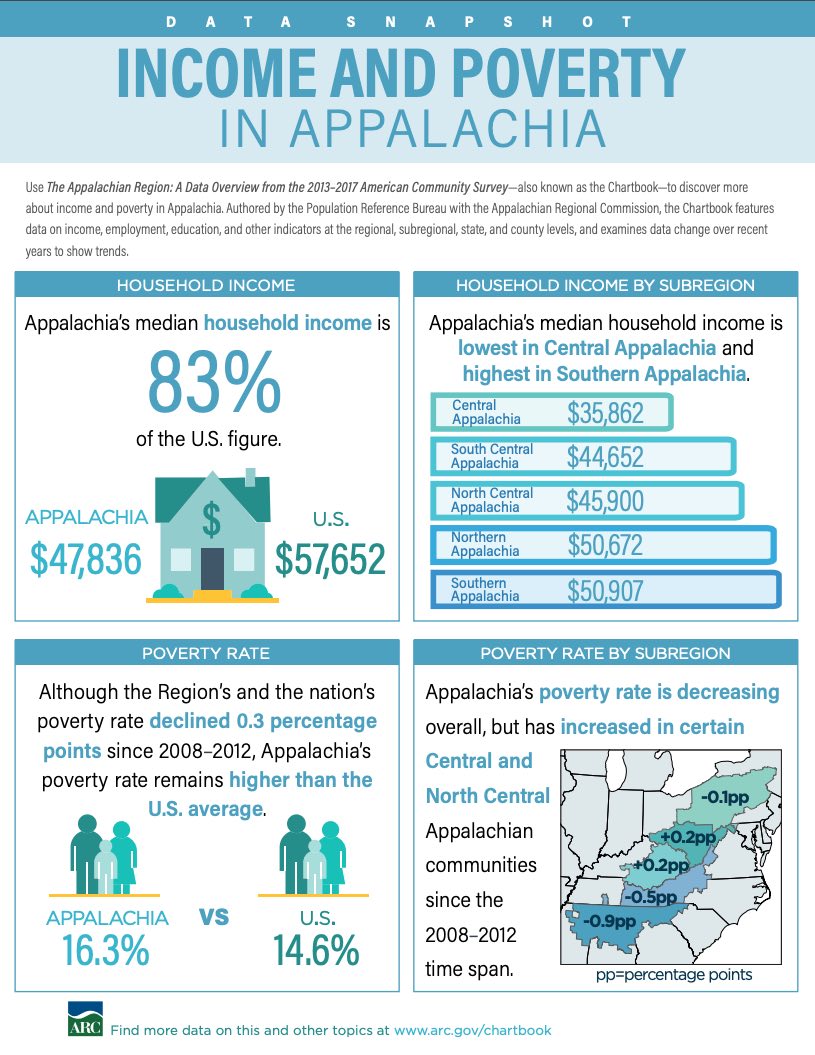
Appalachia's median household income is 83% of the U.S. figure.
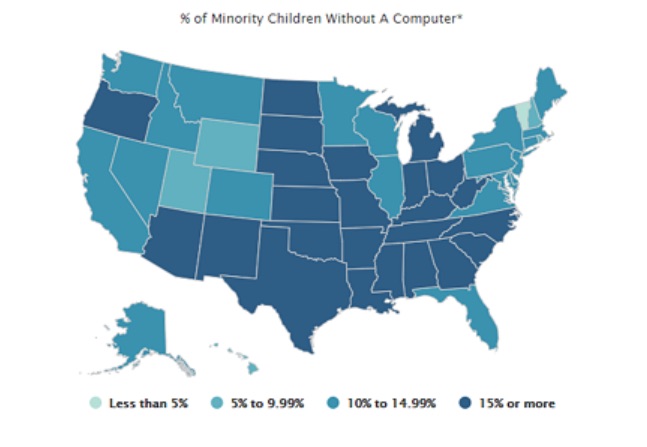
(2020) With the number of coronavirus infections surging, school districts across the United States are grappling with decisions about whether and how to re-open this fall. For online learning to be effective, students need access to computers and high-speed internet access, but a new analysis and interactive dashboard by PRB show sharp digital and economic divides among school-age children across states and between racial and ethnic groups.