
537 Search Results Found For : "climate change"
Latinos and the Changing Face of America
(2004) Over the last 100 years, few racial or ethnic groups have had as great an impact on the demography of the United States as Latinos. In 1900, there were only slightly more than 500,000 Latinos.1
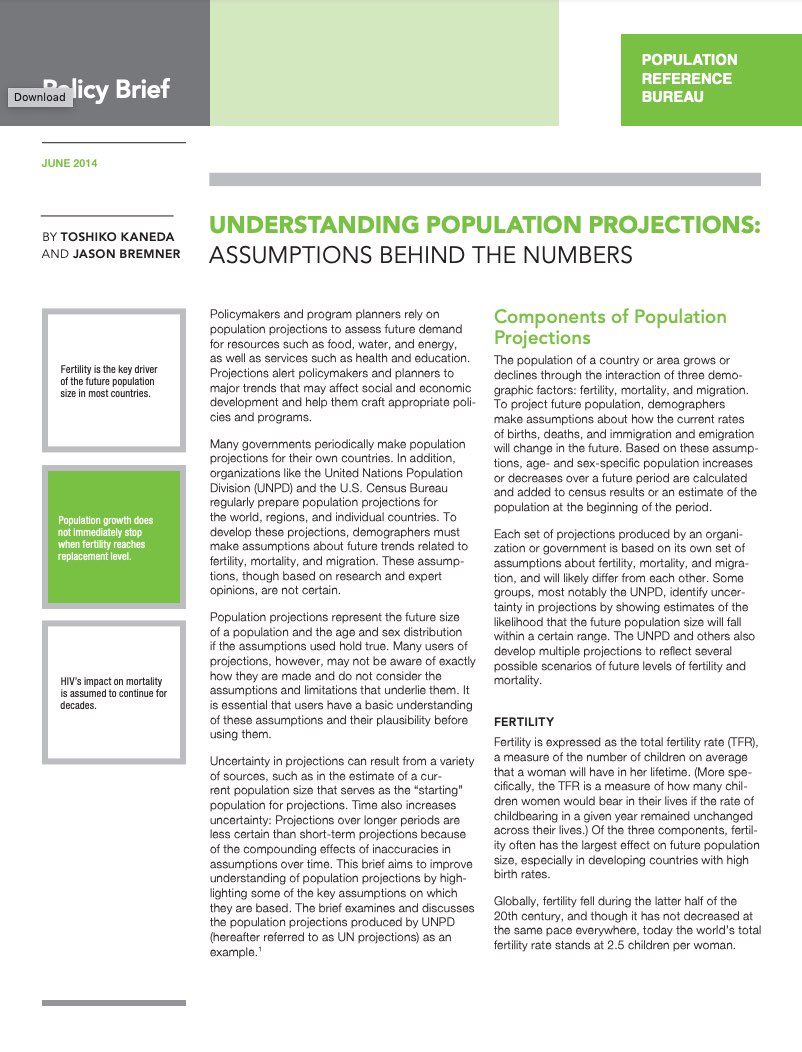
Understanding Population Projections: Assumptions Behind the Numbers
View Details
Array
(
[ID] => 15551
[id] => 15551
[title] => understanding-population-projections-2014
[filename] => understanding-population-projections-2014.pdf
[filesize] => 599322
[url] => https://www.prb.org/wp-content/uploads/2014/07/understanding-population-projections-2014.pdf
[link] => https://www.prb.org/resources/understanding-population-projections-assumptions-behind-the-numbers/understanding-population-projections-2014-2/
[alt] =>
[author] => 15
[description] =>
[caption] =>
[name] => understanding-population-projections-2014-2
[status] => inherit
[uploaded_to] => 5136
[date] => 2021-02-01 20:02:53
[modified] => 2021-02-01 20:02:53
[menu_order] => 0
[mime_type] => application/pdf
[type] => application
[subtype] => pdf
[icon] => https://www.prb.org/wp-includes/images/media/document.png
)
Download
(0.6 MB)
Mama Muliri of HEAL Africa: Battling Gender-Based Violence in the Democratic Republic of Congo
(2010) In eastern Democratic Republic of Congo (DRC), HEAL Africa provides free health and psychosocial services to survivors of gender-based violence. Jeanne Muliri Kabekatyo ("Mama Muliri") pioneered and leads Heal My People, HEAL Africa's strategic response to gender-based violence.
Population: A Lively Introduction
(2007)When where you born? How many brothers and sisters did you have? Where did your ancestors live? How long will you live?
View Details
Array
(
[ID] => 25929
[id] => 25929
[title] => 62.1LivelyIntroduction
[filename] => 62.1LivelyIntroduction.pdf
[filesize] => 570168
[url] => https://www.prb.org/wp-content/uploads/2007/03/62.1LivelyIntroduction.pdf
[link] => https://www.prb.org/resources/population-a-lively-introduction/62-1livelyintroduction/
[alt] =>
[author] => 15
[description] =>
[caption] =>
[name] => 62-1livelyintroduction
[status] => inherit
[uploaded_to] => 6935
[date] => 2007-03-01 00:00:00
[modified] => 2021-05-18 14:09:03
[menu_order] => 0
[mime_type] => application/pdf
[type] => application
[subtype] => pdf
[icon] => https://www.prb.org/wp-includes/images/media/document.png
)
Download
(0.6 MB)
PowerPoint Presentation. International Day of Zero Tolerance to Female Genital Mutilation/Cutting Marks Ninth Year
(2012) Feb. 6, 2012, marks the ninth commemoration of the International Day of Zero Tolerance to Female Genital Mutilation/Cutting. An estimated 100 million to 140 million girls and women worldwide have undergone female genital mutilation/cutting (FGM/C), and more than 3 million girls are at risk for cutting each year on the African continent alone.
View Details
Array
(
[ID] => 16431
[id] => 16431
[title] => fgm_powerpoint_2012
[filename] => fgm_powerpoint_2012.pptx
[filesize] => 895858
[url] => https://www.prb.org/wp-content/uploads/2012/02/fgm_powerpoint_2012.pptx
[link] => https://www.prb.org/resources/international-day-of-zero-tolerance-to-female-genital-mutilation-cutting-marks-ninth-year/fgm_powerpoint_2012-2/
[alt] =>
[author] => 15
[description] =>
[caption] =>
[name] => fgm_powerpoint_2012-2
[status] => inherit
[uploaded_to] => 16428
[date] => 2021-02-05 15:36:26
[modified] => 2021-02-05 15:36:26
[menu_order] => 0
[mime_type] => application/vnd.openxmlformats-officedocument.presentationml.presentation
[type] => application
[subtype] => vnd.openxmlformats-officedocument.presentationml.presentation
[icon] => https://www.prb.org/wp-includes/images/media/interactive.png
)
Download
(0.9 MB)
United Nations Raises Projected World Population
(2013) The United Nations Population Division has just released its comprehensive estimates and projections, World Population Prospects: The 2012 Revision. The results show a larger global population size in 2050, 9.6 billion, up from the 9.3 billion that the UN projected in its 2010 Revision. A major reason for the higher projection is higher fertility (birth rates) in some countries than previously estimated, particularly in Africa. Much of that information comes from recent demographic surveys.

U.S. Population Growth Is Slowing to Near Zero
An immigration cliff—combined with fertility declines and population aging—places the United States closer to the demographic experience of Europe.
Existing Data Show Increase in Married Same-Sex U.S. Couples
The number of married same-sex couples in the United States has increased dramatically in recent years, as reported in a recent Bulletin on U.S. family change from the Population Reference Bureau.1