(2010) This year's World Health Day (April 7) focuses on the importance of urban health. Urbanization is occurring so rapidly in some parts of the world that cities are not able to keep up with increased demand for environmental, health, and educational services, not to mention the employment, housing, and transportation needs of a population that may double in size in less than 25 years.
(2010) The Democratic People’s Republic of North Korea, one of the few remaining Communist countries, has demographic similarities and disparities with wealthier, democratic South Korea.
Kenya’s Adolescent Reproductive Health and Development Policy: Implementation Progress and Barriers
(2013) Developed in 2003, the Adolescent Reproductive Health and Development (ARHD) Policy was the first in Kenya to focus on improving the reproductive health and well-being of adolescents and youth.1 Ten years since the policy was developed, Kenya has experienced much advancement and change in the social, economic, and political environment for ARHD.
2008) Close to 200 million people are living outside their country of birth. Increasing numbers are refugees fleeing their homeland for another country.
(2008) Extremely low birth rates in most of Europe have fueled concerns about population decline, yet one segment of the continent's population—Muslims—continues to grow. The increasing number and visibility of Muslims in Western Europe, juxtaposed with the low fertility among non-Muslims, has led some Europeans to worry that the region will eventually have a Muslim majority, fundamentally changing Western European society.
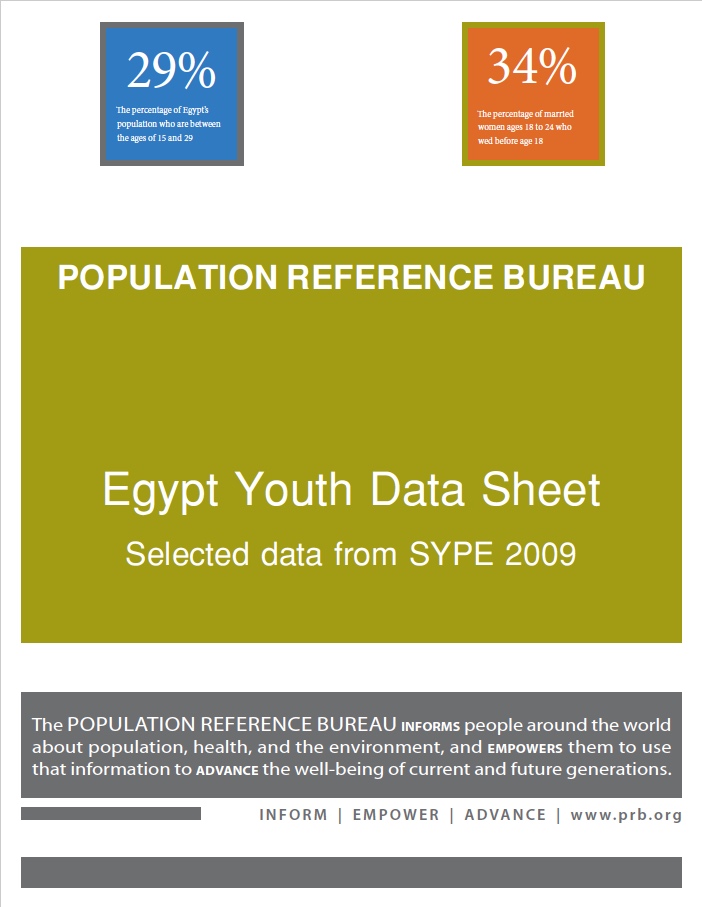
In Egypt, Young Women and People Living With HIV/AIDS Are Among the Most Disadvantaged
(2012) Jan. 25, 2012, marked the one-year anniversary of the antigovernment protests in Egypt that led to President Hosni Mubarak's resignation. Hundreds of thousands of Egyptians, including a vast majority of young people, demanded political freedom, better wages, and better working conditions.
On Feb. 3, 2011, the U.S. Census Bureau released the first detailed demographic data for states and local areas from the 2010 Census. Racial and ethnic characteristics of the total and voting-age populations were released for geographic areas down to the city block level.